
About This Book
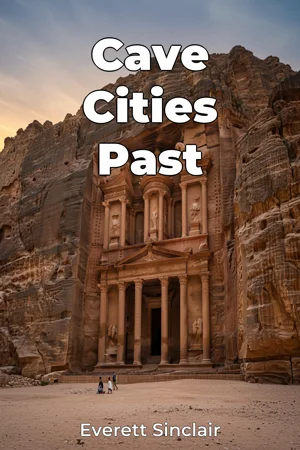
Imagine cities not built, but carved. "Cave Cities Past" delves into the fascinating world of ancient underground settlements, moving beyond well-known examples to explore the hidden depths of human ingenuity and adaptation. While sites like Cappadocia and the catacombs of Rome are familiar, this book redirects focus to lesser-known subterranean structures, particularly those surrounding and beneath the iconic city of Petra, Jordan. The book's central argument is that subsurface architecture represents more than just refuge; it served as a dynamic stage for complex social, economic, and ritual activities, crucial for understanding ancient urban life. This exploration is important because it challenges conventional understandings of ancient urban planning and resource management. By examining Petra's subsurface structures, the book reveals how the Nabataeans, the creators of Petra, skillfully integrated the natural topography with their architectural ambitions, creating a multi-layered urban environment. This integration involved sophisticated hydrological systems, storage spaces, and defensive measures, all carved directly into the rock. Understanding these elements is vital for appreciating the holistic nature of Nabataean civilization and its interaction with a challenging desert environment. "Cave Cities Past" begins by establishing the historical and geological context of Petra, outlining the unique sandstone formations that facilitated the creation of its underground spaces. It addresses the reader who may not be familiar with the Nabataean civilization. The book then examines specific examples of subsurface architecture, starting with water management systems, crucial for sustaining life in the arid climate. Next, it explores storage chambers and their role in ensuring food security and trade. Following this, it investigates the potential use of subterranean spaces for religious or ritual purposes, drawing on archaeological evidence and comparative studies of similar sites in the region. A significant portion of the book is dedicated to analyzing the construction techniques used to create these spaces, focusing on the tools, labor organization, and engineering knowledge required. The arguments presented are supported by archaeological surveys, detailed architectural analysis, and comparative studies of other cave cities from around the world. Unique primary data sources, including newly analyzed excavation reports and geological surveys of the Petra region, are incorporated. The book connects to several interdisciplinary fields, including archaeology, urban planning, and environmental studies. The archaeological perspective provides the empirical evidence for reconstructing the past. Urban planning helps analyze the spatial organization and functionality of the cave cities. Connecting to Environmental studies highlights the sustainable adaptation strategies employed by ancient societies. "Cave Cities Past" adopts a fact-based and analytical tone, aiming to provide a comprehensive and balanced account of Petra's subterranean world. The book will appeal to archaeologists, historians, architects, and anyone interested in ancient civilizations and urban planning. It offers new insights into the ingenuity and adaptability of past societies and provides a fresh perspective on the relationship between humans and their environment. The scope is primarily focused on Petra and its immediate surroundings, acknowledging that while comparative examples from other regions will be included for context, a comprehensive global survey of all cave cities is beyond the book's scope. This book aligns with established conventions in architectural history and archaeology. The genre expects a level of detailed analysis of material culture, a critical engagement with existing scholarship, and a clear presentation of evidence. The information can be practically applied to contemporary challenges related to sustainable urban development and resource management in arid regions. The study of ancient water management systems, for example, can inform modern strategies for water conservation and distribution. Ongoing debates about the interpretation of Nabataean religious practices and the precise function of certain subterranean spaces are addressed, offering balanced perspectives and encouraging further research.
Imagine cities not built, but carved. "Cave Cities Past" delves into the fascinating world of ancient underground settlements, moving beyond well-known examples to explore the hidden depths of human ingenuity and adaptation. While sites like Cappadocia and the catacombs of Rome are familiar, this book redirects focus to lesser-known subterranean structures, particularly those surrounding and beneath the iconic city of Petra, Jordan. The book's central argument is that subsurface architecture represents more than just refuge; it served as a dynamic stage for complex social, economic, and ritual activities, crucial for understanding ancient urban life. This exploration is important because it challenges conventional understandings of ancient urban planning and resource management. By examining Petra's subsurface structures, the book reveals how the Nabataeans, the creators of Petra, skillfully integrated the natural topography with their architectural ambitions, creating a multi-layered urban environment. This integration involved sophisticated hydrological systems, storage spaces, and defensive measures, all carved directly into the rock. Understanding these elements is vital for appreciating the holistic nature of Nabataean civilization and its interaction with a challenging desert environment. "Cave Cities Past" begins by establishing the historical and geological context of Petra, outlining the unique sandstone formations that facilitated the creation of its underground spaces. It addresses the reader who may not be familiar with the Nabataean civilization. The book then examines specific examples of subsurface architecture, starting with water management systems, crucial for sustaining life in the arid climate. Next, it explores storage chambers and their role in ensuring food security and trade. Following this, it investigates the potential use of subterranean spaces for religious or ritual purposes, drawing on archaeological evidence and comparative studies of similar sites in the region. A significant portion of the book is dedicated to analyzing the construction techniques used to create these spaces, focusing on the tools, labor organization, and engineering knowledge required. The arguments presented are supported by archaeological surveys, detailed architectural analysis, and comparative studies of other cave cities from around the world. Unique primary data sources, including newly analyzed excavation reports and geological surveys of the Petra region, are incorporated. The book connects to several interdisciplinary fields, including archaeology, urban planning, and environmental studies. The archaeological perspective provides the empirical evidence for reconstructing the past. Urban planning helps analyze the spatial organization and functionality of the cave cities. Connecting to Environmental studies highlights the sustainable adaptation strategies employed by ancient societies. "Cave Cities Past" adopts a fact-based and analytical tone, aiming to provide a comprehensive and balanced account of Petra's subterranean world. The book will appeal to archaeologists, historians, architects, and anyone interested in ancient civilizations and urban planning. It offers new insights into the ingenuity and adaptability of past societies and provides a fresh perspective on the relationship between humans and their environment. The scope is primarily focused on Petra and its immediate surroundings, acknowledging that while comparative examples from other regions will be included for context, a comprehensive global survey of all cave cities is beyond the book's scope. This book aligns with established conventions in architectural history and archaeology. The genre expects a level of detailed analysis of material culture, a critical engagement with existing scholarship, and a clear presentation of evidence. The information can be practically applied to contemporary challenges related to sustainable urban development and resource management in arid regions. The study of ancient water management systems, for example, can inform modern strategies for water conservation and distribution. Ongoing debates about the interpretation of Nabataean religious practices and the precise function of certain subterranean spaces are addressed, offering balanced perspectives and encouraging further research.
"Cave Cities Past" explores the hidden world of subsurface architecture, challenging conventional understandings of ancient urban planning by focusing on Petra and its surrounding underground settlements. The book argues that these structures were not mere refuges but served as dynamic spaces for complex social, economic, and ritual activities. The Nabataeans, Petra's creators, ingeniously integrated the natural sandstone formations with their architectural designs, revealing a multi-layered urban environment that included sophisticated hydrological systems carved directly into the rock. The book begins by establishing the historical and geological context of Petra, then progresses by examining specific examples of subsurface architecture, such as water management systems and storage chambers. It also investigates the potential use of subterranean spaces for religious purposes. This approach, supported by archaeological surveys and detailed architectural analysis, offers a comprehensive account of Petra's subterranean world and highlights the ingenuity and adaptability of past societies.
Book Details
ISBN
9788235223869
Publisher
Publifye AS
Your Licenses
You don't own any licenses for this book
Purchase a license below to unlock this book and download the EPUB.
Purchase License
Select a tier to unlock this book
Need bulk licensing?
Contact us for enterprise agreements.