
About This Book
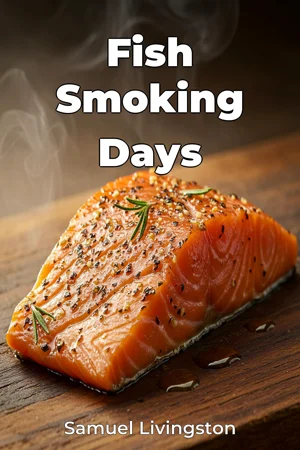
Have you ever wondered how coastal communities have preserved and enhanced the flavor of their fish for centuries? "Fish Smoking Days" delves into the intricate world of fish smoking, revealing its vital role in coastal diets across the globe. This book explores not only the techniques involved but also the scientific and cultural significance of this ancient practice. We begin by examining the fundamental methods of fish smoking, differentiating between cold smoking and hot smoking, detailing the equipment used, and explaining the crucial factors that influence the final product, such as wood type, temperature control, and humidity. This foundation allows readers to understand the science behind the transformation of fish into a preserved delicacy. These techniques are important as they represent a complex interplay of physics, chemistry, and microbiology, crucial for both preservation and flavor development. The book provides a historical context, tracing the origins of fish smoking back to early civilizations where it served as a primary method of preservation, enabling communities to survive through harsh seasons and trade surplus food. We explore how different cultures adapted smoking techniques to suit local fish species and available resources, creating a rich tapestry of smoking traditions. This section emphasizes the social importance of smoked fish as a dietary staple and a valuable commodity. "Fish Smoking Days" argues that fish smoking is more than just a culinary technique; it is a cornerstone of food security and cultural identity for many coastal populations. The core message is that understanding and preserving these traditional practices is vital in an era of increasing global food challenges and homogenized diets. The book is structured in three major parts. First, the introduction provides a detailed look at the science of smoking, including the chemical reactions that occur during the process and their effect on the fish's texture, flavor, and nutritional content. Following this, we delve into the practical aspects, offering step-by-step guides to various smoking methods suitable for different types of fish, alongside insights into troubleshooting common problems. Finally, the book culminates in an exploration of the role of smoked fish in contemporary diets, including its nutritional benefits, potential risks, and its place in modern cuisine. Recipes and serving suggestions are included. The arguments presented are supported by a combination of scientific literature, historical records, and interviews with experienced fish smokers from different regions. Data from nutritional studies and food safety analyses are presented to provide a balanced perspective on the benefits and risks associated with consuming smoked fish. The book also features original photographs and diagrams to illustrate the techniques and equipment discussed. "Fish Smoking Days" also connects to broader topics such as food science, anthropology, and environmental sustainability. By examining the environmental impact of different smoking practices and exploring the role of smoked fish in traditional diets, the book adds a new depth to the discussion of sustainable food systems. The book also discusses the impact of modern regulations on traditional smoking practices. The unique perspective offered in "Fish Smoking Days" lies in its interdisciplinary approach, combining scientific rigor with cultural sensitivity. While other books on fish smoking may focus solely on techniques or recipes, this book aims to provide a holistic understanding of the practice as a cultural, scientific, and culinary phenomenon. The book is written in an accessible style, designed to appeal to a broad audience, from culinary enthusiasts and home cooks to food scientists and researchers. The detailed explanations and step-by-step instructions will empower readers to try fish smoking themselves, while the scientific and historical insights will satisfy those seeking a deeper understanding of the topic. As a work of non-fiction in the cooking and life sciences genres, "Fish Smoking Days" focuses on factual accuracy, clear explanations, and evidence-based arguments. The scope is limited to traditional and small-scale fish smoking practices, excluding industrial-scale operations. The information presented in "Fish Smoking Days" has numerous real-world applications. Home cooks can use the techniques to create delicious and healthy meals. Small-scale fishermen can learn how to add value to their catch through smoking. Researchers can use the data and analysis to further investigate the nutritional and environmental aspects of fish smoking. Finally, "Fish Smoking Days" addresses some of the ongoing debates surrounding the safety of smoked fish, particularly concerning the potential for carcinogen formation during the smoking process. By presenting the latest research and offering practical tips for minimizing risks, the book aims to provide readers with the knowledge they need to make informed decisions about consuming smoked fish.
Have you ever wondered how coastal communities have preserved and enhanced the flavor of their fish for centuries? "Fish Smoking Days" delves into the intricate world of fish smoking, revealing its vital role in coastal diets across the globe. This book explores not only the techniques involved but also the scientific and cultural significance of this ancient practice. We begin by examining the fundamental methods of fish smoking, differentiating between cold smoking and hot smoking, detailing the equipment used, and explaining the crucial factors that influence the final product, such as wood type, temperature control, and humidity. This foundation allows readers to understand the science behind the transformation of fish into a preserved delicacy. These techniques are important as they represent a complex interplay of physics, chemistry, and microbiology, crucial for both preservation and flavor development. The book provides a historical context, tracing the origins of fish smoking back to early civilizations where it served as a primary method of preservation, enabling communities to survive through harsh seasons and trade surplus food. We explore how different cultures adapted smoking techniques to suit local fish species and available resources, creating a rich tapestry of smoking traditions. This section emphasizes the social importance of smoked fish as a dietary staple and a valuable commodity. "Fish Smoking Days" argues that fish smoking is more than just a culinary technique; it is a cornerstone of food security and cultural identity for many coastal populations. The core message is that understanding and preserving these traditional practices is vital in an era of increasing global food challenges and homogenized diets. The book is structured in three major parts. First, the introduction provides a detailed look at the science of smoking, including the chemical reactions that occur during the process and their effect on the fish's texture, flavor, and nutritional content. Following this, we delve into the practical aspects, offering step-by-step guides to various smoking methods suitable for different types of fish, alongside insights into troubleshooting common problems. Finally, the book culminates in an exploration of the role of smoked fish in contemporary diets, including its nutritional benefits, potential risks, and its place in modern cuisine. Recipes and serving suggestions are included. The arguments presented are supported by a combination of scientific literature, historical records, and interviews with experienced fish smokers from different regions. Data from nutritional studies and food safety analyses are presented to provide a balanced perspective on the benefits and risks associated with consuming smoked fish. The book also features original photographs and diagrams to illustrate the techniques and equipment discussed. "Fish Smoking Days" also connects to broader topics such as food science, anthropology, and environmental sustainability. By examining the environmental impact of different smoking practices and exploring the role of smoked fish in traditional diets, the book adds a new depth to the discussion of sustainable food systems. The book also discusses the impact of modern regulations on traditional smoking practices. The unique perspective offered in "Fish Smoking Days" lies in its interdisciplinary approach, combining scientific rigor with cultural sensitivity. While other books on fish smoking may focus solely on techniques or recipes, this book aims to provide a holistic understanding of the practice as a cultural, scientific, and culinary phenomenon. The book is written in an accessible style, designed to appeal to a broad audience, from culinary enthusiasts and home cooks to food scientists and researchers. The detailed explanations and step-by-step instructions will empower readers to try fish smoking themselves, while the scientific and historical insights will satisfy those seeking a deeper understanding of the topic. As a work of non-fiction in the cooking and life sciences genres, "Fish Smoking Days" focuses on factual accuracy, clear explanations, and evidence-based arguments. The scope is limited to traditional and small-scale fish smoking practices, excluding industrial-scale operations. The information presented in "Fish Smoking Days" has numerous real-world applications. Home cooks can use the techniques to create delicious and healthy meals. Small-scale fishermen can learn how to add value to their catch through smoking. Researchers can use the data and analysis to further investigate the nutritional and environmental aspects of fish smoking. Finally, "Fish Smoking Days" addresses some of the ongoing debates surrounding the safety of smoked fish, particularly concerning the potential for carcinogen formation during the smoking process. By presenting the latest research and offering practical tips for minimizing risks, the book aims to provide readers with the knowledge they need to make informed decisions about consuming smoked fish.
"Fish Smoking Days" explores the age-old practice of fish smoking, a cornerstone of coastal cuisine and food preservation. It delves into both the techniques and the science behind this traditional method, explaining how communities worldwide have relied on it to preserve their catch and enhance flavor. The book highlights the differences between cold smoking and hot smoking, crucial for understanding how temperature and wood type dramatically affect the final product. Readers will discover how smoking isn't just about taste, but also about the complex interplay of physics, chemistry, and microbiology that transforms fish into a preserved delicacy. The book traces the historical roots of fish smoking, from its origins as a survival strategy to its evolution into a cultural art form. Different chapters explore how various cultures adapted smoking techniques to local fish species and available resources, creating unique and diverse traditions. The book then transitions into a practical guide, offering step-by-step instructions for various smoking methods and addressing common challenges. Ultimately, "Fish Smoking Days" argues that fish smoking is more than just a culinary technique; it's a vital part of food security and cultural identity. By combining scientific insights with practical knowledge and cultural context, the book offers a unique and comprehensive understanding of this fascinating practice, making it valuable for both culinary enthusiasts and those interested in food science and biology.
Book Details
ISBN
9788235223616
Publisher
Publifye AS
Your Licenses
You don't own any licenses for this book
Purchase a license below to unlock this book and download the EPUB.
Purchase License
Select a tier to unlock this book
Need bulk licensing?
Contact us for enterprise agreements.