
About This Book
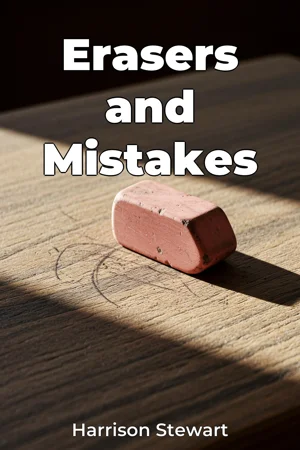
Have you ever stopped to consider the humble eraser, that ubiquitous tool found on desks and in pencil cases worldwide? This book, "Erasers and Mistakes," delves into the surprisingly rich history of the eraser, exploring its invention, evolution, and profound influence on education and beyond. This book addresses two key topics: first, the historical development of erasers from early natural materials to modern synthetic compounds. Second, we examine the eraser's impact on educational practices, artistic expression, and the cultural perception of mistakes. These topics are significant because they reveal how a seemingly simple object has shaped the way we learn, create, and interact with the world around us. Understanding the eraser's story offers a unique lens through which to view broader societal changes in technology, education, and attitudes towards error. Before the advent of erasers, removing pencil marks was a messy and often unsatisfactory affair. Bread crumbs were commonly used, along with other abrasive materials that often damaged the writing surface. This book will explore the historical context surrounding the need for a more efficient and effective erasing tool, examining the societal shifts that drove innovation in this area. The central argument of "Erasers and Mistakes" is that the eraser, far from being a mere corrective tool, represents a fundamental shift in our relationship with learning and creativity. By providing a means to easily rectify errors, the eraser has fostered a culture of experimentation and revision, encouraging individuals to embrace mistakes as part of the learning process. The book unfolds in a structured manner. Initially, we introduce the primitive methods employed for erasing before the development of rubber erasers. We then move into the discovery of rubber and its application for erasing, including early patents and manufacturing processes. The subsequent chapters detail the evolution of eraser technology, from the introduction of the pencil-eraser combination to the development of specialized erasers for different media. The latter part of the book is dedicated to the eraser's role in education, exploring how its availability has influenced teaching methodologies and students' attitudes toward mistakes. Finally, we examine the cultural implications of the eraser, considering its impact on artistic expression, design, and the broader concept of perfectionism. The information presented is underpinned by extensive research drawn from historical records, patent archives, scientific literature on rubber production, and educational studies. We also incorporate insights from interviews with historians of technology and educators to provide a comprehensive and nuanced perspective. "Erasers and Mistakes" also connects to several other disciplines. It touches upon materials science through the examination of rubber and polymer chemistry, economic history through the analysis of the eraser manufacturing industry, and educational psychology by investigating the impact of error correction on learning. A unique aspect of this book is its blend of historical analysis with practical insights into the psychology of learning. It's written in an accessible style suitable for students, educators, and anyone curious about the history of everyday objects. While focusing primarily on the Western history of erasers, the book acknowledges the global context of innovation and manufacturing. This book deliberately limits its scope to the history and impact of physical erasers, omitting digital or software-based "erasers." The information in "Erasers and Mistakes" can assist educators in understanding the historical context of the tools they use daily. It can also encourage a renewed appreciation for the role of mistakes in the learning process. By understanding the eraser’s history, we can better appreciate its role and impact.
Have you ever stopped to consider the humble eraser, that ubiquitous tool found on desks and in pencil cases worldwide? This book, "Erasers and Mistakes," delves into the surprisingly rich history of the eraser, exploring its invention, evolution, and profound influence on education and beyond. This book addresses two key topics: first, the historical development of erasers from early natural materials to modern synthetic compounds. Second, we examine the eraser's impact on educational practices, artistic expression, and the cultural perception of mistakes. These topics are significant because they reveal how a seemingly simple object has shaped the way we learn, create, and interact with the world around us. Understanding the eraser's story offers a unique lens through which to view broader societal changes in technology, education, and attitudes towards error. Before the advent of erasers, removing pencil marks was a messy and often unsatisfactory affair. Bread crumbs were commonly used, along with other abrasive materials that often damaged the writing surface. This book will explore the historical context surrounding the need for a more efficient and effective erasing tool, examining the societal shifts that drove innovation in this area. The central argument of "Erasers and Mistakes" is that the eraser, far from being a mere corrective tool, represents a fundamental shift in our relationship with learning and creativity. By providing a means to easily rectify errors, the eraser has fostered a culture of experimentation and revision, encouraging individuals to embrace mistakes as part of the learning process. The book unfolds in a structured manner. Initially, we introduce the primitive methods employed for erasing before the development of rubber erasers. We then move into the discovery of rubber and its application for erasing, including early patents and manufacturing processes. The subsequent chapters detail the evolution of eraser technology, from the introduction of the pencil-eraser combination to the development of specialized erasers for different media. The latter part of the book is dedicated to the eraser's role in education, exploring how its availability has influenced teaching methodologies and students' attitudes toward mistakes. Finally, we examine the cultural implications of the eraser, considering its impact on artistic expression, design, and the broader concept of perfectionism. The information presented is underpinned by extensive research drawn from historical records, patent archives, scientific literature on rubber production, and educational studies. We also incorporate insights from interviews with historians of technology and educators to provide a comprehensive and nuanced perspective. "Erasers and Mistakes" also connects to several other disciplines. It touches upon materials science through the examination of rubber and polymer chemistry, economic history through the analysis of the eraser manufacturing industry, and educational psychology by investigating the impact of error correction on learning. A unique aspect of this book is its blend of historical analysis with practical insights into the psychology of learning. It's written in an accessible style suitable for students, educators, and anyone curious about the history of everyday objects. While focusing primarily on the Western history of erasers, the book acknowledges the global context of innovation and manufacturing. This book deliberately limits its scope to the history and impact of physical erasers, omitting digital or software-based "erasers." The information in "Erasers and Mistakes" can assist educators in understanding the historical context of the tools they use daily. It can also encourage a renewed appreciation for the role of mistakes in the learning process. By understanding the eraser’s history, we can better appreciate its role and impact.
"Erasers and Mistakes" explores the fascinating history of erasers, revealing how this seemingly simple tool has profoundly shaped education and our approach to mistakes. Before erasers, removing pencil marks involved messy methods like using bread crumbs, which often damaged the paper. The book examines how the invention of rubber erasers revolutionized error correction, fostering a culture of experimentation and revision in learning and creativity. The book traces the historical development of erasers, from early natural materials to the rubber erasers and the eventual pencil-eraser combination. It delves into the impact of erasers on educational practices and teaching methodologies. By understanding the historical development and cultural impact of erasers, readers gain a new appreciation for their role in our daily lives and in the broader context of technology and education. The book begins with primitive erasing methods and progresses to the discovery of rubber and its application in erasers. Later chapters detail the technology's evolution and the eraser's influence on education, artistic expression, and attitudes toward perfectionism. "Erasers and Mistakes" provides a unique lens through which to view societal changes and the psychology of learning, making it a valuable resource for educators and anyone interested in the history of invention.
Book Details
ISBN
9788235223487
Publisher
Publifye AS
Your Licenses
You don't own any licenses for this book
Purchase a license below to unlock this book and download the EPUB.
Purchase License
Select a tier to unlock this book
Need bulk licensing?
Contact us for enterprise agreements.