
About This Book
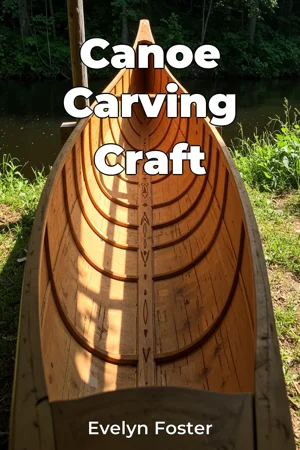
Have you ever wondered about the silent partnership between a river and the people who depend on it? 'Canoe Carving Craft' delves into this intricate relationship by exploring the canoe-building traditions of river families whose lives are interwoven with the waterways they navigate for fishing and transport. This book examines the historical and practical significance of canoe carving, revealing how this craft has shaped not only transportation methods but also community structures and cultural identities. This book primarily explores the canoe construction techniques of specific river communities, highlighting the deep knowledge of materials and environmental awareness embedded within these practices. It also examines the historical evolution of these canoeing traditions, focusing on how they have adapted to changing social, economic, and environmental circumstances. Finally, the work explores the significance of canoe building as a tangible form of cultural heritage, connecting generations and preserving vital skills. These topics are vital because they offer insight into the sustainable practices of indigenous communities and provide a model for understanding the relationship between people and their environment. Understanding this craft requires some familiarization with basic woodworking principles and an awareness of the ecological systems of riverine environments. With that in mind, within these pages is a deep dive into the historical context within which these traditions developed, from the earliest dugout canoes to the refined birchbark canoes that became crucial for trade and exploration, and the cultural traditions connected to canoe building. Our central argument posits that canoe carving is more than just a craft; it is a living archive of ecological knowledge, cultural resilience, and community identity. The book demonstrates how the canoe embodies a community’s understanding of its environment and its ability to adapt and thrive within it. This understanding is vital for appreciating the cultural ingenuity of riverine communities and for promoting sustainable interactions with natural resources. The book begins by introducing various canoe styles and the communities that create them, explaining the foundational concepts of canoe design and construction. Then, it delves into major themes, examining: (1) Material sourcing and preparation, detailing how river families sustainably harvest and process natural materials like wood, bark, and resin; (2) Construction techniques, providing step-by-step explanations of the carving, shaping, and assembly processes, enriched with photographs and illustrations; (3) Cultural and spiritual significance, examining the role of canoes in ceremonies, storytelling, and the transmission of traditional knowledge. The final chapters synthesize these arguments by exploring the role of canoe carving in contemporary challenges, such as cultural preservation, ecological conservation, and sustainable tourism, and then culminates with practical implications for modern craft enthusiasts, educators, and policymakers. The evidence presented draws from ethnographic research, oral histories, archival documents, and firsthand observations of canoe-building practices. The book includes unique data collected through interviews with master canoe builders, providing invaluable insights into their techniques, philosophies, and personal experiences. 'Canoe Carving Craft' also intersects with several other fields, including anthropology, ecology, and environmental studies. Anthropologically, it explores the cultural meanings embedded in material objects. Ecologically, it examines the sustainable resource management practices of river communities. Environmentally, it highlights the importance of preserving traditional knowledge for ecological conservation. These interdisciplinary connections strengthen the argument that canoe carving represents a holistic approach to living in harmony with nature. This book takes a unique approach by combining detailed technical descriptions of canoe-building techniques with in-depth analyses of the craft's cultural and ecological significance. It avoids romanticizing traditional practices, instead presenting a nuanced and realistic portrayal of the challenges and opportunities faced by river families in preserving their cultural heritage. The writing style balances scholarly rigor with accessibility, making the book engaging for both academic researchers and general readers interested in crafts, history, and indigenous cultures. The target audience includes craft enthusiasts, history buffs, cultural heritage professionals, environmental educators, and anyone interested in learning about the sustainable practices of river communities. As a work of Crafts & Hobbies and History, the book conforms to expectations by providing detailed instructions and historical context, supported by visual aids. While covering a range of canoe-building traditions, the book primarily focuses on communities in specific geographic regions, acknowledging that canoe carving is a diverse practice with unique variations across the globe. The information provided in the book can be applied in various real-world contexts, such as heritage tourism initiatives, craft education programs, and community-based conservation projects. By showcasing the value of traditional knowledge, the book aims to inspire a renewed appreciation for the sustainable practices of river communities. Within the world of canoe building, there are ongoing debates about the appropriation of indigenous crafts and the balance between cultural preservation and economic development. This book engages with these debates by promoting respectful collaboration and ethical engagement with river communities.
Have you ever wondered about the silent partnership between a river and the people who depend on it? 'Canoe Carving Craft' delves into this intricate relationship by exploring the canoe-building traditions of river families whose lives are interwoven with the waterways they navigate for fishing and transport. This book examines the historical and practical significance of canoe carving, revealing how this craft has shaped not only transportation methods but also community structures and cultural identities. This book primarily explores the canoe construction techniques of specific river communities, highlighting the deep knowledge of materials and environmental awareness embedded within these practices. It also examines the historical evolution of these canoeing traditions, focusing on how they have adapted to changing social, economic, and environmental circumstances. Finally, the work explores the significance of canoe building as a tangible form of cultural heritage, connecting generations and preserving vital skills. These topics are vital because they offer insight into the sustainable practices of indigenous communities and provide a model for understanding the relationship between people and their environment. Understanding this craft requires some familiarization with basic woodworking principles and an awareness of the ecological systems of riverine environments. With that in mind, within these pages is a deep dive into the historical context within which these traditions developed, from the earliest dugout canoes to the refined birchbark canoes that became crucial for trade and exploration, and the cultural traditions connected to canoe building. Our central argument posits that canoe carving is more than just a craft; it is a living archive of ecological knowledge, cultural resilience, and community identity. The book demonstrates how the canoe embodies a community’s understanding of its environment and its ability to adapt and thrive within it. This understanding is vital for appreciating the cultural ingenuity of riverine communities and for promoting sustainable interactions with natural resources. The book begins by introducing various canoe styles and the communities that create them, explaining the foundational concepts of canoe design and construction. Then, it delves into major themes, examining: (1) Material sourcing and preparation, detailing how river families sustainably harvest and process natural materials like wood, bark, and resin; (2) Construction techniques, providing step-by-step explanations of the carving, shaping, and assembly processes, enriched with photographs and illustrations; (3) Cultural and spiritual significance, examining the role of canoes in ceremonies, storytelling, and the transmission of traditional knowledge. The final chapters synthesize these arguments by exploring the role of canoe carving in contemporary challenges, such as cultural preservation, ecological conservation, and sustainable tourism, and then culminates with practical implications for modern craft enthusiasts, educators, and policymakers. The evidence presented draws from ethnographic research, oral histories, archival documents, and firsthand observations of canoe-building practices. The book includes unique data collected through interviews with master canoe builders, providing invaluable insights into their techniques, philosophies, and personal experiences. 'Canoe Carving Craft' also intersects with several other fields, including anthropology, ecology, and environmental studies. Anthropologically, it explores the cultural meanings embedded in material objects. Ecologically, it examines the sustainable resource management practices of river communities. Environmentally, it highlights the importance of preserving traditional knowledge for ecological conservation. These interdisciplinary connections strengthen the argument that canoe carving represents a holistic approach to living in harmony with nature. This book takes a unique approach by combining detailed technical descriptions of canoe-building techniques with in-depth analyses of the craft's cultural and ecological significance. It avoids romanticizing traditional practices, instead presenting a nuanced and realistic portrayal of the challenges and opportunities faced by river families in preserving their cultural heritage. The writing style balances scholarly rigor with accessibility, making the book engaging for both academic researchers and general readers interested in crafts, history, and indigenous cultures. The target audience includes craft enthusiasts, history buffs, cultural heritage professionals, environmental educators, and anyone interested in learning about the sustainable practices of river communities. As a work of Crafts & Hobbies and History, the book conforms to expectations by providing detailed instructions and historical context, supported by visual aids. While covering a range of canoe-building traditions, the book primarily focuses on communities in specific geographic regions, acknowledging that canoe carving is a diverse practice with unique variations across the globe. The information provided in the book can be applied in various real-world contexts, such as heritage tourism initiatives, craft education programs, and community-based conservation projects. By showcasing the value of traditional knowledge, the book aims to inspire a renewed appreciation for the sustainable practices of river communities. Within the world of canoe building, there are ongoing debates about the appropriation of indigenous crafts and the balance between cultural preservation and economic development. This book engages with these debates by promoting respectful collaboration and ethical engagement with river communities.
"Canoe Carving Craft" explores the deep connection between river communities and their environment through the art of canoe building. More than just a means of transportation, canoe carving embodies cultural resilience, ecological knowledge, and community identity, acting as a living archive of a people's history and relationship with nature. The book reveals intriguing facts, such as how the designs of canoes reflect a community's intimate understanding of local waterways and how the choice of materials showcases sustainable harvesting practices passed down through generations. The book progresses through different aspects of canoe carving, starting with an introduction to various canoe styles and communities, then moving into material sourcing, construction techniques, and the cultural and spiritual significance of canoes. It uniquely combines detailed technical descriptions with in-depth analyses of the craft's cultural and ecological importance. This approach allows readers to understand not only how canoes are made but also why they are vital to the identity and survival of river families. Through ethnographic research, oral histories, and firsthand observations, "Canoe Carving Craft" presents a nuanced portrayal of canoe-building traditions. It avoids romanticizing the craft, instead providing a realistic view of the challenges and opportunities faced by river communities in preserving their cultural heritage. This makes the book valuable for craft enthusiasts, history buffs, and anyone interested in learning about sustainable practices and indigenous crafts.
Book Details
ISBN
9788235223401
Publisher
Publifye AS
Your Licenses
You don't own any licenses for this book
Purchase a license below to unlock this book and download the EPUB.
Purchase License
Select a tier to unlock this book
Need bulk licensing?
Contact us for enterprise agreements.