
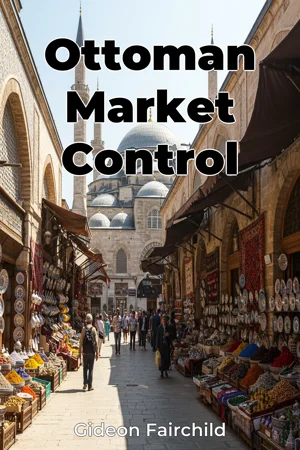
About This Book
How did the Ottoman Empire, once a dominant force in global trade, sow the seeds of its own economic decline? "Ottoman Market Control" delves into the intricate relationship between the Empire's strategic domination of trade routes, its evolving taxation systems, and the patterns that ultimately led to economic stagnation. This book investigates the critical period when Ottoman policies, initially designed to bolster the Empire's wealth and power, inadvertently stifled innovation and adaptability. Central to our analysis are three interconnected themes: the control of strategic trade routes, the mechanics of Ottoman taxation, and the long-term consequences for economic growth. The control of vital arteries such as the Silk Road and Mediterranean sea lanes provided immense revenue but also created dependencies and vulnerabilities. The intricacies of the Ottoman taxation system, ranging from the devşirme system to customs duties, had a profound impact on economic activity, influencing the distribution of wealth and resources. Understanding these themes is crucial because they illuminate how even seemingly successful policies can lead to unforeseen and detrimental outcomes for an empire’s long-term economic health. This book provides a historical examination of Ottoman economic policies from the 15th to the 18th centuries. It draws upon primary sources such as Ottoman administrative records, trade agreements, and contemporary accounts from travelers and merchants, as well as secondary scholarship in economic history and Ottoman studies. The central argument posits that while the Ottoman Empire initially benefited from its control over key trade routes and its highly structured taxation system, these policies gradually fostered an environment that discouraged competition, innovation, and diversification, ultimately contributing to its economic stagnation relative to Europe. The book unfolds in three parts. The first section introduces the Ottoman Empire's rise to economic prominence through its strategic location and efficient resource management. It details how control over trade routes and implementation of various tax systems fueled expansion and consolidated power. The second section examines the evolution of these systems, focusing on the specific policies and their effects on different sectors of the economy, namely agriculture, manufacturing, and trade. This includes a detailed analysis of customs policies, internal tariffs, and their impact on merchant activity. The final section explores the consequences of these economic policies, examining the gradual decline in Ottoman competitiveness, the rise of European mercantile powers, and the internal factors that exacerbated the empire's economic woes. This leads to a discussion of how these patterns contributed to the empire’s long-term decline, resulting in increasing economic dependence on Europe. The evidence presented includes quantitative data on trade volumes, tax revenues, and prices, as well as qualitative analysis of Ottoman legal and administrative documents. Unique data comes from the Ottoman archives, which gives insight into the implementation and reception of economic policies at various levels of society. This book also bridges the gap between economic history, political science, and Ottoman studies, offering insights into how political decisions shape economic outcomes and vice versa. Furthermore, it offers a fresh perspective by examining Ottoman economic policies not as isolated events, but as interconnected systems with long-term consequences. Written in an analytical and academic tone, "Ottoman Market Control" is aimed at scholars, students, and general readers interested in economic history, Ottoman history, and the dynamics of trade and taxation within empires. This book offers valuable insights for understanding the challenges of economic management and the unintended consequences of policy decisions. The book’s scope is limited to the economic aspects of Ottoman history, specifically focusing on trade and taxation. While it acknowledges the influence of political, social, and military factors, it primarily focuses on economic policies and their quantifiable effects. The lessons from the Ottoman experience have real-world applications for understanding contemporary challenges in economic development and trade policy, demonstrating how even dominant powers can face economic decline if they fail to adapt to changing global dynamics. This analysis contributes to ongoing discussions about economic diversification, innovation policy, and the challenges of maintaining competitiveness in a globalized world.
How did the Ottoman Empire, once a dominant force in global trade, sow the seeds of its own economic decline? "Ottoman Market Control" delves into the intricate relationship between the Empire's strategic domination of trade routes, its evolving taxation systems, and the patterns that ultimately led to economic stagnation. This book investigates the critical period when Ottoman policies, initially designed to bolster the Empire's wealth and power, inadvertently stifled innovation and adaptability. Central to our analysis are three interconnected themes: the control of strategic trade routes, the mechanics of Ottoman taxation, and the long-term consequences for economic growth. The control of vital arteries such as the Silk Road and Mediterranean sea lanes provided immense revenue but also created dependencies and vulnerabilities. The intricacies of the Ottoman taxation system, ranging from the devşirme system to customs duties, had a profound impact on economic activity, influencing the distribution of wealth and resources. Understanding these themes is crucial because they illuminate how even seemingly successful policies can lead to unforeseen and detrimental outcomes for an empire’s long-term economic health. This book provides a historical examination of Ottoman economic policies from the 15th to the 18th centuries. It draws upon primary sources such as Ottoman administrative records, trade agreements, and contemporary accounts from travelers and merchants, as well as secondary scholarship in economic history and Ottoman studies. The central argument posits that while the Ottoman Empire initially benefited from its control over key trade routes and its highly structured taxation system, these policies gradually fostered an environment that discouraged competition, innovation, and diversification, ultimately contributing to its economic stagnation relative to Europe. The book unfolds in three parts. The first section introduces the Ottoman Empire's rise to economic prominence through its strategic location and efficient resource management. It details how control over trade routes and implementation of various tax systems fueled expansion and consolidated power. The second section examines the evolution of these systems, focusing on the specific policies and their effects on different sectors of the economy, namely agriculture, manufacturing, and trade. This includes a detailed analysis of customs policies, internal tariffs, and their impact on merchant activity. The final section explores the consequences of these economic policies, examining the gradual decline in Ottoman competitiveness, the rise of European mercantile powers, and the internal factors that exacerbated the empire's economic woes. This leads to a discussion of how these patterns contributed to the empire’s long-term decline, resulting in increasing economic dependence on Europe. The evidence presented includes quantitative data on trade volumes, tax revenues, and prices, as well as qualitative analysis of Ottoman legal and administrative documents. Unique data comes from the Ottoman archives, which gives insight into the implementation and reception of economic policies at various levels of society. This book also bridges the gap between economic history, political science, and Ottoman studies, offering insights into how political decisions shape economic outcomes and vice versa. Furthermore, it offers a fresh perspective by examining Ottoman economic policies not as isolated events, but as interconnected systems with long-term consequences. Written in an analytical and academic tone, "Ottoman Market Control" is aimed at scholars, students, and general readers interested in economic history, Ottoman history, and the dynamics of trade and taxation within empires. This book offers valuable insights for understanding the challenges of economic management and the unintended consequences of policy decisions. The book’s scope is limited to the economic aspects of Ottoman history, specifically focusing on trade and taxation. While it acknowledges the influence of political, social, and military factors, it primarily focuses on economic policies and their quantifiable effects. The lessons from the Ottoman experience have real-world applications for understanding contemporary challenges in economic development and trade policy, demonstrating how even dominant powers can face economic decline if they fail to adapt to changing global dynamics. This analysis contributes to ongoing discussions about economic diversification, innovation policy, and the challenges of maintaining competitiveness in a globalized world.
"Ottoman Market Control" explores the economic policies of the Ottoman Empire, focusing on how initial successes in controlling trade routes and implementing taxation systems eventually led to economic stagnation. The book examines the period from the 15th to the 18th centuries, detailing how the Empire's dominance over vital arteries like the Silk Road and Mediterranean Sea lanes, while initially lucrative, created dependencies. Similarly, the intricate Ottoman taxation system, including customs duties, significantly impacted the distribution of wealth and resources. The book uniquely bridges economic history, political science, and Ottoman studies, offering insights into the interconnectedness of political decisions and economic outcomes. It challenges the notion of isolated economic events by presenting Ottoman economic policies as interconnected systems with long-term consequences. Progressing through three sections, the book first introduces the Empire's rise, then examines the evolution of economic systems and their effects on sectors like agriculture and trade, and finally explores the consequences of these policies, like the rise of European mercantile powers. Drawing from Ottoman administrative records, trade agreements, and contemporary accounts, the book argues that policies designed to bolster wealth inadvertently stifled innovation and adaptability. This led to a gradual decline in Ottoman competitiveness and increasing economic dependence on Europe. The book provides valuable lessons for understanding contemporary challenges in economic development and trade policy, demonstrating how dominant powers can decline if they fail to adapt.
Book Details
ISBN
9788235223371
Publisher
Publifye AS
Your Licenses
You don't own any licenses for this book
Purchase a license below to unlock this book and download the EPUB.
Purchase License
Select a tier to unlock this book
Need bulk licensing?
Contact us for enterprise agreements.