
About This Book
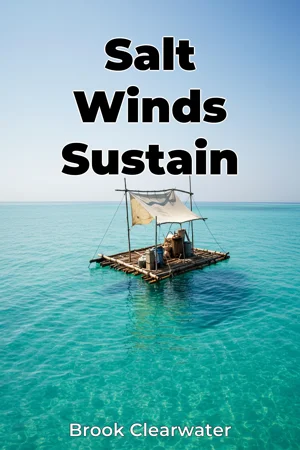
Imagine being adrift at sea, with the relentless sun above and the vast, unforgiving ocean all around. What would it take to survive? "Salt Winds Sustain" explores precisely this scenario, offering a comprehensive analysis of oceanic survival strategies centered around rainwater harvesting and shade creation. These seemingly simple techniques are, in reality, complex interactions of environmental science, geographic understanding, and human ingenuity. This book delves into two critical aspects of maritime survival: securing potable water and mitigating the harmful effects of solar radiation. The importance of these topics cannot be overstated. Dehydration and heatstroke are among the most immediate threats to castaways, making effective rainwater collection and shade provision essential for prolonging life and maximizing chances of rescue. We examine the historical context of these survival methods, drawing upon accounts of explorers, sailors, and survivors throughout history while contrasting these traditional methods with modern techniques and materials. The book presumes a foundational understanding of basic meteorological principles and the physiological effects of dehydration and heat exposure on the human body. "Salt Winds Sustain" argues that even in the most desolate oceanic environments, survival is possible with readily available resources and a comprehensive understanding of the natural world. It's a testament to human resilience and adaptability when faced with extreme adversity. The book is structured in three major parts. Part one introduces the fundamental principles of rainwater harvesting at sea, examining different collection methods, from rudimentary tarps and sails to more advanced condensation techniques. It analyzes the effectiveness of each method under varying weather conditions and sea states. This section also addresses the crucial issue of water purification, exploring methods for removing salt and other contaminants to render collected rainwater safe for consumption. Part two focuses on shade creation and heat management. We investigate the effectiveness of different improvised shelters, considering factors such as material availability, construction complexity, and thermal performance. The section delves into the science of solar radiation and heat transfer, explaining how shade structures can minimize heat stress and prevent heatstroke. Part three synthesizes the information from the previous sections, presenting integrated survival strategies that combine rainwater harvesting and shade creation for optimal effectiveness. It examines case studies of real-life survival scenarios, analyzing the factors that contributed to success or failure. The conclusion presents practical guidelines for implementing these survival techniques in a variety of maritime environments. The book draws upon a wide range of sources, including meteorological data, physiological studies, and firsthand accounts of ocean survival. Unique datasets, such as historical ship logs and survivor testimonies, are analyzed to provide empirical evidence for the effectiveness of different survival techniques. Computational modeling is also used to simulate heat transfer and water collection rates under various environmental conditions. "Salt Winds Sustain" connects to several interdisciplinary fields, including meteorology, engineering, and human physiology. The book's analysis of rainwater harvesting draws upon meteorological principles to predict rainfall patterns and optimize collection strategies. The design and construction of shade structures incorporate engineering concepts of structural stability and thermal performance. The discussion of dehydration and heatstroke relies on an understanding of human physiology and the body's response to extreme environmental stress. These interdisciplinary connections enrich the argument while demonstrating the holistic nature of survival in a maritime setting. The book offers a practical, evidence-based approach to ocean survival, emphasizing the importance of preparedness and knowledge. This sets it apart from purely theoretical discussions of survival techniques. The book adopts a formal yet accessible tone, presenting complex scientific concepts in a clear and understandable manner. It is intended for a wide audience, including sailors, adventurers, survival enthusiasts, and anyone interested in the science of ocean survival. It is valuable to those seeking practical knowledge and a deeper understanding of the challenges and possibilities of maritime environments. "Salt Winds Sustain" aligns with the conventions of scientific writing within Earth Sciences and Geography, prioritizing data-driven analysis and clear communication of findings. The scope of the book is limited to the specific techniques of rainwater harvesting and shade creation, acknowledging that other survival skills, such as navigation and signaling, are also important but beyond the book’s focus. The information presented in "Salt Winds Sustain" can be applied in a variety of real-world scenarios, from preparing for offshore voyages to responding to maritime emergencies. By providing readers with a comprehensive understanding of rainwater harvesting and shade creation, this book empowers them to survive and thrive in the face of adversity. While the fundamental principles of rainwater harvesting and shade creation are well-established, there are ongoing debates with regards to the efficiency of certain improvised techniques and the long-term physiological effects of consuming minimally purified rainwater. We will critically examine these debates, presenting a balanced perspective based on the available evidence.
Imagine being adrift at sea, with the relentless sun above and the vast, unforgiving ocean all around. What would it take to survive? "Salt Winds Sustain" explores precisely this scenario, offering a comprehensive analysis of oceanic survival strategies centered around rainwater harvesting and shade creation. These seemingly simple techniques are, in reality, complex interactions of environmental science, geographic understanding, and human ingenuity. This book delves into two critical aspects of maritime survival: securing potable water and mitigating the harmful effects of solar radiation. The importance of these topics cannot be overstated. Dehydration and heatstroke are among the most immediate threats to castaways, making effective rainwater collection and shade provision essential for prolonging life and maximizing chances of rescue. We examine the historical context of these survival methods, drawing upon accounts of explorers, sailors, and survivors throughout history while contrasting these traditional methods with modern techniques and materials. The book presumes a foundational understanding of basic meteorological principles and the physiological effects of dehydration and heat exposure on the human body. "Salt Winds Sustain" argues that even in the most desolate oceanic environments, survival is possible with readily available resources and a comprehensive understanding of the natural world. It's a testament to human resilience and adaptability when faced with extreme adversity. The book is structured in three major parts. Part one introduces the fundamental principles of rainwater harvesting at sea, examining different collection methods, from rudimentary tarps and sails to more advanced condensation techniques. It analyzes the effectiveness of each method under varying weather conditions and sea states. This section also addresses the crucial issue of water purification, exploring methods for removing salt and other contaminants to render collected rainwater safe for consumption. Part two focuses on shade creation and heat management. We investigate the effectiveness of different improvised shelters, considering factors such as material availability, construction complexity, and thermal performance. The section delves into the science of solar radiation and heat transfer, explaining how shade structures can minimize heat stress and prevent heatstroke. Part three synthesizes the information from the previous sections, presenting integrated survival strategies that combine rainwater harvesting and shade creation for optimal effectiveness. It examines case studies of real-life survival scenarios, analyzing the factors that contributed to success or failure. The conclusion presents practical guidelines for implementing these survival techniques in a variety of maritime environments. The book draws upon a wide range of sources, including meteorological data, physiological studies, and firsthand accounts of ocean survival. Unique datasets, such as historical ship logs and survivor testimonies, are analyzed to provide empirical evidence for the effectiveness of different survival techniques. Computational modeling is also used to simulate heat transfer and water collection rates under various environmental conditions. "Salt Winds Sustain" connects to several interdisciplinary fields, including meteorology, engineering, and human physiology. The book's analysis of rainwater harvesting draws upon meteorological principles to predict rainfall patterns and optimize collection strategies. The design and construction of shade structures incorporate engineering concepts of structural stability and thermal performance. The discussion of dehydration and heatstroke relies on an understanding of human physiology and the body's response to extreme environmental stress. These interdisciplinary connections enrich the argument while demonstrating the holistic nature of survival in a maritime setting. The book offers a practical, evidence-based approach to ocean survival, emphasizing the importance of preparedness and knowledge. This sets it apart from purely theoretical discussions of survival techniques. The book adopts a formal yet accessible tone, presenting complex scientific concepts in a clear and understandable manner. It is intended for a wide audience, including sailors, adventurers, survival enthusiasts, and anyone interested in the science of ocean survival. It is valuable to those seeking practical knowledge and a deeper understanding of the challenges and possibilities of maritime environments. "Salt Winds Sustain" aligns with the conventions of scientific writing within Earth Sciences and Geography, prioritizing data-driven analysis and clear communication of findings. The scope of the book is limited to the specific techniques of rainwater harvesting and shade creation, acknowledging that other survival skills, such as navigation and signaling, are also important but beyond the book’s focus. The information presented in "Salt Winds Sustain" can be applied in a variety of real-world scenarios, from preparing for offshore voyages to responding to maritime emergencies. By providing readers with a comprehensive understanding of rainwater harvesting and shade creation, this book empowers them to survive and thrive in the face of adversity. While the fundamental principles of rainwater harvesting and shade creation are well-established, there are ongoing debates with regards to the efficiency of certain improvised techniques and the long-term physiological effects of consuming minimally purified rainwater. We will critically examine these debates, presenting a balanced perspective based on the available evidence.
"Salt Winds Sustain" explores critical ocean survival strategies, focusing on rainwater harvesting and shade creation. The book highlights how these techniques, rooted in environmental science and geographic understanding, significantly increase a castaway's chances of survival. Did you know that dehydration and heatstroke are among the most immediate threats at sea? The book delves into effective methods for water purification and examines the science of solar radiation to mitigate heat stress. This book uniquely combines historical accounts with modern techniques, offering a practical, evidence-based approach. It progresses by first introducing rainwater harvesting methods, then focusing on shade creation and heat management, and finally synthesizing these strategies with real-life case studies. The book considers factors like material availability, construction complexity, and thermal performance, incorporating keywords such as the oceanic environment and Earth Sciences.
Book Details
ISBN
9788235223272
Publisher
Publifye AS
Your Licenses
You don't own any licenses for this book
Purchase a license below to unlock this book and download the EPUB.
Purchase License
Select a tier to unlock this book
Need bulk licensing?
Contact us for enterprise agreements.