
About This Book
Could the unprecedented joblessness of the Great Depression happen again? "Unemployment Soars High" delves into the economic and social catastrophe of the 1930s United States, focusing primarily on the staggering peak unemployment rate of 25% reached in 1933. This book meticulously examines the causes, consequences, and potential lessons learned from this period of profound economic hardship. It is essential to understand the anatomy of such a crisis to mitigate the risk of similar events recurring in the future. The central argument of "Unemployment Soars High" is that the confluence of specific governmental policies, international economic pressures, and structural weaknesses within the American economy created the conditions for the unparalleled unemployment levels of that era. Understanding these interwoven factors provides a vital framework for analyzing modern economic vulnerabilities. We aim to offer not just a historical account, but also a cautionary narrative about the potential for policy missteps to amplify economic downturns. The book is structured into three major sections. The first section introduces the pre-Depression economic landscape, including the roaring twenties, speculative bubbles, and early warning signs ignored by many. The second section provides a detailed chronicle of the Depression years, with a strong emphasis on statistical data. The analysis will incorporate labor statistics from the period, alongside contemporary accounts and scholarly interpretations. This core portion of the book examines the policies of the Hoover administration and the early New Deal, assessing their impacts on employment. It explores the role of factors such as banking collapses, agricultural crises, and international trade dynamics in exacerbating joblessness. Finally, the third section analyzes the long-term consequences of the Depression, including the shift in government involvement in the economy, the rise of labor unions, and the collective memory of economic insecurity that shaped American society for decades. This section culminates in a consideration of modern economic challenges, drawing parallels and offering policy recommendations to avoid repeating past mistakes. To substantiate its claims, the book relies heavily on primary source data, including government reports, census data, and contemporary newspaper articles. Leading economic historians' work is integrated, offering different perspectives on the causes and effects of the Great Depression. The book also utilizes econometric analysis to test various hypotheses related to unemployment, incorporating techniques to account for the data limitations of the period. “Unemployment Soars High” connects directly to the fields of economics, history, and political science. The economic analysis will explore macroeconomic theories of recession and unemployment, while the historical perspective offers a narrative account of the era informed by economic data. The book touches on political science by examining the role of government policy in shaping economic outcomes and the political responses to mass unemployment. This book distinguishes itself by its meticulous attention to statistical detail combined with historical context. We avoid overly technical jargon where possible to make it accessible to a broad audience, while not compromising analytical rigor. The target audience for “Unemployment Soars High” includes students of economics and history, policymakers, and general readers interested in understanding the causes and consequences of economic crises. It will be particularly valuable to those seeking informed perspectives on contemporary debates about unemployment, government intervention, and financial regulation. As an economic history, the book adheres to the standards of academic rigor, presenting well-supported arguments based on evidence and acknowledging alternative interpretations. The scope of the book is limited to the United States and is not a comparative study of global depression-era unemployment. However, it acknowledges the importance of international economic factors in shaping the American experience. The lessons of the Great Depression remain highly relevant today. A deeper understanding of that era and its failed policies can inform present-day economic policy decisions. By examining the historical context and statistical data, the book aims to provide readers with the tools to critically assess contemporary economic challenges and policy proposals. The book addresses ongoing debates among economists and historians regarding the causes of the Great Depression and the effectiveness of the New Deal. It acknowledges the complexity of these debates and presents a balanced perspective, while still advocating for the importance of understanding historical precedents in formulating economic policy.
Could the unprecedented joblessness of the Great Depression happen again? "Unemployment Soars High" delves into the economic and social catastrophe of the 1930s United States, focusing primarily on the staggering peak unemployment rate of 25% reached in 1933. This book meticulously examines the causes, consequences, and potential lessons learned from this period of profound economic hardship. It is essential to understand the anatomy of such a crisis to mitigate the risk of similar events recurring in the future. The central argument of "Unemployment Soars High" is that the confluence of specific governmental policies, international economic pressures, and structural weaknesses within the American economy created the conditions for the unparalleled unemployment levels of that era. Understanding these interwoven factors provides a vital framework for analyzing modern economic vulnerabilities. We aim to offer not just a historical account, but also a cautionary narrative about the potential for policy missteps to amplify economic downturns. The book is structured into three major sections. The first section introduces the pre-Depression economic landscape, including the roaring twenties, speculative bubbles, and early warning signs ignored by many. The second section provides a detailed chronicle of the Depression years, with a strong emphasis on statistical data. The analysis will incorporate labor statistics from the period, alongside contemporary accounts and scholarly interpretations. This core portion of the book examines the policies of the Hoover administration and the early New Deal, assessing their impacts on employment. It explores the role of factors such as banking collapses, agricultural crises, and international trade dynamics in exacerbating joblessness. Finally, the third section analyzes the long-term consequences of the Depression, including the shift in government involvement in the economy, the rise of labor unions, and the collective memory of economic insecurity that shaped American society for decades. This section culminates in a consideration of modern economic challenges, drawing parallels and offering policy recommendations to avoid repeating past mistakes. To substantiate its claims, the book relies heavily on primary source data, including government reports, census data, and contemporary newspaper articles. Leading economic historians' work is integrated, offering different perspectives on the causes and effects of the Great Depression. The book also utilizes econometric analysis to test various hypotheses related to unemployment, incorporating techniques to account for the data limitations of the period. “Unemployment Soars High” connects directly to the fields of economics, history, and political science. The economic analysis will explore macroeconomic theories of recession and unemployment, while the historical perspective offers a narrative account of the era informed by economic data. The book touches on political science by examining the role of government policy in shaping economic outcomes and the political responses to mass unemployment. This book distinguishes itself by its meticulous attention to statistical detail combined with historical context. We avoid overly technical jargon where possible to make it accessible to a broad audience, while not compromising analytical rigor. The target audience for “Unemployment Soars High” includes students of economics and history, policymakers, and general readers interested in understanding the causes and consequences of economic crises. It will be particularly valuable to those seeking informed perspectives on contemporary debates about unemployment, government intervention, and financial regulation. As an economic history, the book adheres to the standards of academic rigor, presenting well-supported arguments based on evidence and acknowledging alternative interpretations. The scope of the book is limited to the United States and is not a comparative study of global depression-era unemployment. However, it acknowledges the importance of international economic factors in shaping the American experience. The lessons of the Great Depression remain highly relevant today. A deeper understanding of that era and its failed policies can inform present-day economic policy decisions. By examining the historical context and statistical data, the book aims to provide readers with the tools to critically assess contemporary economic challenges and policy proposals. The book addresses ongoing debates among economists and historians regarding the causes of the Great Depression and the effectiveness of the New Deal. It acknowledges the complexity of these debates and presents a balanced perspective, while still advocating for the importance of understanding historical precedents in formulating economic policy.
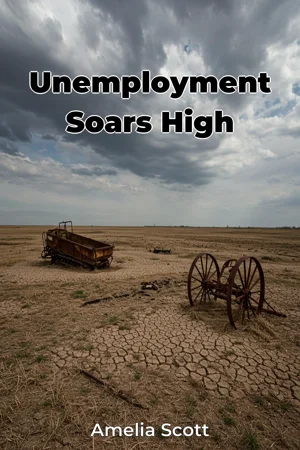
"Unemployment Soars High" examines the devastating economic crisis of the 1930s, focusing on the unprecedented 25% unemployment rate during the Great Depression. It dissects the era's governmental policies, international pressures, and economic weaknesses to understand why joblessness reached such extreme levels. This exploration enables readers to understand the anatomy of an economic crisis and avoid repeating history. One intriguing fact is the role of speculative bubbles during the Roaring Twenties, which preceded the crash, and how they masked underlying vulnerabilities. The book progresses through three major sections, starting with the pre-Depression landscape, then detailing the Depression years with labor statistics, and finally analyzing long-term consequences like the rise of labor unions. The approach combines meticulous statistical detail with historical context, making it accessible to a broad audience. It highlights often-overlooked aspects, such as how banking collapses and international trade dynamics exacerbated joblessness. The goal is to provide readers with the knowledge to critically assess modern economic challenges and policy proposals.
Book Details
ISBN
9788235223180
Publisher
Publifye AS
Your Licenses
You don't own any licenses for this book
Purchase a license below to unlock this book and download the EPUB.
Purchase License
Select a tier to unlock this book
Need bulk licensing?
Contact us for enterprise agreements.