
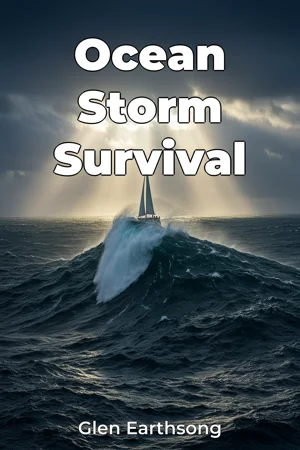
About This Book
Have you ever wondered what it truly takes to survive the raw power of the ocean during a storm? "Ocean Storm Survival" delves into the critical challenges posed by waves and wind on open-water voyages, offering essential knowledge for anyone venturing beyond the sight of land. This book serves as a fact-based guide rooted in Earth Sciences, Geography, and the spirit of Adventure, providing a comprehensive understanding of oceanic weather phenomena and survival strategies. Two central topics form the core of this exploration: wave dynamics and wind behavior in extreme weather. Understanding how waves are formed, how they propagate, and how they interact with vessels is paramount to maritime safety. Similarly, knowledge of wind patterns, pressure systems, and the forces they exert on ships is indispensable for navigation and storm avoidance. These topics are vitally important because unpreparedness in the face of these natural forces can lead to catastrophic consequences. "Ocean Storm Survival" offers a scientific and practical context for understanding these challenges. It draws upon historical accounts of maritime disasters, meteorological data, and modern naval architecture to provide a holistic perspective. Readers will gain insight into the evolution of weather forecasting, ship design, and survival techniques, while a basic understanding of physics and meteorology will enhance the reader's comprehension. The central argument of this book is that a thorough, science-based understanding of wave and wind dynamics, combined with practical survival strategies, dramatically increases the odds of surviving severe oceanic storms. This argument is critical because, despite advancements in technology, the ocean remains a powerful and unpredictable environment, and human error or unforeseen circumstances can quickly turn a routine voyage into a life-threatening situation. The book begins by introducing fundamental concepts of oceanography and meteorology. It then progresses to detailed analyses of wave formation, including swell generation, wave breaking, and rogue wave phenomena. The subsequent sections explore wind behavior, covering topics such as wind speed prediction, the effects of wind on sea state, and the dynamics of storm systems. These sections are enriched with case studies of actual storm events and their impact on various vessel types. The book culminates in a comprehensive guide to storm survival, encompassing elements of preparation, navigation, damage control, and emergency procedures. Practical applications, such as storm avoidance techniques, vessel stabilization methods, and emergency communication protocols, are emphasized throughout. The evidence presented in "Ocean Storm Survival" includes meteorological data, ship performance analyses, firsthand accounts from storm survivors, and research from naval engineering. Unique data sources, such as historical ship logs and satellite imagery, are utilized to reconstruct past storm events and analyze the impact of waves and wind on vessels. This book connects to a range of disciplines, including Meteorology, Oceanography, and Engineering. Meteorological principles are used to explain storm formation and behavior, while oceanographic concepts are applied to understanding wave dynamics. Engineering principles inform discussions on ship design and stability in extreme conditions. This interdisciplinary approach provides a well-rounded understanding of the challenges and solutions. "Ocean Storm Survival" presents an integrated approach to understanding and mitigating the risks associated with open-water voyages, combining theoretical knowledge with practical survival techniques, thus setting this book apart from traditional nautical guides. Written in a clear and accessible style, "Ocean Storm Survival" is aimed at sailors, yachtsmen, commercial mariners, and anyone with an interest in ocean navigation and safety. It would be valuable to those seeking to enhance their knowledge of oceanic weather and improve their preparedness for potential storm encounters. As a non-fiction book within the Earth Sciences Geography and Adventure genres, it emphasizes factual accuracy, clear explanations, and real-world applications, consistent with the expectations of readers interested in these fields. The scope of this book is limited to the challenges posed by waves and wind during oceanic storms and survival techniques. It does not delve into other aspects of seamanship or navigation beyond their direct relevance to storm survival. The information in "Ocean Storm Survival" can be applied practically by readers to improve their storm preparation, make informed navigational decisions, and execute effective emergency procedures. While there is broad scientific consensus on the fundamental principles of wave and wind dynamics, debates exist regarding the prediction of extreme weather events and the effectiveness of different survival strategies. "Ocean Storm Survival" addresses these debates by presenting a balanced overview of current research and best practices.
Have you ever wondered what it truly takes to survive the raw power of the ocean during a storm? "Ocean Storm Survival" delves into the critical challenges posed by waves and wind on open-water voyages, offering essential knowledge for anyone venturing beyond the sight of land. This book serves as a fact-based guide rooted in Earth Sciences, Geography, and the spirit of Adventure, providing a comprehensive understanding of oceanic weather phenomena and survival strategies. Two central topics form the core of this exploration: wave dynamics and wind behavior in extreme weather. Understanding how waves are formed, how they propagate, and how they interact with vessels is paramount to maritime safety. Similarly, knowledge of wind patterns, pressure systems, and the forces they exert on ships is indispensable for navigation and storm avoidance. These topics are vitally important because unpreparedness in the face of these natural forces can lead to catastrophic consequences. "Ocean Storm Survival" offers a scientific and practical context for understanding these challenges. It draws upon historical accounts of maritime disasters, meteorological data, and modern naval architecture to provide a holistic perspective. Readers will gain insight into the evolution of weather forecasting, ship design, and survival techniques, while a basic understanding of physics and meteorology will enhance the reader's comprehension. The central argument of this book is that a thorough, science-based understanding of wave and wind dynamics, combined with practical survival strategies, dramatically increases the odds of surviving severe oceanic storms. This argument is critical because, despite advancements in technology, the ocean remains a powerful and unpredictable environment, and human error or unforeseen circumstances can quickly turn a routine voyage into a life-threatening situation. The book begins by introducing fundamental concepts of oceanography and meteorology. It then progresses to detailed analyses of wave formation, including swell generation, wave breaking, and rogue wave phenomena. The subsequent sections explore wind behavior, covering topics such as wind speed prediction, the effects of wind on sea state, and the dynamics of storm systems. These sections are enriched with case studies of actual storm events and their impact on various vessel types. The book culminates in a comprehensive guide to storm survival, encompassing elements of preparation, navigation, damage control, and emergency procedures. Practical applications, such as storm avoidance techniques, vessel stabilization methods, and emergency communication protocols, are emphasized throughout. The evidence presented in "Ocean Storm Survival" includes meteorological data, ship performance analyses, firsthand accounts from storm survivors, and research from naval engineering. Unique data sources, such as historical ship logs and satellite imagery, are utilized to reconstruct past storm events and analyze the impact of waves and wind on vessels. This book connects to a range of disciplines, including Meteorology, Oceanography, and Engineering. Meteorological principles are used to explain storm formation and behavior, while oceanographic concepts are applied to understanding wave dynamics. Engineering principles inform discussions on ship design and stability in extreme conditions. This interdisciplinary approach provides a well-rounded understanding of the challenges and solutions. "Ocean Storm Survival" presents an integrated approach to understanding and mitigating the risks associated with open-water voyages, combining theoretical knowledge with practical survival techniques, thus setting this book apart from traditional nautical guides. Written in a clear and accessible style, "Ocean Storm Survival" is aimed at sailors, yachtsmen, commercial mariners, and anyone with an interest in ocean navigation and safety. It would be valuable to those seeking to enhance their knowledge of oceanic weather and improve their preparedness for potential storm encounters. As a non-fiction book within the Earth Sciences Geography and Adventure genres, it emphasizes factual accuracy, clear explanations, and real-world applications, consistent with the expectations of readers interested in these fields. The scope of this book is limited to the challenges posed by waves and wind during oceanic storms and survival techniques. It does not delve into other aspects of seamanship or navigation beyond their direct relevance to storm survival. The information in "Ocean Storm Survival" can be applied practically by readers to improve their storm preparation, make informed navigational decisions, and execute effective emergency procedures. While there is broad scientific consensus on the fundamental principles of wave and wind dynamics, debates exist regarding the prediction of extreme weather events and the effectiveness of different survival strategies. "Ocean Storm Survival" addresses these debates by presenting a balanced overview of current research and best practices.
"Ocean Storm Survival" explores the formidable challenges of ocean storms, providing critical knowledge for safe open-water voyages. It focuses on two key areas: wave dynamics and wind behavior, explaining how understanding these forces is essential for maritime safety. For instance, the book details how rogue waves form unexpectedly and the impact of wind patterns on sea conditions, equipping readers with knowledge to anticipate and mitigate risks. The book adopts a science-based approach, integrating historical accounts, meteorological data, and naval architecture principles. It traces the evolution of weather forecasting and ship design, highlighting how these advancements contribute to survival techniques. This approach ensures readers gain both theoretical understanding and practical skills. Beginning with oceanography and meteorology fundamentals, "Ocean Storm Survival" progresses to wave formation analysis, including swell generation and rogue wave phenomena. Later sections delve into wind behavior and storm system dynamics, enriched with real case studies. The book culminates in a comprehensive guide to storm survival, covering preparation, navigation, damage control, and emergency procedures, making it an invaluable resource for mariners.
Book Details
ISBN
9788235223166
Publisher
Publifye AS
Your Licenses
You don't own any licenses for this book
Purchase a license below to unlock this book and download the EPUB.
Purchase License
Select a tier to unlock this book
Need bulk licensing?
Contact us for enterprise agreements.