
About This Book
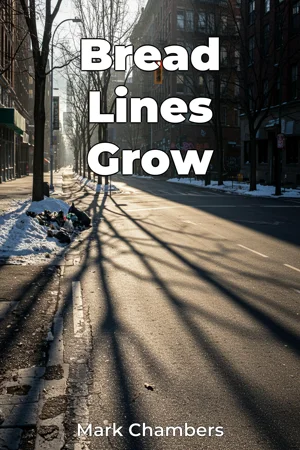
How did a nation, boasting unprecedented industrial capabilities, grapple with widespread hunger in the early 1930s? *Bread Lines Grow* examines the multifaceted responses to urban hunger in the United States during the depths of the Great Depression, specifically focusing on the year 1932. The book delves into the political, social, and economic factors that converged to create a crisis of unprecedented scale, and analyzes the diverse strategies employed to alleviate the suffering of millions. This book's central topics include the evolution of federal and local relief programs, the role of private charities and community organizations in providing sustenance, and the lived experiences of those directly impacted by food insecurity. These topics hold immense relevance for understanding the long-term effects of economic downturns and the ongoing challenges of addressing poverty and inequality. The historical context is crucial. The year 1932 marked a turning point in the Depression, with unemployment soaring and existing social safety nets proving woefully inadequate. Understanding the pre-existing inequalities and the laissez-faire economic policies of the era is essential for grasping the magnitude of the crisis. *Bread Lines Grow* argues that the scale of urban hunger in 1932 forced a fundamental re-evaluation of the government's responsibility to its citizens, ultimately laying the groundwork for the New Deal. This argument is significant because it challenges the notion that the New Deal emerged solely from a top-down political agenda, asserting that it was also a direct response to the urgent needs of a starving population. The book unfolds as follows: First, it introduces the economic and social conditions of 1932, setting the stage for the subsequent analysis. Second, it examines the patchwork system of hunger relief efforts, comparing and contrasting the approaches taken by different cities and municipalities and analyzing their effectiveness. Case studies of cities like New York, Chicago, and Detroit illustrate the diverse challenges and innovations in addressing food shortages. Third, *Bread Lines Grow* delves into the political debates surrounding hunger relief, focusing on the struggle between those who advocated for minimal government intervention and those who called for more comprehensive social programs. The culminating section explores the lasting legacy of these early relief efforts on the development of the American welfare state. *Bread Lines Grow* draws upon a wide range of primary sources, including government documents, reports from social workers and charitable organizations, newspaper accounts, and personal narratives collected by the Federal Writers' Project. Statistical data on unemployment, food prices, and relief expenditures provides quantitative support for the qualitative analysis. The research methodology combines historical analysis with elements of urban studies and political science. The book connects to several interdisciplinary fields. Its analysis of urban poverty and social inequality intersects with sociology. Its examination of government policies and political ideologies relates to political science. Its exploration of economic conditions and the impact on individuals touches upon the field of economics. These interdisciplinary connections enrich the book's argument by providing multiple perspectives on the complex issue of urban hunger. What sets *Bread Lines Grow* apart is its focus on the specific year of 1932, allowing for an in-depth examination of the interplay between individual suffering, community responses, and government action during a pivotal moment in American history. The book adopts a narrative non-fiction style, aiming to make the historical analysis accessible and engaging for a broad audience. The intended readership includes students and scholars of history, political science, and social policy, as well as anyone interested in learning more about the Great Depression and the origins of the American welfare state. The book's exploration of urban hunger relief efforts offers valuable insights into the enduring challenges of poverty and inequality in contemporary society. As a work of history and political science, *Bread Lines Grow* adheres to the conventions of rigorous scholarship, providing detailed citations and a comprehensive bibliography. The book's scope is limited to the United States and primarily focuses on urban areas, acknowledging that rural hunger presented its own unique challenges during this period. The information can be applied to understand contemporary debates on poverty, social welfare, and the role of government in addressing economic crises. *Bread Lines Grow* directly addresses the historical debate surrounding the effectiveness and impact of Hoover's response to the Great Depression, offering a nuanced assessment of the challenges and limitations of his policies in the face of widespread hunger.
How did a nation, boasting unprecedented industrial capabilities, grapple with widespread hunger in the early 1930s? *Bread Lines Grow* examines the multifaceted responses to urban hunger in the United States during the depths of the Great Depression, specifically focusing on the year 1932. The book delves into the political, social, and economic factors that converged to create a crisis of unprecedented scale, and analyzes the diverse strategies employed to alleviate the suffering of millions. This book's central topics include the evolution of federal and local relief programs, the role of private charities and community organizations in providing sustenance, and the lived experiences of those directly impacted by food insecurity. These topics hold immense relevance for understanding the long-term effects of economic downturns and the ongoing challenges of addressing poverty and inequality. The historical context is crucial. The year 1932 marked a turning point in the Depression, with unemployment soaring and existing social safety nets proving woefully inadequate. Understanding the pre-existing inequalities and the laissez-faire economic policies of the era is essential for grasping the magnitude of the crisis. *Bread Lines Grow* argues that the scale of urban hunger in 1932 forced a fundamental re-evaluation of the government's responsibility to its citizens, ultimately laying the groundwork for the New Deal. This argument is significant because it challenges the notion that the New Deal emerged solely from a top-down political agenda, asserting that it was also a direct response to the urgent needs of a starving population. The book unfolds as follows: First, it introduces the economic and social conditions of 1932, setting the stage for the subsequent analysis. Second, it examines the patchwork system of hunger relief efforts, comparing and contrasting the approaches taken by different cities and municipalities and analyzing their effectiveness. Case studies of cities like New York, Chicago, and Detroit illustrate the diverse challenges and innovations in addressing food shortages. Third, *Bread Lines Grow* delves into the political debates surrounding hunger relief, focusing on the struggle between those who advocated for minimal government intervention and those who called for more comprehensive social programs. The culminating section explores the lasting legacy of these early relief efforts on the development of the American welfare state. *Bread Lines Grow* draws upon a wide range of primary sources, including government documents, reports from social workers and charitable organizations, newspaper accounts, and personal narratives collected by the Federal Writers' Project. Statistical data on unemployment, food prices, and relief expenditures provides quantitative support for the qualitative analysis. The research methodology combines historical analysis with elements of urban studies and political science. The book connects to several interdisciplinary fields. Its analysis of urban poverty and social inequality intersects with sociology. Its examination of government policies and political ideologies relates to political science. Its exploration of economic conditions and the impact on individuals touches upon the field of economics. These interdisciplinary connections enrich the book's argument by providing multiple perspectives on the complex issue of urban hunger. What sets *Bread Lines Grow* apart is its focus on the specific year of 1932, allowing for an in-depth examination of the interplay between individual suffering, community responses, and government action during a pivotal moment in American history. The book adopts a narrative non-fiction style, aiming to make the historical analysis accessible and engaging for a broad audience. The intended readership includes students and scholars of history, political science, and social policy, as well as anyone interested in learning more about the Great Depression and the origins of the American welfare state. The book's exploration of urban hunger relief efforts offers valuable insights into the enduring challenges of poverty and inequality in contemporary society. As a work of history and political science, *Bread Lines Grow* adheres to the conventions of rigorous scholarship, providing detailed citations and a comprehensive bibliography. The book's scope is limited to the United States and primarily focuses on urban areas, acknowledging that rural hunger presented its own unique challenges during this period. The information can be applied to understand contemporary debates on poverty, social welfare, and the role of government in addressing economic crises. *Bread Lines Grow* directly addresses the historical debate surrounding the effectiveness and impact of Hoover's response to the Great Depression, offering a nuanced assessment of the challenges and limitations of his policies in the face of widespread hunger.
"Bread Lines Grow" examines the profound crisis of urban hunger in the United States during 1932, a pivotal year in the Great Depression. It analyzes the political, social, and economic factors that led to widespread food insecurity, and investigates the diverse strategies employed to combat it. The book highlights that existing social safety nets were woefully inadequate, and the scale of suffering forced a re-evaluation of the government's role in providing for its citizens, laying the groundwork for the New Deal. The book progresses by first establishing the economic and social landscape of 1932, then comparing the effectiveness of various local hunger relief efforts across cities like New York and Chicago. Finally, it explores the political debates surrounding government intervention versus individual responsibility. By focusing on 1932, "Bread Lines Grow" provides an in-depth look at the intersection of individual suffering, community responses, and governmental actions during a crucial period in American history, making it valuable for understanding the origins of American social welfare and the ongoing challenges of poverty.
Book Details
ISBN
9788235223043
Publisher
Publifye AS
Your Licenses
You don't own any licenses for this book
Purchase a license below to unlock this book and download the EPUB.
Purchase License
Select a tier to unlock this book
Need bulk licensing?
Contact us for enterprise agreements.