
About This Book
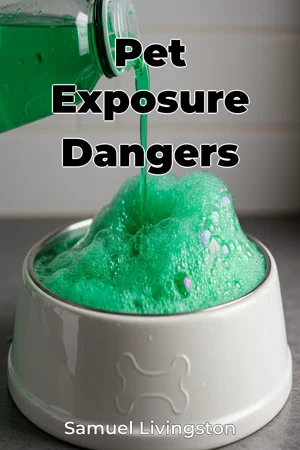
Have you ever considered what happens when your pet accidentally ingests household cleaning products? 'Pet Exposure Dangers' delves into the largely unexamined risks that common household detergents pose to our animal companions, offering a comprehensive analysis grounded in veterinary toxicology data. This book addresses two central issues: first, the inherent toxicity of many cleaning agents, and second, the frequency with which pets are exposed to these substances within the domestic environment. These topics are crucial because most pet owners are unaware of the potential dangers lurking in their cleaning cabinets, often underestimating the severity of the health consequences following exposure. The book provides essential context by outlining the chemical composition of various detergents and their mechanisms of action within mammalian bodies. It emphasizes the differences in metabolic pathways between humans and common pets like dogs and cats, explaining why substances considered relatively safe for humans can be profoundly toxic to animals. Readers will gain a foundational understanding of basic toxicology principles, including dose-response relationships and the factors that influence toxin absorption, distribution, metabolism, and excretion in pets. The central argument of 'Pet Exposure Dangers' is that the current regulatory standards for household detergents do not adequately account for pet safety, leading to a significant underestimation of potential health hazards. This argument is vital because it calls for increased awareness, stricter regulations, and the development of safer alternative cleaning products. The book begins by introducing the main classes of household detergents and their chemical constituents. It then systematically explores the physiological effects of these substances on different organ systems in pets, supported by case studies and epidemiological data from veterinary toxicology databases. Major sections include: (1) a detailed examination of specific detergent types (e.g., anionic, cationic, non-ionic) and their toxicological profiles; (2) an analysis of exposure routes (ingestion, inhalation, dermal contact) and the factors influencing toxicity; (3) and an in-depth review of clinical signs, diagnostic approaches, and treatment strategies for detergent toxicities in pets. The book culminates in a discussion of preventive measures, safer alternatives, and recommendations for regulatory reform. The evidence presented in 'Pet Exposure Dangers' is drawn from a variety of sources including peer-reviewed scientific literature, veterinary toxicology case reports, and proprietary data from poison control centers. A unique aspect of the book is its reliance on a large, previously unpublished dataset of detergent-related pet poisoning cases, offering novel insights into the prevalence and severity of these incidents. 'Pet Exposure Dangers' is interdisciplinary, drawing connections to fields such as environmental science (assessing the environmental impact of detergent runoff), public health (evaluating the broader implications of chemical exposure), and veterinary medicine (diagnosing and treating affected animals). These diverse connections enhance the book's argument by providing a holistic perspective on the problem. The book offers a novel perspective by framing the issue of detergent toxicity from the standpoint of comparative toxicology, highlighting the unique vulnerabilities of pets compared to humans. Combining detailed scientific analysis with practical advice, the book is written in an accessible yet authoritative style, making complex toxicological concepts understandable to a broad audience. 'Pet Exposure Dangers' is intended for veterinary professionals, pet owners, and anyone interested in animal welfare and environmental health. It provides valuable information for veterinarians seeking to diagnose and treat detergent toxicities, for pet owners looking to create safer home environments, and for policymakers interested in improving chemical safety regulations. The genre conventions of science life sciences and medical general are respected through the inclusion of detailed scientific data, rigorous analysis, and clear explanations of complex concepts. The book focuses specifically on household detergent exposures in common pets, excluding industrial chemicals and other forms of environmental contamination, thus maintaining a manageable scope. The information in 'Pet Exposure Dangers' can be applied practically by readers to make informed decisions about the cleaning products they use in their homes. It also offers guidance on how to prevent pet exposures and what to do in the event of accidental ingestion or contact. The book addresses the ongoing debate about the safety of "green" or "natural" cleaning products, providing evidence-based assessments of their toxicity compared to conventional detergents. This book ultimately arms the reader with current research and tools to promote home safety.
Have you ever considered what happens when your pet accidentally ingests household cleaning products? 'Pet Exposure Dangers' delves into the largely unexamined risks that common household detergents pose to our animal companions, offering a comprehensive analysis grounded in veterinary toxicology data. This book addresses two central issues: first, the inherent toxicity of many cleaning agents, and second, the frequency with which pets are exposed to these substances within the domestic environment. These topics are crucial because most pet owners are unaware of the potential dangers lurking in their cleaning cabinets, often underestimating the severity of the health consequences following exposure. The book provides essential context by outlining the chemical composition of various detergents and their mechanisms of action within mammalian bodies. It emphasizes the differences in metabolic pathways between humans and common pets like dogs and cats, explaining why substances considered relatively safe for humans can be profoundly toxic to animals. Readers will gain a foundational understanding of basic toxicology principles, including dose-response relationships and the factors that influence toxin absorption, distribution, metabolism, and excretion in pets. The central argument of 'Pet Exposure Dangers' is that the current regulatory standards for household detergents do not adequately account for pet safety, leading to a significant underestimation of potential health hazards. This argument is vital because it calls for increased awareness, stricter regulations, and the development of safer alternative cleaning products. The book begins by introducing the main classes of household detergents and their chemical constituents. It then systematically explores the physiological effects of these substances on different organ systems in pets, supported by case studies and epidemiological data from veterinary toxicology databases. Major sections include: (1) a detailed examination of specific detergent types (e.g., anionic, cationic, non-ionic) and their toxicological profiles; (2) an analysis of exposure routes (ingestion, inhalation, dermal contact) and the factors influencing toxicity; (3) and an in-depth review of clinical signs, diagnostic approaches, and treatment strategies for detergent toxicities in pets. The book culminates in a discussion of preventive measures, safer alternatives, and recommendations for regulatory reform. The evidence presented in 'Pet Exposure Dangers' is drawn from a variety of sources including peer-reviewed scientific literature, veterinary toxicology case reports, and proprietary data from poison control centers. A unique aspect of the book is its reliance on a large, previously unpublished dataset of detergent-related pet poisoning cases, offering novel insights into the prevalence and severity of these incidents. 'Pet Exposure Dangers' is interdisciplinary, drawing connections to fields such as environmental science (assessing the environmental impact of detergent runoff), public health (evaluating the broader implications of chemical exposure), and veterinary medicine (diagnosing and treating affected animals). These diverse connections enhance the book's argument by providing a holistic perspective on the problem. The book offers a novel perspective by framing the issue of detergent toxicity from the standpoint of comparative toxicology, highlighting the unique vulnerabilities of pets compared to humans. Combining detailed scientific analysis with practical advice, the book is written in an accessible yet authoritative style, making complex toxicological concepts understandable to a broad audience. 'Pet Exposure Dangers' is intended for veterinary professionals, pet owners, and anyone interested in animal welfare and environmental health. It provides valuable information for veterinarians seeking to diagnose and treat detergent toxicities, for pet owners looking to create safer home environments, and for policymakers interested in improving chemical safety regulations. The genre conventions of science life sciences and medical general are respected through the inclusion of detailed scientific data, rigorous analysis, and clear explanations of complex concepts. The book focuses specifically on household detergent exposures in common pets, excluding industrial chemicals and other forms of environmental contamination, thus maintaining a manageable scope. The information in 'Pet Exposure Dangers' can be applied practically by readers to make informed decisions about the cleaning products they use in their homes. It also offers guidance on how to prevent pet exposures and what to do in the event of accidental ingestion or contact. The book addresses the ongoing debate about the safety of "green" or "natural" cleaning products, providing evidence-based assessments of their toxicity compared to conventional detergents. This book ultimately arms the reader with current research and tools to promote home safety.
"Pet Exposure Dangers" sheds light on the often-overlooked risks that common household detergents pose to pets. Many pet owners are unaware of the potential dangers lurking in their cleaning cabinets, underestimating the severity of health consequences following exposure. The book highlights the inherent toxicity of many cleaning agents and the frequency with which pets encounter these substances, emphasizing that regulatory standards don't adequately account for animal safety. For instance, metabolic differences mean substances safe for humans can be highly toxic to dogs and cats. The book approaches this topic by outlining chemical compositions and their effects on pets' organ systems, supported by case studies and data from veterinary toxicology databases. It begins by introducing detergent classes and their constituents, systematically exploring physiological impacts, exposure routes (ingestion, inhalation, dermal contact), and clinical signs. "Pet Exposure Dangers" uniquely relies on a large, previously unpublished dataset of detergent-related pet poisoning cases, providing novel insights into their prevalence and severity. The book progresses from examining specific detergent types to discussing preventive measures, safer alternatives, and regulatory reforms.
Book Details
ISBN
9788235222930
Publisher
Publifye AS
Your Licenses
You don't own any licenses for this book
Purchase a license below to unlock this book and download the EPUB.
Purchase License
Select a tier to unlock this book
Need bulk licensing?
Contact us for enterprise agreements.