
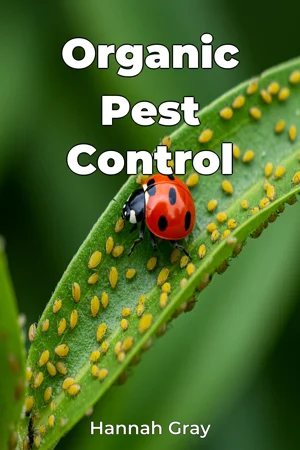
About This Book
Are you tired of battling garden pests with harsh chemicals that harm the environment and your health? "Organic Pest Control" offers a comprehensive guide to managing garden pests using safe, sustainable, and effective methods. We delve into the principles of ecological balance in your garden, the identification of common pests and beneficial insects, and the implementation of organic control strategies that protect your plants and the planet. This book matters because it equips you with the knowledge to create a thriving, healthy garden without relying on harmful synthetic pesticides. We address key topics starting with understanding your garden's ecosystem. This includes soil health, plant diversity, and the roles of various organisms. A healthy ecosystem is naturally more resilient to pest infestations. Then, accurate pest identification is critical. We provide detailed descriptions and photographs to help you distinguish between pests and beneficial insects, ensuring you target the right problems with the appropriate solutions. Finally, we present a range of organic control methods, from cultural practices and biological controls to natural pesticides, empowering you to choose the best approach for your specific situation. The book is structured to guide you through the entire process of organic pest control. The early chapters introduce the principles of integrated pest management (IPM) and the importance of preventative measures. Subsequent chapters focus on specific pest groups such as aphids, caterpillars, and squash bugs, detailing their life cycles, damage patterns, and organic control options. The book culminates with strategies for creating a pest-resistant garden through proper plant selection, soil management, and habitat creation for beneficial insects. Practical application is emphasized throughout, with step-by-step instructions and real-world examples. The information presented is grounded in scientific research and practical experience. We cite studies on the effectiveness of various organic pest control methods, drawing from entomological research, agricultural extension publications, and the experiences of successful organic gardeners. We provide data on the benefits of companion planting, the efficacy of biological controls like ladybugs and parasitic wasps, and the proper use of natural pesticides such as neem oil and insecticidal soap. "Organic Pest Control" connects to various fields, notably horticulture, entomology, and environmental science. By understanding the biology of pests and their interactions with the environment, we can develop more effective and sustainable control strategies. We also explore the ethical considerations of pest control and the importance of protecting biodiversity in our gardens and beyond. Our approach provides a balanced and practical perspective, emphasizing preventative measures and integrated strategies rather than simply reacting to pest outbreaks. We advocate for a whole-system approach to garden management. This book is written for home gardeners of all levels, from beginners to experienced growers who want to transition to organic practices. It is also relevant to small-scale farmers and anyone interested in environmentally responsible pest management. The book is written in a clear, accessible style, avoiding technical jargon and providing practical advice that can be immediately applied in your garden. The scope of the book is limited to common garden pests and focuses on organic control methods that are readily available and safe for home use. While we touch on some advanced techniques, the primary focus is on providing practical guidance for everyday gardeners. We acknowledge ongoing debates about the use of certain organic pesticides and strive to present a balanced perspective based on current scientific understanding. Ultimately, "Organic Pest Control" empowers you to cultivate a healthy, thriving garden while minimizing your environmental impact.
Are you tired of battling garden pests with harsh chemicals that harm the environment and your health? "Organic Pest Control" offers a comprehensive guide to managing garden pests using safe, sustainable, and effective methods. We delve into the principles of ecological balance in your garden, the identification of common pests and beneficial insects, and the implementation of organic control strategies that protect your plants and the planet. This book matters because it equips you with the knowledge to create a thriving, healthy garden without relying on harmful synthetic pesticides. We address key topics starting with understanding your garden's ecosystem. This includes soil health, plant diversity, and the roles of various organisms. A healthy ecosystem is naturally more resilient to pest infestations. Then, accurate pest identification is critical. We provide detailed descriptions and photographs to help you distinguish between pests and beneficial insects, ensuring you target the right problems with the appropriate solutions. Finally, we present a range of organic control methods, from cultural practices and biological controls to natural pesticides, empowering you to choose the best approach for your specific situation. The book is structured to guide you through the entire process of organic pest control. The early chapters introduce the principles of integrated pest management (IPM) and the importance of preventative measures. Subsequent chapters focus on specific pest groups such as aphids, caterpillars, and squash bugs, detailing their life cycles, damage patterns, and organic control options. The book culminates with strategies for creating a pest-resistant garden through proper plant selection, soil management, and habitat creation for beneficial insects. Practical application is emphasized throughout, with step-by-step instructions and real-world examples. The information presented is grounded in scientific research and practical experience. We cite studies on the effectiveness of various organic pest control methods, drawing from entomological research, agricultural extension publications, and the experiences of successful organic gardeners. We provide data on the benefits of companion planting, the efficacy of biological controls like ladybugs and parasitic wasps, and the proper use of natural pesticides such as neem oil and insecticidal soap. "Organic Pest Control" connects to various fields, notably horticulture, entomology, and environmental science. By understanding the biology of pests and their interactions with the environment, we can develop more effective and sustainable control strategies. We also explore the ethical considerations of pest control and the importance of protecting biodiversity in our gardens and beyond. Our approach provides a balanced and practical perspective, emphasizing preventative measures and integrated strategies rather than simply reacting to pest outbreaks. We advocate for a whole-system approach to garden management. This book is written for home gardeners of all levels, from beginners to experienced growers who want to transition to organic practices. It is also relevant to small-scale farmers and anyone interested in environmentally responsible pest management. The book is written in a clear, accessible style, avoiding technical jargon and providing practical advice that can be immediately applied in your garden. The scope of the book is limited to common garden pests and focuses on organic control methods that are readily available and safe for home use. While we touch on some advanced techniques, the primary focus is on providing practical guidance for everyday gardeners. We acknowledge ongoing debates about the use of certain organic pesticides and strive to present a balanced perspective based on current scientific understanding. Ultimately, "Organic Pest Control" empowers you to cultivate a healthy, thriving garden while minimizing your environmental impact.
"Organic Pest Control" provides a comprehensive roadmap for gardeners seeking to manage pests sustainably, moving away from harmful chemicals towards an ecological balance. The book emphasizes understanding your garden ecosystem, highlighting how soil health and plant diversity naturally bolster resilience against infestations. A key aspect involves accurate pest identification, teaching you to differentiate between destructive garden pests and beneficial insects that aid in natural pest management. The book progresses by first establishing the principles of integrated pest management (IPM) and preventative actions. Subsequent chapters delve into specific pest groups like aphids and caterpillars, detailing their life cycles and organic control options. You'll discover how companion planting can deter pests and learn about the effectiveness of natural pesticides such as neem oil. This guide uniquely combines scientific research with practical experience. It's designed for gardeners of all skill levels, offering step-by-step instructions to create a thriving, pest-resistant garden. By adopting the strategies outlined, readers can foster a healthy garden environment while minimizing their environmental impact and promoting sustainable gardening practices.
Book Details
ISBN
9788235222893
Publisher
Publifye AS
Your Licenses
You don't own any licenses for this book
Purchase a license below to unlock this book and download the EPUB.
Purchase License
Select a tier to unlock this book
Need bulk licensing?
Contact us for enterprise agreements.