
About This Book
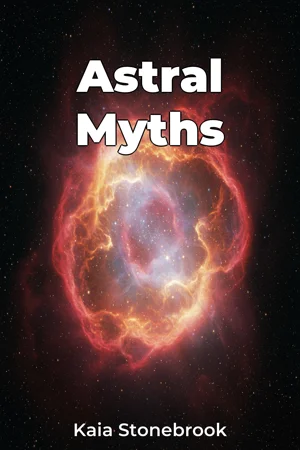
How did the movements of celestial bodies shape the narratives of human existence, and how do those ancient interpretations resonate in our understanding of science and religion today? "Astral Myths" delves into the profound connections between the cosmos, early belief systems, and the dawn of scientific thought, revealing how observations of the heavens influenced the formation of mythology, storytelling, and religious thought across diverse cultures. This book explores the intricate ways in which ancient civilizations integrated their understanding of astronomy with their spiritual and cultural identities. We will examine the pervasive role of celestial objects in mythology, focusing on the sun, moon, stars, and planets as they appeared in the cosmologies of ancient Mesopotamia, Egypt, Greece, and other significant cultures. By exploring these myths, we gain insight into the historical context of early human attempts to comprehend their place in the universe. A crucial concept examined is the development of astrology and its role as a precursor to modern astronomy, alongside its continued influence on religious and philosophical thought. The central argument posits that ancient astral myths are not merely fanciful stories, but sophisticated systems devised to explain natural phenomena, encode cultural values, and provide a framework for understanding human destiny. These systems represent early forms of scientific inquiry, albeit interwoven with spiritual interpretations. This perspective challenges the binary view of science and religion as mutually exclusive, highlighting their historical interdependence. "Astral Myths" is structured to provide a comprehensive exploration of this interplay. Beginning with an introduction to basic astronomical concepts as understood by ancient observers, the book then progresses through several thematic sections. We will investigate the cosmologies of various cultures, illustrating how each society’s unique environment and historical circumstances shaped its astral myths. Subsequent chapters delve into the development of astrology and its relationship to early medicine, agriculture, and governance. The concluding sections explore the legacy of astral myths in contemporary religious and spiritual practices and assess their influence on modern science’s understanding of the universe. The book draws upon a wide array of evidence, including archaeological findings, ancient texts (such as the Enuma Elish and the Rigveda), and comparative analyses of mythological narratives. Special attention is given to the interpretation of astronomical alignments in ancient monuments and temples to understand the practical applications of astral knowledge. "Astral Myths" connects to several other fields, including comparative mythology, religious studies, the history of science, and cultural anthropology. These interdisciplinary connections enrich our understanding of the complex relationships between human societies and the cosmos. This book adopts a narrative non-fiction approach, aiming to make complex concepts accessible to a broad audience while maintaining scholarly rigor. It invites readers to reconsider the origins of human thought and explore the enduring power of stories that connect us to the stars. The target audience includes anyone interested in mythology, astronomy, religious history, or the history of ideas. It will also appeal to those who appreciate the power of storytelling and want to understand how ancient narratives continue to shape our understanding of the world. The scope of “Astral Myths” is limited to examining the astral myths of major ancient civilizations, with a focus on their astronomical and cultural significance. While acknowledging the vastness of the topic and the myriad of cultures that have developed astral myths, the book prioritizes depth of analysis over breadth of coverage. The knowledge presented can be applied to interpreting ancient art, understanding the symbolism in religious texts, and appreciating the interconnectedness of human cultures. While ancient astral myths often presented a geocentric view of the universe, the book will also discuss the gradual shift toward heliocentric models and the resulting controversies. This transition highlights the ongoing tension between established belief systems and emerging scientific paradigms.
How did the movements of celestial bodies shape the narratives of human existence, and how do those ancient interpretations resonate in our understanding of science and religion today? "Astral Myths" delves into the profound connections between the cosmos, early belief systems, and the dawn of scientific thought, revealing how observations of the heavens influenced the formation of mythology, storytelling, and religious thought across diverse cultures. This book explores the intricate ways in which ancient civilizations integrated their understanding of astronomy with their spiritual and cultural identities. We will examine the pervasive role of celestial objects in mythology, focusing on the sun, moon, stars, and planets as they appeared in the cosmologies of ancient Mesopotamia, Egypt, Greece, and other significant cultures. By exploring these myths, we gain insight into the historical context of early human attempts to comprehend their place in the universe. A crucial concept examined is the development of astrology and its role as a precursor to modern astronomy, alongside its continued influence on religious and philosophical thought. The central argument posits that ancient astral myths are not merely fanciful stories, but sophisticated systems devised to explain natural phenomena, encode cultural values, and provide a framework for understanding human destiny. These systems represent early forms of scientific inquiry, albeit interwoven with spiritual interpretations. This perspective challenges the binary view of science and religion as mutually exclusive, highlighting their historical interdependence. "Astral Myths" is structured to provide a comprehensive exploration of this interplay. Beginning with an introduction to basic astronomical concepts as understood by ancient observers, the book then progresses through several thematic sections. We will investigate the cosmologies of various cultures, illustrating how each society’s unique environment and historical circumstances shaped its astral myths. Subsequent chapters delve into the development of astrology and its relationship to early medicine, agriculture, and governance. The concluding sections explore the legacy of astral myths in contemporary religious and spiritual practices and assess their influence on modern science’s understanding of the universe. The book draws upon a wide array of evidence, including archaeological findings, ancient texts (such as the Enuma Elish and the Rigveda), and comparative analyses of mythological narratives. Special attention is given to the interpretation of astronomical alignments in ancient monuments and temples to understand the practical applications of astral knowledge. "Astral Myths" connects to several other fields, including comparative mythology, religious studies, the history of science, and cultural anthropology. These interdisciplinary connections enrich our understanding of the complex relationships between human societies and the cosmos. This book adopts a narrative non-fiction approach, aiming to make complex concepts accessible to a broad audience while maintaining scholarly rigor. It invites readers to reconsider the origins of human thought and explore the enduring power of stories that connect us to the stars. The target audience includes anyone interested in mythology, astronomy, religious history, or the history of ideas. It will also appeal to those who appreciate the power of storytelling and want to understand how ancient narratives continue to shape our understanding of the world. The scope of “Astral Myths” is limited to examining the astral myths of major ancient civilizations, with a focus on their astronomical and cultural significance. While acknowledging the vastness of the topic and the myriad of cultures that have developed astral myths, the book prioritizes depth of analysis over breadth of coverage. The knowledge presented can be applied to interpreting ancient art, understanding the symbolism in religious texts, and appreciating the interconnectedness of human cultures. While ancient astral myths often presented a geocentric view of the universe, the book will also discuss the gradual shift toward heliocentric models and the resulting controversies. This transition highlights the ongoing tension between established belief systems and emerging scientific paradigms.
"Astral Myths" explores the intersection of ancient astronomy, mythology, and religion, revealing how early civilizations used celestial observations to shape their understanding of the world. The book examines how cultures like those in Mesopotamia, Egypt, and Greece integrated celestial bodies—the sun, moon, stars, and planets—into their cosmologies, influencing storytelling and religious thought. One intriguing aspect is the development of astrology, which served as a precursor to modern astronomy while also impacting early medicine, agriculture, and governance. The book argues that astral myths are not mere fanciful tales but sophisticated systems for explaining natural phenomena, encoding cultural values, and understanding human destiny. It challenges the notion of science and religion as mutually exclusive by highlighting their historical interdependence. Structured thematically, "Astral Myths" begins with basic astronomical concepts, progresses through various cultural cosmologies, delves into astrology's development, and concludes by exploring the legacy of astral myths in contemporary practices and modern science.
Book Details
ISBN
9788235222558
Publisher
Publifye AS
Your Licenses
You don't own any licenses for this book
Purchase a license below to unlock this book and download the EPUB.
Purchase License
Select a tier to unlock this book
Need bulk licensing?
Contact us for enterprise agreements.