
About This Book
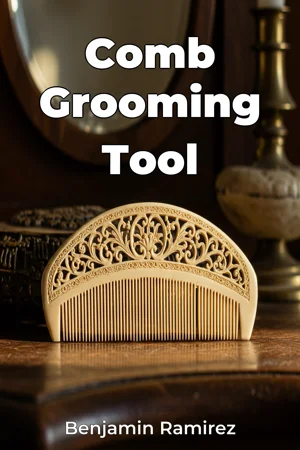
Have you ever considered the profound story held within the simple comb? "Comb Grooming Tool" unveils the captivating history and evolution of this ubiquitous personal care implement, tracing its origins from rudimentary bone and shell designs to the mass-produced plastic combs of the modern era. This book delves into much more than mere technological advancement; it explores the intricate relationship between combs, culture, and the diverse practices surrounding hair grooming across civilizations. Two key topics anchor this exploration: the material evolution of the comb and the diverse cultural significances attributed to hair and its maintenance. The evolution of comb materials, from bone and wood to metal and plastic, reflects not only technological progress but also changing economic conditions and accessibility. Intertwined with this material history is the profound cultural significance of hair, which varies dramatically across societies and time periods. Hair grooming practices are often embedded with social, religious, and symbolic meanings, making the comb a powerful artifact for understanding these cultural nuances. The book’s central argument posits that the comb, often overlooked as a mundane object, serves as a tangible link to understanding societal values, technological innovation, and the human preoccupation with self-presentation throughout history. This argument is crucial because it elevates the comb from a simple tool to a lens through which we can examine broader cultural and technological trends. "Comb Grooming Tool" is structured to provide a comprehensive overview of its subject. It commences with an introduction to the earliest known combs and the materials used in their construction, setting the stage for a chronological exploration. The book then develops its argument across three major sections. First, it examines ancient combs, detailing their construction and use in early civilizations, from Egypt and Rome to Asia. Second, it explores the development of combs through the medieval period and the Renaissance, highlighting changes in design, materials, and their reflection of evolving social norms. Third, it examines the mass production of combs during the industrial revolution and the subsequent proliferation of plastic combs in the 20th and 21st centuries, alongside an analysis of the environmental impact and cultural shifts associated with these changes. The book culminates by considering the comb's place in contemporary society, its ongoing relevance, and potential future developments. The evidence presented draws from a range of sources, including archaeological findings, museum collections, historical texts, and design studies. This interdisciplinary approach allows for a holistic understanding of the comb. The book also incorporates visual elements, such as photographs and illustrations of combs from various eras, to enhance reader engagement. The study of combs intersects with diverse fields, including archaeology, anthropology, materials science, and cultural studies. By drawing connections between these fields, the book broadens its appeal to a wider audience and enriches its analysis. The book offers a unique perspective by focusing specifically on a single, often-overlooked object as a means to explore larger cultural and technological narratives. Its approach involves blending historical research with material culture studies to reveal new insights into human behavior. Written in an accessible and engaging style, "Comb Grooming Tool" is aimed at a broad audience, including design enthusiasts, history buffs, cultural studies students, and anyone curious about the hidden histories of everyday objects. It provides valuable insights into the evolution of design, the impact of technology on culture, and the enduring human interest in personal grooming. The book's scope is intentionally broad, covering a wide range of historical periods and geographical regions. However, it also acknowledges its limitations, focusing primarily on cultures where combs have played a significant role in grooming practices. The information presented can be applied to a better understanding of the historical context of design. It can also be used to inform contemporary design practices, encouraging a more sustainable and culturally sensitive approach to product development. While the comb may seem like a simple tool, the book will show how it has been subject to debates about hygiene, status, and cultural appropriation, all of which are discussed in "Comb Grooming Tool".
Have you ever considered the profound story held within the simple comb? "Comb Grooming Tool" unveils the captivating history and evolution of this ubiquitous personal care implement, tracing its origins from rudimentary bone and shell designs to the mass-produced plastic combs of the modern era. This book delves into much more than mere technological advancement; it explores the intricate relationship between combs, culture, and the diverse practices surrounding hair grooming across civilizations. Two key topics anchor this exploration: the material evolution of the comb and the diverse cultural significances attributed to hair and its maintenance. The evolution of comb materials, from bone and wood to metal and plastic, reflects not only technological progress but also changing economic conditions and accessibility. Intertwined with this material history is the profound cultural significance of hair, which varies dramatically across societies and time periods. Hair grooming practices are often embedded with social, religious, and symbolic meanings, making the comb a powerful artifact for understanding these cultural nuances. The book’s central argument posits that the comb, often overlooked as a mundane object, serves as a tangible link to understanding societal values, technological innovation, and the human preoccupation with self-presentation throughout history. This argument is crucial because it elevates the comb from a simple tool to a lens through which we can examine broader cultural and technological trends. "Comb Grooming Tool" is structured to provide a comprehensive overview of its subject. It commences with an introduction to the earliest known combs and the materials used in their construction, setting the stage for a chronological exploration. The book then develops its argument across three major sections. First, it examines ancient combs, detailing their construction and use in early civilizations, from Egypt and Rome to Asia. Second, it explores the development of combs through the medieval period and the Renaissance, highlighting changes in design, materials, and their reflection of evolving social norms. Third, it examines the mass production of combs during the industrial revolution and the subsequent proliferation of plastic combs in the 20th and 21st centuries, alongside an analysis of the environmental impact and cultural shifts associated with these changes. The book culminates by considering the comb's place in contemporary society, its ongoing relevance, and potential future developments. The evidence presented draws from a range of sources, including archaeological findings, museum collections, historical texts, and design studies. This interdisciplinary approach allows for a holistic understanding of the comb. The book also incorporates visual elements, such as photographs and illustrations of combs from various eras, to enhance reader engagement. The study of combs intersects with diverse fields, including archaeology, anthropology, materials science, and cultural studies. By drawing connections between these fields, the book broadens its appeal to a wider audience and enriches its analysis. The book offers a unique perspective by focusing specifically on a single, often-overlooked object as a means to explore larger cultural and technological narratives. Its approach involves blending historical research with material culture studies to reveal new insights into human behavior. Written in an accessible and engaging style, "Comb Grooming Tool" is aimed at a broad audience, including design enthusiasts, history buffs, cultural studies students, and anyone curious about the hidden histories of everyday objects. It provides valuable insights into the evolution of design, the impact of technology on culture, and the enduring human interest in personal grooming. The book's scope is intentionally broad, covering a wide range of historical periods and geographical regions. However, it also acknowledges its limitations, focusing primarily on cultures where combs have played a significant role in grooming practices. The information presented can be applied to a better understanding of the historical context of design. It can also be used to inform contemporary design practices, encouraging a more sustainable and culturally sensitive approach to product development. While the comb may seem like a simple tool, the book will show how it has been subject to debates about hygiene, status, and cultural appropriation, all of which are discussed in "Comb Grooming Tool".
"Comb Grooming Tool" explores the surprisingly rich history of the comb, revealing its evolution from ancient times to the present day. More than just a hair grooming implement, the comb provides insights into cultural values, technological innovation, and our enduring fascination with self-presentation. For example, early combs made from bone and shell demonstrate resourcefulness, while the shift to mass-produced plastic combs reflects industrial advancements and changing social norms. The book examines the comb's journey across different eras, beginning with ancient civilizations and progressing through the medieval period, the Renaissance, and the Industrial Revolution. It analyzes how the design, materials, and cultural significance of combs have transformed over time, mirroring shifts in societal values and technological capabilities. The book adopts an interdisciplinary approach, drawing from archaeology, anthropology, material science, and design studies to provide a holistic understanding of this everyday object.
Book Details
ISBN
9788235222350
Publisher
Publifye AS
Your Licenses
You don't own any licenses for this book
Purchase a license below to unlock this book and download the EPUB.
Purchase License
Select a tier to unlock this book
Need bulk licensing?
Contact us for enterprise agreements.