
About This Book
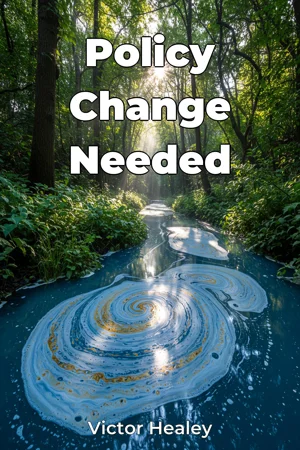
Are the detergents we use daily undermining our health and environment? "Policy Change Needed" argues that current regulatory approaches to detergent formulations are insufficient to protect public health and environmental well-being, and that updated policies, guided by scientific evidence, are urgently required. This book delves into three critical areas. First, it examines the complex chemical compositions of modern detergents, highlighting both the intended benefits and the unintended consequences of various ingredients. Second, it analyzes the existing patchwork of regulations governing these chemicals, identifying loopholes and inconsistencies that allow potentially harmful substances to persist in consumer products. Third, it proposes evidence-based policy recommendations designed to promote safer detergent formulations and reduce the public’s exposure to hazardous chemicals. These topics are vital because global detergent use is ubiquitous, resulting in widespread environmental contamination and potential human health risks. The context for this discussion rests on decades of research revealing the potential impact of detergent chemicals on aquatic ecosystems and human health. Readers should have a basic understanding of chemistry and environmental science to fully appreciate the intricacies of the arguments presented. No prior knowledge of policy or regulation is required. The central argument is that a proactive, preventative approach to detergent regulation is essential to safeguard public health and the environment. Current reactive measures, which often wait for demonstrable harm before taking action, are inadequate in addressing the subtle, long-term effects of chemical exposure. This argument is crucial because it challenges the status quo and advocates for a fundamental shift in how we assess and manage the risks associated with detergent chemicals. The book is structured to guide the reader through a logical progression of ideas. It begins by introducing the history of detergent development, from early soaps to the complex synthetic formulations of today. Following this initial overview, the book proceeds in three major parts: (1) a detailed examination of specific chemical classes found in detergents and their documented or suspected impacts on human health and aquatic ecosystems; (2) a critical analysis of current regulatory frameworks in different regions, highlighting both successes and shortcomings; (3) a presentation of specific policy recommendations, supported by scientific evidence and cost-benefit analyses, designed to encourage the development and use of safer alternatives. The culmination of the argument leads to a call for greater transparency, stronger enforcement, and increased investment in research and development of safe and sustainable detergent technologies. The evidence presented is drawn from a variety of sources, including peer-reviewed scientific literature, government reports, and data from industry studies. Unique data sources include an analysis of chemical formulations from a wide array of commercially available detergents and a comparative assessment of regulatory policies across different countries. This book connects to various fields, including environmental chemistry, toxicology, and public policy. By integrating scientific research with policy analysis, it offers a holistic perspective on the challenges and opportunities associated with detergent regulation. Furthermore, the book’s focus on human health links it to the fields of epidemiology and medicine. The unique approach taken in this book lies in its emphasis on proactive, preventative strategies. Rather than simply reacting to existing problems, it advocates for a more forward-thinking approach that anticipates potential risks and promotes the development of safer alternatives. The tone is academic and evidence-based, while remaining accessible to a broad audience. Complex scientific concepts are explained clearly and concisely, and technical jargon is minimized. The writing style aims to be informative and persuasive, encouraging readers to critically examine their assumptions about detergents and their impact on the world. The target audience includes policymakers, environmental scientists, public health professionals, and concerned citizens interested in learning more about the environmental and health implications of everyday chemicals. The book would be valuable to anyone seeking to understand the complex interplay between science, policy, and consumer behavior in the context of environmental health. As non-fiction, this book is committed to presenting factual and verifiable information. It aims to provide a comprehensive and unbiased overview of the topic, while acknowledging the limitations of current knowledge and the uncertainties inherent in scientific research. The scope of the book is limited to detergent formulations and their regulation, with a focus on the environmental and health impacts of specific chemical ingredients. It does not delve into broader issues related to consumerism or waste management, although these are acknowledged as important related topics. The information in this book can be applied practically by readers in several ways. Policymakers can use the policy recommendations to inform the development of more effective regulations. Manufacturers can use the information to guide the formulation of safer and more sustainable products. Consumers can use the information to make informed choices about the detergents they purchase and use. The book addresses ongoing debates regarding the safety and efficacy of various detergent chemicals. It acknowledges the differing perspectives of industry, government, and environmental groups, and seeks to provide a balanced assessment of the available evidence.
Are the detergents we use daily undermining our health and environment? "Policy Change Needed" argues that current regulatory approaches to detergent formulations are insufficient to protect public health and environmental well-being, and that updated policies, guided by scientific evidence, are urgently required. This book delves into three critical areas. First, it examines the complex chemical compositions of modern detergents, highlighting both the intended benefits and the unintended consequences of various ingredients. Second, it analyzes the existing patchwork of regulations governing these chemicals, identifying loopholes and inconsistencies that allow potentially harmful substances to persist in consumer products. Third, it proposes evidence-based policy recommendations designed to promote safer detergent formulations and reduce the public’s exposure to hazardous chemicals. These topics are vital because global detergent use is ubiquitous, resulting in widespread environmental contamination and potential human health risks. The context for this discussion rests on decades of research revealing the potential impact of detergent chemicals on aquatic ecosystems and human health. Readers should have a basic understanding of chemistry and environmental science to fully appreciate the intricacies of the arguments presented. No prior knowledge of policy or regulation is required. The central argument is that a proactive, preventative approach to detergent regulation is essential to safeguard public health and the environment. Current reactive measures, which often wait for demonstrable harm before taking action, are inadequate in addressing the subtle, long-term effects of chemical exposure. This argument is crucial because it challenges the status quo and advocates for a fundamental shift in how we assess and manage the risks associated with detergent chemicals. The book is structured to guide the reader through a logical progression of ideas. It begins by introducing the history of detergent development, from early soaps to the complex synthetic formulations of today. Following this initial overview, the book proceeds in three major parts: (1) a detailed examination of specific chemical classes found in detergents and their documented or suspected impacts on human health and aquatic ecosystems; (2) a critical analysis of current regulatory frameworks in different regions, highlighting both successes and shortcomings; (3) a presentation of specific policy recommendations, supported by scientific evidence and cost-benefit analyses, designed to encourage the development and use of safer alternatives. The culmination of the argument leads to a call for greater transparency, stronger enforcement, and increased investment in research and development of safe and sustainable detergent technologies. The evidence presented is drawn from a variety of sources, including peer-reviewed scientific literature, government reports, and data from industry studies. Unique data sources include an analysis of chemical formulations from a wide array of commercially available detergents and a comparative assessment of regulatory policies across different countries. This book connects to various fields, including environmental chemistry, toxicology, and public policy. By integrating scientific research with policy analysis, it offers a holistic perspective on the challenges and opportunities associated with detergent regulation. Furthermore, the book’s focus on human health links it to the fields of epidemiology and medicine. The unique approach taken in this book lies in its emphasis on proactive, preventative strategies. Rather than simply reacting to existing problems, it advocates for a more forward-thinking approach that anticipates potential risks and promotes the development of safer alternatives. The tone is academic and evidence-based, while remaining accessible to a broad audience. Complex scientific concepts are explained clearly and concisely, and technical jargon is minimized. The writing style aims to be informative and persuasive, encouraging readers to critically examine their assumptions about detergents and their impact on the world. The target audience includes policymakers, environmental scientists, public health professionals, and concerned citizens interested in learning more about the environmental and health implications of everyday chemicals. The book would be valuable to anyone seeking to understand the complex interplay between science, policy, and consumer behavior in the context of environmental health. As non-fiction, this book is committed to presenting factual and verifiable information. It aims to provide a comprehensive and unbiased overview of the topic, while acknowledging the limitations of current knowledge and the uncertainties inherent in scientific research. The scope of the book is limited to detergent formulations and their regulation, with a focus on the environmental and health impacts of specific chemical ingredients. It does not delve into broader issues related to consumerism or waste management, although these are acknowledged as important related topics. The information in this book can be applied practically by readers in several ways. Policymakers can use the policy recommendations to inform the development of more effective regulations. Manufacturers can use the information to guide the formulation of safer and more sustainable products. Consumers can use the information to make informed choices about the detergents they purchase and use. The book addresses ongoing debates regarding the safety and efficacy of various detergent chemicals. It acknowledges the differing perspectives of industry, government, and environmental groups, and seeks to provide a balanced assessment of the available evidence.
"Policy Change Needed" tackles the critical issue of detergent regulation and its impact on environmental and public health. It argues that current policies are inadequate, allowing potentially harmful substances to persist in everyday products. The book highlights the complex chemical compositions of detergents, revealing how ingredients can have unintended consequences, such as contributing to environmental contamination. For example, some chemicals found in detergents have been linked to adverse effects on aquatic ecosystems. The book progresses logically, starting with the history of detergent development and moving into a detailed examination of chemical classes, their impacts, and current regulatory frameworks. It also uniquely provides specific policy recommendations, supported by scientific evidence, advocating for proactive, preventative strategies. The book emphasizes the need for transparency, stronger enforcement, and investment in safer alternatives, making it a valuable resource for policymakers, scientists, and concerned citizens.
Book Details
ISBN
9788235222176
Publisher
Publifye AS
Your Licenses
You don't own any licenses for this book
Purchase a license below to unlock this book and download the EPUB.
Purchase License
Select a tier to unlock this book
Need bulk licensing?
Contact us for enterprise agreements.