
About This Book
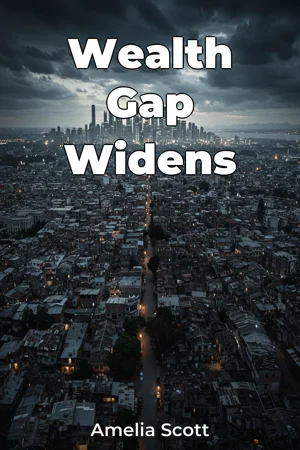
Is the widening gap between the rich and the poor an inevitable feature of modern economies, or a correctable flaw demanding immediate attention? "Wealth Gap Widens" delves into this critical question, providing a comprehensive analysis of income inequality trends across modern societies since 1980. This book is a rigorous examination of the economic, political, and social forces driving the increasingly disparate distribution of wealth. Understanding these forces is vital for policymakers, economists, and concerned citizens alike. We will explore the multifaceted nature of income inequality, including its measurement, its causes, and its consequences. We will also investigate the interaction between globalization, technological advancements, and policy choices in shaping wealth distribution. These topics are crucial because escalating inequality undermines social cohesion, economic stability, and democratic institutions. The book's central argument is that the dramatic rise in income inequality observed over the past four decades is not a natural or inevitable phenomenon. Instead, it is the result of specific policy choices and structural changes that have favored capital over labor, the wealthy over the working class, and concentrated economic power in the hands of a few. This argument is significant because it challenges the prevailing narrative that inequality is simply a byproduct of economic growth or individual merit. The book unfolds in three major sections. First, an introduction to the foundational concepts and measurement techniques used to quantify income inequality, such as the Gini coefficient and percentile income shares. Second, an exploration of the key drivers behind the widening wealth gap. This section will include chapters on the impact of globalization, the role of technological advancements, and the influence of policy choices related to taxation, regulation, and labor markets. And finally, an analysis of the consequences of high levels of inequality, including its effects on economic growth, social mobility, political stability, and public health. The book culminates with a discussion of potential policy interventions aimed at reducing inequality and promoting a more equitable distribution of wealth. "Wealth Gap Widens" relies on a wealth of empirical evidence, drawing from international databases such as the World Inequality Database, the Luxembourg Income Study, and national statistical agencies. It employs rigorous econometric techniques, including regression analysis and decomposition methods, to identify the causal effects of various factors on income inequality. Unique datasets, including tax records and wealth surveys, are utilized to provide a detailed picture of the distribution of income and wealth at the top of the income scale. The analysis intersects with other academic disciplines, including sociology, political science, and public health. The book will also delve into the political implications of wealth concentration and the potential for democratic backsliding. It will also consider the social and cultural dimensions of inequality, exploring how it shapes individual identities, social norms, and patterns of consumption. This book takes a nuanced and evidence-based approach, avoiding simplistic explanations and ideological biases. It challenges conventional wisdom and offers fresh insights into the complex dynamics of wealth distribution. The tone is academic but accessible, aiming to make complex economic concepts understandable to a broad audience. The primary target audience is composed of students, academics, policymakers, and informed citizens interested in understanding the causes and consequences of income inequality. The book will be particularly useful for those seeking to develop evidence-based policies to promote greater economic fairness. It is a work of political economics, written to inform both academic and policy debates. The scope of "Wealth Gap Widens" is intentionally limited to the post-1980 period, focusing on the rise of neoliberal economic policies and the acceleration of globalization. While historical context is provided, the book does not attempt to provide a comprehensive history of income inequality. The geographic focus is primarily on developed economies, with some attention given to emerging markets. The information presented has practical applications for policymakers seeking to design more progressive tax systems, strengthen labor market institutions, and invest in education and social programs. It also empowers citizens to engage in informed discussions about economic policy and demand greater accountability from their elected officials. The book addresses ongoing debates about the optimal level of inequality, the trade-offs between efficiency and equity, and the appropriate role of government in regulating the economy. It acknowledges the complexities and uncertainties involved in addressing income inequality and emphasizes the need for evidence-based policy solutions. "Wealth Gap Widens" is structured to provide a thorough and balanced exploration of one of the most pressing issues of our time.
Is the widening gap between the rich and the poor an inevitable feature of modern economies, or a correctable flaw demanding immediate attention? "Wealth Gap Widens" delves into this critical question, providing a comprehensive analysis of income inequality trends across modern societies since 1980. This book is a rigorous examination of the economic, political, and social forces driving the increasingly disparate distribution of wealth. Understanding these forces is vital for policymakers, economists, and concerned citizens alike. We will explore the multifaceted nature of income inequality, including its measurement, its causes, and its consequences. We will also investigate the interaction between globalization, technological advancements, and policy choices in shaping wealth distribution. These topics are crucial because escalating inequality undermines social cohesion, economic stability, and democratic institutions. The book's central argument is that the dramatic rise in income inequality observed over the past four decades is not a natural or inevitable phenomenon. Instead, it is the result of specific policy choices and structural changes that have favored capital over labor, the wealthy over the working class, and concentrated economic power in the hands of a few. This argument is significant because it challenges the prevailing narrative that inequality is simply a byproduct of economic growth or individual merit. The book unfolds in three major sections. First, an introduction to the foundational concepts and measurement techniques used to quantify income inequality, such as the Gini coefficient and percentile income shares. Second, an exploration of the key drivers behind the widening wealth gap. This section will include chapters on the impact of globalization, the role of technological advancements, and the influence of policy choices related to taxation, regulation, and labor markets. And finally, an analysis of the consequences of high levels of inequality, including its effects on economic growth, social mobility, political stability, and public health. The book culminates with a discussion of potential policy interventions aimed at reducing inequality and promoting a more equitable distribution of wealth. "Wealth Gap Widens" relies on a wealth of empirical evidence, drawing from international databases such as the World Inequality Database, the Luxembourg Income Study, and national statistical agencies. It employs rigorous econometric techniques, including regression analysis and decomposition methods, to identify the causal effects of various factors on income inequality. Unique datasets, including tax records and wealth surveys, are utilized to provide a detailed picture of the distribution of income and wealth at the top of the income scale. The analysis intersects with other academic disciplines, including sociology, political science, and public health. The book will also delve into the political implications of wealth concentration and the potential for democratic backsliding. It will also consider the social and cultural dimensions of inequality, exploring how it shapes individual identities, social norms, and patterns of consumption. This book takes a nuanced and evidence-based approach, avoiding simplistic explanations and ideological biases. It challenges conventional wisdom and offers fresh insights into the complex dynamics of wealth distribution. The tone is academic but accessible, aiming to make complex economic concepts understandable to a broad audience. The primary target audience is composed of students, academics, policymakers, and informed citizens interested in understanding the causes and consequences of income inequality. The book will be particularly useful for those seeking to develop evidence-based policies to promote greater economic fairness. It is a work of political economics, written to inform both academic and policy debates. The scope of "Wealth Gap Widens" is intentionally limited to the post-1980 period, focusing on the rise of neoliberal economic policies and the acceleration of globalization. While historical context is provided, the book does not attempt to provide a comprehensive history of income inequality. The geographic focus is primarily on developed economies, with some attention given to emerging markets. The information presented has practical applications for policymakers seeking to design more progressive tax systems, strengthen labor market institutions, and invest in education and social programs. It also empowers citizens to engage in informed discussions about economic policy and demand greater accountability from their elected officials. The book addresses ongoing debates about the optimal level of inequality, the trade-offs between efficiency and equity, and the appropriate role of government in regulating the economy. It acknowledges the complexities and uncertainties involved in addressing income inequality and emphasizes the need for evidence-based policy solutions. "Wealth Gap Widens" is structured to provide a thorough and balanced exploration of one of the most pressing issues of our time.
"Wealth Gap Widens" explores the escalating income inequality trends in modern economies since 1980, revealing it's not an inevitable outcome but a consequence of specific policy choices. The book argues that decisions favoring capital over labor have significantly widened the wealth gap, challenging the notion that inequality is merely a byproduct of economic growth. Examining globalization, technological advancements, and policy impacts, the book emphasizes how escalating inequality undermines social cohesion and economic stability. The analysis unfolds across three sections, beginning with foundational concepts like the Gini coefficient. It then investigates key drivers such as globalization and taxation policies, utilizing international databases and econometric techniques to identify causal effects. The book further analyzes the consequences of high inequality on economic growth and social mobility. Examples include how tax policies can either exacerbate or mitigate wealth concentration. This book offers valuable insights for policymakers, economists, and citizens interested in political economics and economic policy. It relies on empirical evidence and avoids simplistic explanations. By providing a nuanced, evidence-based approach, "Wealth Gap Widens" informs both academic and policy debates, empowering readers to engage in discussions about economic fairness and demand accountability.
Book Details
ISBN
9788235221728
Publisher
Publifye AS
Your Licenses
You don't own any licenses for this book
Purchase a license below to unlock this book and download the EPUB.
Purchase License
Select a tier to unlock this book
Need bulk licensing?
Contact us for enterprise agreements.