
About This Book
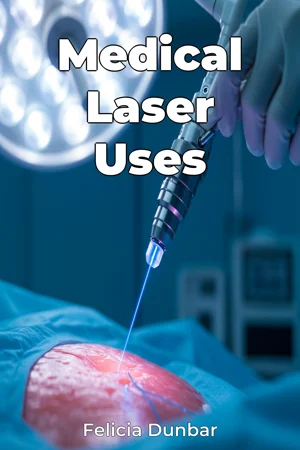
Have you ever wondered how a beam of light can be a surgeon's most precise tool? "Medical Laser Uses" explores the transformative applications of lasers in modern medicine, detailing their crucial role in diverse treatments and surgical procedures. This book unveils the science, technology, and impact of lasers, clarifying how these powerful tools are revolutionizing healthcare. The book is structured around three key themes: the fundamental physics of medical lasers, their diverse clinical applications across various specialties, and the future trends shaping laser medicine. Understanding the underlying principles of laser technology – including light amplification, specific wavelengths, and energy delivery methods – is essential for grasping their therapeutic potential. The book then explains how these principles translate into practical applications, from delicate eye surgeries to complex tumor removals. Finally, it assesses emerging laser technologies and their potential to further enhance medical treatments. "Medical Laser Uses" provides essential context by examining the history of laser development and their initial adoption in medicine, highlighting the evolution from early experimental uses to today's sophisticated applications. It builds upon the reader’s understanding of basic biology and physics to explain laser-tissue interactions and the mechanisms by which lasers achieve therapeutic effects. The core argument presented is that medical lasers offer unparalleled precision, minimal invasiveness, and the ability to target specific tissues – leading to improved patient outcomes and reduced recovery times compared to traditional surgical methods. This argument is explored through detailed analyses of clinical trials, case studies, and technological advancements in laser systems. The book begins with an introduction to the physics of lasers and their interaction with biological tissues. It then progresses through a systematic review of laser applications in various medical fields, including ophthalmology, dermatology, cardiology, oncology, and urology. Each chapter focuses on specific laser types, treatment techniques, and clinical outcomes, culminating in a discussion of the ethical considerations and regulatory landscape surrounding laser medicine. The content also explores the practical implications of incorporating laser technology into medical practice, considering factors such as cost-effectiveness, training requirements, and patient safety protocols. Evidence is presented through a synthesis of peer-reviewed research articles, clinical guidelines, and technological specifications of laser devices. It draws upon data from large-scale clinical trials, meta-analyses, and reports from medical technology assessment agencies. The book also makes connections to related fields such as biomedical engineering, materials science, and optics, demonstrating how interdisciplinary collaboration drives innovation in laser medicine. Furthermore, it highlights the implications of laser technology for regenerative medicine and personalized treatment approaches. "Medical Laser Uses" adopts a balanced and objective tone, presenting factual information in a clear and accessible manner. The writing style is technical yet engaging, catering to readers with a general interest in science and medicine. The book targets medical students, practicing physicians, biomedical engineers, and anyone seeking a comprehensive overview of medical laser technology and its applications. It offers valuable insights for healthcare professionals looking to incorporate laser-based therapies into their practice. The book's scope encompasses a wide range of medical laser applications but is limited to established and emerging clinical uses, excluding purely experimental or theoretical applications. It acknowledges the ongoing debates surrounding the cost-effectiveness and long-term outcomes of certain laser procedures, providing a balanced perspective on the benefits and limitations of this technology. Ultimately, "Medical Laser Uses" equips readers with a solid understanding of how lasers are transforming medical practice, enabling them to critically evaluate new developments, and appreciate the potential of this technology to improve patient care.
Have you ever wondered how a beam of light can be a surgeon's most precise tool? "Medical Laser Uses" explores the transformative applications of lasers in modern medicine, detailing their crucial role in diverse treatments and surgical procedures. This book unveils the science, technology, and impact of lasers, clarifying how these powerful tools are revolutionizing healthcare. The book is structured around three key themes: the fundamental physics of medical lasers, their diverse clinical applications across various specialties, and the future trends shaping laser medicine. Understanding the underlying principles of laser technology – including light amplification, specific wavelengths, and energy delivery methods – is essential for grasping their therapeutic potential. The book then explains how these principles translate into practical applications, from delicate eye surgeries to complex tumor removals. Finally, it assesses emerging laser technologies and their potential to further enhance medical treatments. "Medical Laser Uses" provides essential context by examining the history of laser development and their initial adoption in medicine, highlighting the evolution from early experimental uses to today's sophisticated applications. It builds upon the reader’s understanding of basic biology and physics to explain laser-tissue interactions and the mechanisms by which lasers achieve therapeutic effects. The core argument presented is that medical lasers offer unparalleled precision, minimal invasiveness, and the ability to target specific tissues – leading to improved patient outcomes and reduced recovery times compared to traditional surgical methods. This argument is explored through detailed analyses of clinical trials, case studies, and technological advancements in laser systems. The book begins with an introduction to the physics of lasers and their interaction with biological tissues. It then progresses through a systematic review of laser applications in various medical fields, including ophthalmology, dermatology, cardiology, oncology, and urology. Each chapter focuses on specific laser types, treatment techniques, and clinical outcomes, culminating in a discussion of the ethical considerations and regulatory landscape surrounding laser medicine. The content also explores the practical implications of incorporating laser technology into medical practice, considering factors such as cost-effectiveness, training requirements, and patient safety protocols. Evidence is presented through a synthesis of peer-reviewed research articles, clinical guidelines, and technological specifications of laser devices. It draws upon data from large-scale clinical trials, meta-analyses, and reports from medical technology assessment agencies. The book also makes connections to related fields such as biomedical engineering, materials science, and optics, demonstrating how interdisciplinary collaboration drives innovation in laser medicine. Furthermore, it highlights the implications of laser technology for regenerative medicine and personalized treatment approaches. "Medical Laser Uses" adopts a balanced and objective tone, presenting factual information in a clear and accessible manner. The writing style is technical yet engaging, catering to readers with a general interest in science and medicine. The book targets medical students, practicing physicians, biomedical engineers, and anyone seeking a comprehensive overview of medical laser technology and its applications. It offers valuable insights for healthcare professionals looking to incorporate laser-based therapies into their practice. The book's scope encompasses a wide range of medical laser applications but is limited to established and emerging clinical uses, excluding purely experimental or theoretical applications. It acknowledges the ongoing debates surrounding the cost-effectiveness and long-term outcomes of certain laser procedures, providing a balanced perspective on the benefits and limitations of this technology. Ultimately, "Medical Laser Uses" equips readers with a solid understanding of how lasers are transforming medical practice, enabling them to critically evaluate new developments, and appreciate the potential of this technology to improve patient care.
"Medical Laser Uses" explores the revolutionary impact of laser technology in modern medicine, offering unparalleled precision across various treatments. Lasers, utilizing specific wavelengths and energy delivery, have transformed surgical procedures, notably in ophthalmology and dermatology. The book journeys through the fundamental physics of medical lasers, diverse clinical applications, and future trends, highlighting how laser-tissue interactions achieve therapeutic effects. The book emphasizes lasers' minimal invasiveness, leading to improved patient outcomes and reduced recovery times, a significant advantage over traditional methods. It navigates through laser applications in fields like cardiology, oncology, and urology, detailing specific laser types and treatment techniques. Readers gain insights into the evolution of laser medicine, from early experimental uses to sophisticated clinical applications, and the ethical considerations surrounding this technology. Commencing with the physics of lasers, the book progresses through a review of medical fields, systematically uncovering laser applications. The content also addresses the practical implications of integrating laser technology into medical practice, such as cost-effectiveness and training requirements. This makes "Medical Laser Uses" exceptionally valuable for medical students, physicians, and biomedical engineers seeking a comprehensive understanding of laser medicine.
Book Details
ISBN
9788235221599
Publisher
Publifye AS
Your Licenses
You don't own any licenses for this book
Purchase a license below to unlock this book and download the EPUB.
Purchase License
Select a tier to unlock this book
Need bulk licensing?
Contact us for enterprise agreements.