
About This Book
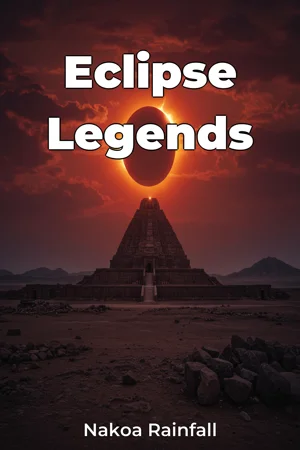
What if the fleeting shadow of an eclipse held the power to shape civilizations? "Eclipse Legends" delves into the profound and multifaceted influence of solar and lunar eclipses on ancient myths, prophecies, and religious interpretations across diverse cultures. This book explores how these celestial events, viewed with a mixture of awe and fear, became deeply interwoven with humanity's understanding of the cosmos and our place within it. We will examine two core themes. First, we dissect the diverse mythological narratives surrounding eclipses, from tales of celestial dragons devouring the sun to accounts of gods battling for cosmic supremacy. Second, we analyze the role of eclipses in shaping prophetic traditions and religious practices, looking at how ancient societies used eclipses to predict the future, appease deities, and legitimize political power. These topics are important because they reveal how human cultures have historically sought to understand and control their environment, imbuing natural phenomena with meaning and significance. Understanding the cultural interpretations of eclipses requires insight into ancient astronomical knowledge, religious beliefs, and social structures. We explore prevalent creation myths, cosmological models, and the roles of priests and astronomers in different societies. We also consider how the predictability of eclipses, once mastered, influenced social and political events. "Eclipse Legends" argues that eclipses served as powerful catalysts in the development of ancient mythologies and religious systems. We demonstrate that consistent patterns of interpretation emerged across geographically disparate cultures, suggesting a universal human response to these dramatic celestial events. This argument advances understanding of how early civilizations constructed meaning from their observations of the natural world. The book begins by introducing the astronomical mechanics of eclipses and the cross-cultural evidence of their impact. Subsequent chapters explore specific regional traditions, including those of Mesopotamia, Egypt, China, and Mesoamerica. Each chapter focuses on: a) the local mythology and folklore associated with eclipses; b) the role of eclipses in religious rituals and divination; and c) the use of eclipses as omens or signs of divine intervention. The concluding chapters synthesize these findings, analyzing common threads and regional variations in eclipse lore. We also consider the lasting influence of these ancient beliefs on contemporary culture. Our analysis relies on a combination of archaeological evidence, textual analysis of ancient religious texts and historical records, and comparative mythology. We draw upon original translations of primary source materials, incorporating recent scholarly research in astronomy, anthropology, and religious studies. The book connects to several fields, including: the history of astronomy, which provides a scientific framework for understanding ancient observations; comparative religion, which allows us to analyze the cross-cultural similarities and differences in eclipse beliefs; and anthropology, which offers insight into the social and cultural contexts in which these beliefs developed. These interdisciplinary connections enrich the understanding of the topic. "Eclipse Legends" offers a unique perspective by examining the interconnectedness of astronomical phenomena, religious beliefs, and social practices across a broad range of civilizations. Rather than focusing on a single culture or a specific historical period, we adopt a global, comparative approach. The writing style is academic yet accessible, aiming to engage both scholars and general readers interested in history, religion, and mythology. The tone is informative and analytical, presenting evidence and arguments in a clear and objective manner. The target audience includes students and scholars of history, religion, and mythology, as well as general readers with an interest in ancient cultures and astronomy. The book will appeal to those seeking a deeper understanding of how ancient civilizations interpreted the natural world and the profound influence of celestial events on human beliefs and practices. As a work of non-fiction, this book adheres to the standards of historical and scholarly accuracy. All sources are properly cited, and interpretations are supported by evidence. The scope of the book is broad, covering a wide range of cultures and historical periods, but it is limited to the study of solar and lunar eclipses and their impact on ancient myth and religion. Understanding how ancient societies interpreted eclipses can provide insight into their worldview and their relationship with the cosmos. It also helps us appreciate the enduring power of myth and religion in shaping human culture. While the book presents a comprehensive overview of eclipse legends, it acknowledges that there are alternative interpretations and ongoing debates about the meaning and significance of these phenomena. We address these controversies by presenting different viewpoints and evaluating the evidence for each.
What if the fleeting shadow of an eclipse held the power to shape civilizations? "Eclipse Legends" delves into the profound and multifaceted influence of solar and lunar eclipses on ancient myths, prophecies, and religious interpretations across diverse cultures. This book explores how these celestial events, viewed with a mixture of awe and fear, became deeply interwoven with humanity's understanding of the cosmos and our place within it. We will examine two core themes. First, we dissect the diverse mythological narratives surrounding eclipses, from tales of celestial dragons devouring the sun to accounts of gods battling for cosmic supremacy. Second, we analyze the role of eclipses in shaping prophetic traditions and religious practices, looking at how ancient societies used eclipses to predict the future, appease deities, and legitimize political power. These topics are important because they reveal how human cultures have historically sought to understand and control their environment, imbuing natural phenomena with meaning and significance. Understanding the cultural interpretations of eclipses requires insight into ancient astronomical knowledge, religious beliefs, and social structures. We explore prevalent creation myths, cosmological models, and the roles of priests and astronomers in different societies. We also consider how the predictability of eclipses, once mastered, influenced social and political events. "Eclipse Legends" argues that eclipses served as powerful catalysts in the development of ancient mythologies and religious systems. We demonstrate that consistent patterns of interpretation emerged across geographically disparate cultures, suggesting a universal human response to these dramatic celestial events. This argument advances understanding of how early civilizations constructed meaning from their observations of the natural world. The book begins by introducing the astronomical mechanics of eclipses and the cross-cultural evidence of their impact. Subsequent chapters explore specific regional traditions, including those of Mesopotamia, Egypt, China, and Mesoamerica. Each chapter focuses on: a) the local mythology and folklore associated with eclipses; b) the role of eclipses in religious rituals and divination; and c) the use of eclipses as omens or signs of divine intervention. The concluding chapters synthesize these findings, analyzing common threads and regional variations in eclipse lore. We also consider the lasting influence of these ancient beliefs on contemporary culture. Our analysis relies on a combination of archaeological evidence, textual analysis of ancient religious texts and historical records, and comparative mythology. We draw upon original translations of primary source materials, incorporating recent scholarly research in astronomy, anthropology, and religious studies. The book connects to several fields, including: the history of astronomy, which provides a scientific framework for understanding ancient observations; comparative religion, which allows us to analyze the cross-cultural similarities and differences in eclipse beliefs; and anthropology, which offers insight into the social and cultural contexts in which these beliefs developed. These interdisciplinary connections enrich the understanding of the topic. "Eclipse Legends" offers a unique perspective by examining the interconnectedness of astronomical phenomena, religious beliefs, and social practices across a broad range of civilizations. Rather than focusing on a single culture or a specific historical period, we adopt a global, comparative approach. The writing style is academic yet accessible, aiming to engage both scholars and general readers interested in history, religion, and mythology. The tone is informative and analytical, presenting evidence and arguments in a clear and objective manner. The target audience includes students and scholars of history, religion, and mythology, as well as general readers with an interest in ancient cultures and astronomy. The book will appeal to those seeking a deeper understanding of how ancient civilizations interpreted the natural world and the profound influence of celestial events on human beliefs and practices. As a work of non-fiction, this book adheres to the standards of historical and scholarly accuracy. All sources are properly cited, and interpretations are supported by evidence. The scope of the book is broad, covering a wide range of cultures and historical periods, but it is limited to the study of solar and lunar eclipses and their impact on ancient myth and religion. Understanding how ancient societies interpreted eclipses can provide insight into their worldview and their relationship with the cosmos. It also helps us appreciate the enduring power of myth and religion in shaping human culture. While the book presents a comprehensive overview of eclipse legends, it acknowledges that there are alternative interpretations and ongoing debates about the meaning and significance of these phenomena. We address these controversies by presenting different viewpoints and evaluating the evidence for each.
"Eclipse Legends" explores the captivating role of solar and lunar eclipses in shaping ancient myths and religious interpretations across diverse cultures. The book examines how these celestial events, often viewed as omens or acts of divine intervention, influenced humanity's understanding of the cosmos. Intriguingly, some cultures believed eclipses were caused by celestial dragons devouring the sun. The study of eclipse legends reveals consistent patterns of interpretation across geographically disparate cultures, demonstrating a universal human response to these dramatic celestial events. This book approaches the topic by dissecting mythological narratives and analyzing the role of eclipses in shaping prophetic traditions and religious practices. By examining ancient astronomical knowledge, religious beliefs, and social structures, "Eclipse Legends" argues that these events served as powerful catalysts in the development of ancient mythologies and religious systems. Beginning with the astronomical mechanics of eclipses, the book progresses through specific regional traditions, including Mesopotamia, Egypt, China, and Mesoamerica, before synthesizing findings and analyzing common threads. The value of this book lies in its global, comparative approach, examining the interconnectedness of astronomical phenomena, religious beliefs, and social practices. Readers interested in history and religion will gain a deeper understanding of how ancient civilizations interpreted the natural world and the profound influence of celestial events on human beliefs. The book incorporates archaeological evidence, textual analysis of ancient religious texts, and comparative mythology to provide a comprehensive overview.
Book Details
ISBN
9788235221261
Publisher
Publifye AS
Your Licenses
You don't own any licenses for this book
Purchase a license below to unlock this book and download the EPUB.
Purchase License
Select a tier to unlock this book
Need bulk licensing?
Contact us for enterprise agreements.