
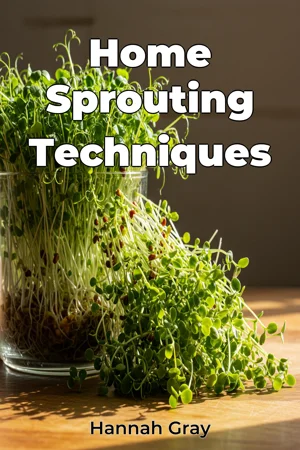
About This Book
Did you know that a tiny seed holds the potential for a powerhouse of nutrition, easily grown right in your kitchen? "Home Sprouting Techniques" unveils the secrets to cultivating nutrient-rich sprouts indoors, transforming your diet and connecting you to a sustainable food source, irrespective of your gardening experience. This book bridges the gap between wanting to eat healthier and achieving that goal through a simple, accessible method. This book focuses on three key areas: understanding the nutritional benefits of sprouts, mastering various sprouting methods, and troubleshooting common challenges. These topics are crucial because sprouts offer a concentrated source of vitamins, minerals, and enzymes, often exceeding the nutritional value of their mature counterparts. Mastering sprouting allows readers to access these benefits year-round, regardless of climate or growing space limitations. Addressing potential problems ensures success and encourages long-term adoption of sprouting practices. The practice of sprouting dates back thousands of years, with evidence suggesting its use in ancient China and other cultures. Historically, sprouting served as a way to preserve and enhance the nutritional content of seeds, especially during times of scarcity. Today, interest in sprouting is resurging due to a growing awareness of the importance of whole foods and sustainable living. No prior gardening or cooking expertise is needed to understand and implement the techniques described – just a willingness to learn and experiment. The central argument of "Home Sprouting Techniques" is that indoor sprouting is an accessible and efficient way for anyone to significantly enhance their diet with fresh, nutrient-dense food using minimal resources. This argument is vital because it empowers individuals to take control of their nutrition and reduce reliance on commercially produced vegetables, which can be costly and potentially lacking in freshness. The book is structured to provide a comprehensive guide, starting with an introduction to the world of sprouts, covering the definition, history, and nutritional advantages. The following sections delve into various sprouting methods, from jar sprouting and tray sprouting to more advanced techniques using specialized equipment. Each method is explained step-by-step, with detailed instructions and clear photographs. A dedicated section is allocated to identifying and resolving common sprouting problems like mold growth, uneven germination and pest infestations. The book culminates in a collection of recipes that showcase the versatility of sprouts in salads, sandwiches, soups, and other dishes. The information presented is supported by scientific research on the nutritional composition of sprouts, along with practical experience in home sprouting. The book draws upon data from nutritional studies and incorporates insights from experienced home sprouters, providing a blend of scientific validity and real-world applicability. "Home Sprouting Techniques" connects to several related fields, including nutrition, botany, and sustainable agriculture. Its exploration of nutrient density links directly to nutritional science, while its discussion of seed germination relates to botanical principles. By promoting indoor food production, it also aligns with the principles of sustainable agriculture. These interdisciplinary connections enhance the book's argument by demonstrating the multifaceted benefits of sprouting. What sets "Home Sprouting Techniques" apart is its practical, hands-on approach. The book emphasizes experimentation and encourages readers to adapt the techniques to their own preferences and resources. The book adopts a conversational and accessible writing style, avoiding technical jargon where possible and explaining complex concepts in a clear and understandable manner. Its tone is encouraging and enthusiastic, aiming to inspire readers to embrace sprouting as a rewarding and beneficial practice. The target audience includes health-conscious individuals, home cooks, gardeners of all levels, and anyone interested in sustainable living. This book provides valuable information and practical guidance for anyone looking to improve their diet and connect with their food source. As a "Gardening General, Cooking" book, it offers precise instructions, visual aids, and recipes to ensure the success of the reader, aligning with the expectations of these genres. The book's scope is limited to indoor sprouting techniques, focusing on the cultivation of sprouts from various seeds and beans. It does not cover the cultivation of microgreens or other types of indoor gardening. This intentional limitation allows for a more in-depth exploration of the specific topic. Readers can apply the information in this book to improve their diet, reduce their grocery bills, and minimize their environmental impact. Sprouting provides a readily available source of fresh, nutritious food that can be incorporated into a wide range of meals and snacks. While sprouting is generally safe, there are some potential risks associated with foodborne illnesses, particularly from sprouts grown in unsanitary conditions. The book addresses these concerns by providing detailed instructions on proper hygiene and sanitation practices, empowering readers to sprout safely.
Did you know that a tiny seed holds the potential for a powerhouse of nutrition, easily grown right in your kitchen? "Home Sprouting Techniques" unveils the secrets to cultivating nutrient-rich sprouts indoors, transforming your diet and connecting you to a sustainable food source, irrespective of your gardening experience. This book bridges the gap between wanting to eat healthier and achieving that goal through a simple, accessible method. This book focuses on three key areas: understanding the nutritional benefits of sprouts, mastering various sprouting methods, and troubleshooting common challenges. These topics are crucial because sprouts offer a concentrated source of vitamins, minerals, and enzymes, often exceeding the nutritional value of their mature counterparts. Mastering sprouting allows readers to access these benefits year-round, regardless of climate or growing space limitations. Addressing potential problems ensures success and encourages long-term adoption of sprouting practices. The practice of sprouting dates back thousands of years, with evidence suggesting its use in ancient China and other cultures. Historically, sprouting served as a way to preserve and enhance the nutritional content of seeds, especially during times of scarcity. Today, interest in sprouting is resurging due to a growing awareness of the importance of whole foods and sustainable living. No prior gardening or cooking expertise is needed to understand and implement the techniques described – just a willingness to learn and experiment. The central argument of "Home Sprouting Techniques" is that indoor sprouting is an accessible and efficient way for anyone to significantly enhance their diet with fresh, nutrient-dense food using minimal resources. This argument is vital because it empowers individuals to take control of their nutrition and reduce reliance on commercially produced vegetables, which can be costly and potentially lacking in freshness. The book is structured to provide a comprehensive guide, starting with an introduction to the world of sprouts, covering the definition, history, and nutritional advantages. The following sections delve into various sprouting methods, from jar sprouting and tray sprouting to more advanced techniques using specialized equipment. Each method is explained step-by-step, with detailed instructions and clear photographs. A dedicated section is allocated to identifying and resolving common sprouting problems like mold growth, uneven germination and pest infestations. The book culminates in a collection of recipes that showcase the versatility of sprouts in salads, sandwiches, soups, and other dishes. The information presented is supported by scientific research on the nutritional composition of sprouts, along with practical experience in home sprouting. The book draws upon data from nutritional studies and incorporates insights from experienced home sprouters, providing a blend of scientific validity and real-world applicability. "Home Sprouting Techniques" connects to several related fields, including nutrition, botany, and sustainable agriculture. Its exploration of nutrient density links directly to nutritional science, while its discussion of seed germination relates to botanical principles. By promoting indoor food production, it also aligns with the principles of sustainable agriculture. These interdisciplinary connections enhance the book's argument by demonstrating the multifaceted benefits of sprouting. What sets "Home Sprouting Techniques" apart is its practical, hands-on approach. The book emphasizes experimentation and encourages readers to adapt the techniques to their own preferences and resources. The book adopts a conversational and accessible writing style, avoiding technical jargon where possible and explaining complex concepts in a clear and understandable manner. Its tone is encouraging and enthusiastic, aiming to inspire readers to embrace sprouting as a rewarding and beneficial practice. The target audience includes health-conscious individuals, home cooks, gardeners of all levels, and anyone interested in sustainable living. This book provides valuable information and practical guidance for anyone looking to improve their diet and connect with their food source. As a "Gardening General, Cooking" book, it offers precise instructions, visual aids, and recipes to ensure the success of the reader, aligning with the expectations of these genres. The book's scope is limited to indoor sprouting techniques, focusing on the cultivation of sprouts from various seeds and beans. It does not cover the cultivation of microgreens or other types of indoor gardening. This intentional limitation allows for a more in-depth exploration of the specific topic. Readers can apply the information in this book to improve their diet, reduce their grocery bills, and minimize their environmental impact. Sprouting provides a readily available source of fresh, nutritious food that can be incorporated into a wide range of meals and snacks. While sprouting is generally safe, there are some potential risks associated with foodborne illnesses, particularly from sprouts grown in unsanitary conditions. The book addresses these concerns by providing detailed instructions on proper hygiene and sanitation practices, empowering readers to sprout safely.
Unlock the nutritional powerhouse within seeds through "Home Sprouting Techniques," a guide to growing nutrient-rich sprouts right in your kitchen. This book reveals how to easily cultivate sprouts indoors, offering a sustainable and accessible way to enhance your diet, regardless of your gardening experience. Sprouts are a concentrated source of vitamins, minerals, and enzymes, often exceeding the nutritional value of mature vegetables. Plus, sprouting dates back thousands of years, serving as a method to preserve and enhance seed nutrition, showcasing its enduring value. The book takes a hands-on approach, guiding you through various sprouting methods, from simple jar techniques to advanced methods using specialized equipment. It also addresses common challenges like mold growth and uneven germination, ensuring your success. Each method is explained step-by-step, with clear instructions. The book progresses logically, starting with the basics of sprouting, then moves onto specific techniques, and culminates in a collection of recipes that showcase the versatility of sprouts in your cooking.
Book Details
ISBN
9788235221025
Publisher
Publifye AS
Your Licenses
You don't own any licenses for this book
Purchase a license below to unlock this book and download the EPUB.
Purchase License
Select a tier to unlock this book
Need bulk licensing?
Contact us for enterprise agreements.