
About This Book
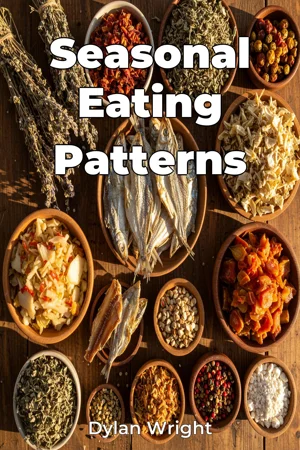
How did our ancestors ensure a varied and nutritious diet year-round, long before the advent of global food supply chains? "Seasonal Eating Patterns" delves into the ingenious strategies employed across diverse climates to harness seasonal abundance and preserve it for leaner times. This book explores traditional harvest calendars and preservation techniques, revealing a wealth of knowledge crucial for understanding past foodways and informing present-day sustainable eating practices. The book's central argument is that traditional seasonal eating patterns, driven by necessity and deep environmental understanding, represent sophisticated systems of resource management that maximized nutritional intake and minimized waste long before the advent of modern agriculture and food preservation technologies. These systems provide valuable lessons for contemporary efforts to promote food security, sustainability, and dietary diversity. It challenges the modern reliance on year-round availability of all foods, advocating for a renewed appreciation for the benefits of aligning our diets with the rhythms of nature. "Seasonal Eating Patterns" navigates two core themes: the analysis of traditional harvest calendars across various climate zones, and the exploration of food preservation techniques adapted to those specific seasonal yields. Harvest Calendars served not merely as guides for planting and harvesting, but also as cultural codifications of ecological knowledge. Investigating these calendars reveals how societies understood and interacted with their environments. Preservation Techniques such as drying, fermenting, smoking, and salting, facilitated the storage of seasonal surpluses, ensuring access to essential nutrients throughout the year. The book is structured in three parts. Part 1 introduces the concept of seasonal eating and its historical significance, examining the environmental constraints and opportunities that shaped food cultures worldwide. It establishes a baseline understanding of agricultural practices before industrialization. Part 2 explores specific harvest calendars and preservation methods across different climatic zones, from temperate regions to arid lands. Part 3 synthesizes the lessons learned from these historical examples, proposing practical applications for contemporary food systems and individual dietary choices. Our research draws upon a wide range of sources, including archaeobotanical evidence, historical texts, ethnographic studies of contemporary traditional societies, and analyses of early agricultural manuals. Data is presented through comparative analysis of dietary practices across geographical regions and time periods, highlighting the adaptability and resilience of traditional food systems. The book connects to fields such as anthropology, environmental studies, and nutrition science. Anthropology informs understanding the cultural contexts of food practices. Environmental studies provide the ecological framework. Nutrition science helps analyze the nutritional value of traditional diets. Examining sustainable agriculture adds another layer. A unique approach is the synthesis of historical food practices with contemporary nutritional science, assessing the nutritional adequacy and potential health benefits of traditional seasonal diets. It contrasts these diets with modern eating habits, highlighting the potential for rediscovering forgotten food sources and preservation methods to enhance dietary diversity. The tone is informative and accessible. While grounded in rigorous research, it avoids jargon and presents information in a way that is engaging for a broad audience. The non-fiction genre conventions are upheld through a clear structure, well-supported arguments, and comprehensive source citations. The target audience includes food enthusiasts, nutritionists, historians, environmentalists, and anyone interested in sustainable living. It offers practical insights for individuals seeking to align their diets with seasonal availability and reduce their environmental impact. The scope of the book is broad, covering a wide range of geographical regions and historical periods. However, it focuses primarily on pre-industrial societies and the historical evolution of food practices. It does not delve deeply into the economic or political factors influencing contemporary food systems. The information provided can be applied to promote local and seasonal eating, reduce food waste, and enhance dietary diversity. It also informs discussions about food sovereignty and the preservation of traditional food knowledge. The preservation methods described can be used to promote sustainability. There are ongoing debates about the sustainability of modern agricultural practices. This book addresses these debates by presenting evidence of alternative food systems that represent a more harmonious relationship between humans and the environment.
How did our ancestors ensure a varied and nutritious diet year-round, long before the advent of global food supply chains? "Seasonal Eating Patterns" delves into the ingenious strategies employed across diverse climates to harness seasonal abundance and preserve it for leaner times. This book explores traditional harvest calendars and preservation techniques, revealing a wealth of knowledge crucial for understanding past foodways and informing present-day sustainable eating practices. The book's central argument is that traditional seasonal eating patterns, driven by necessity and deep environmental understanding, represent sophisticated systems of resource management that maximized nutritional intake and minimized waste long before the advent of modern agriculture and food preservation technologies. These systems provide valuable lessons for contemporary efforts to promote food security, sustainability, and dietary diversity. It challenges the modern reliance on year-round availability of all foods, advocating for a renewed appreciation for the benefits of aligning our diets with the rhythms of nature. "Seasonal Eating Patterns" navigates two core themes: the analysis of traditional harvest calendars across various climate zones, and the exploration of food preservation techniques adapted to those specific seasonal yields. Harvest Calendars served not merely as guides for planting and harvesting, but also as cultural codifications of ecological knowledge. Investigating these calendars reveals how societies understood and interacted with their environments. Preservation Techniques such as drying, fermenting, smoking, and salting, facilitated the storage of seasonal surpluses, ensuring access to essential nutrients throughout the year. The book is structured in three parts. Part 1 introduces the concept of seasonal eating and its historical significance, examining the environmental constraints and opportunities that shaped food cultures worldwide. It establishes a baseline understanding of agricultural practices before industrialization. Part 2 explores specific harvest calendars and preservation methods across different climatic zones, from temperate regions to arid lands. Part 3 synthesizes the lessons learned from these historical examples, proposing practical applications for contemporary food systems and individual dietary choices. Our research draws upon a wide range of sources, including archaeobotanical evidence, historical texts, ethnographic studies of contemporary traditional societies, and analyses of early agricultural manuals. Data is presented through comparative analysis of dietary practices across geographical regions and time periods, highlighting the adaptability and resilience of traditional food systems. The book connects to fields such as anthropology, environmental studies, and nutrition science. Anthropology informs understanding the cultural contexts of food practices. Environmental studies provide the ecological framework. Nutrition science helps analyze the nutritional value of traditional diets. Examining sustainable agriculture adds another layer. A unique approach is the synthesis of historical food practices with contemporary nutritional science, assessing the nutritional adequacy and potential health benefits of traditional seasonal diets. It contrasts these diets with modern eating habits, highlighting the potential for rediscovering forgotten food sources and preservation methods to enhance dietary diversity. The tone is informative and accessible. While grounded in rigorous research, it avoids jargon and presents information in a way that is engaging for a broad audience. The non-fiction genre conventions are upheld through a clear structure, well-supported arguments, and comprehensive source citations. The target audience includes food enthusiasts, nutritionists, historians, environmentalists, and anyone interested in sustainable living. It offers practical insights for individuals seeking to align their diets with seasonal availability and reduce their environmental impact. The scope of the book is broad, covering a wide range of geographical regions and historical periods. However, it focuses primarily on pre-industrial societies and the historical evolution of food practices. It does not delve deeply into the economic or political factors influencing contemporary food systems. The information provided can be applied to promote local and seasonal eating, reduce food waste, and enhance dietary diversity. It also informs discussions about food sovereignty and the preservation of traditional food knowledge. The preservation methods described can be used to promote sustainability. There are ongoing debates about the sustainability of modern agricultural practices. This book addresses these debates by presenting evidence of alternative food systems that represent a more harmonious relationship between humans and the environment.
"Seasonal Eating Patterns" explores how pre-industrial societies ingeniously utilized seasonal food availability. It reveals that harvest calendars were not just planting guides, but sophisticated cultural systems reflecting a deep understanding of local ecology. Traditional food preservation techniques, like fermentation and drying, extended seasonal abundance, ensuring year-round nutrition. The book examines traditional foodways across diverse climates, highlighting practices that maximized dietary diversity and minimized waste. Interestingly, these methods often provided nutritional benefits comparable to, or even exceeding, those of modern diets. By analyzing historical texts, archaeobotanical evidence, and ethnographic studies, the book connects past food practices with contemporary nutritional science. Structured in three parts, the book first introduces the historical significance of seasonal eating. It then delves into specific harvest calendars and preservation methods across various climatic zones. Finally, it synthesizes these historical lessons, proposing practical applications for modern food systems, advocating for a more sustainable and localized approach to eating.
Book Details
ISBN
9788235221018
Publisher
Publifye AS
Your Licenses
You don't own any licenses for this book
Purchase a license below to unlock this book and download the EPUB.
Purchase License
Select a tier to unlock this book
Need bulk licensing?
Contact us for enterprise agreements.