
About This Book
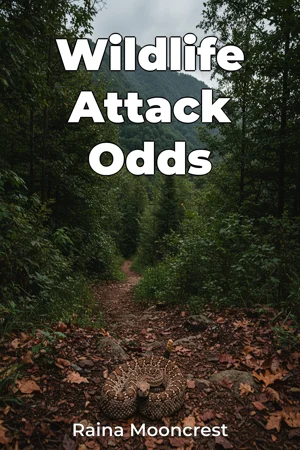
Have you ever wondered what your actual chances of encountering a bear or snake are while hiking deep in the wilderness? "Wildlife Attack Odds" delves into this very question, providing a fact-based analysis of the probabilities and circumstances surrounding encounters with these animals in remote areas. This book isn't about sensationalizing nature's dangers, but rather about understanding them through data and informed analysis. The core of this book revolves around three key topics: animal behavior patterns, environmental factors influencing encounters, and statistical analysis of reported incidents. Understanding animal behavior, particularly regarding food scarcity, mating seasons, and territorial defense, is crucial for predicting potential conflict zones. Similarly, environmental factors like climate change, deforestation, and human encroachment play a significant role in altering animal habitats and increasing the likelihood of human-wildlife interactions. Finally, rigorous statistical analysis of documented attacks and encounters allows us to identify trends, risk factors, and regions with higher incident rates. Historically, fear of predators has been a constant companion of humankind, often fueled by anecdotal evidence and folklore. This book seeks to replace fear with knowledge, drawing upon scientific research and data analysis to provide a more objective perspective. Readers should have a basic understanding of ecological principles and statistical concepts to fully appreciate the book's content, although these concepts will be explained in a way that's approachable for a general audience. The central argument of "Wildlife Attack Odds" is that while the risk of a serious wildlife encounter is statistically low, understanding the factors that contribute to these incidents can significantly improve personal safety and promote responsible interaction with the natural world. This argument is vital because it moves beyond generalized warnings, offering specific, actionable insights that can be used to mitigate risks. The book begins with an introduction to the statistical framework used to analyze wildlife encounters, explaining how data is collected and interpreted. It then develops its ideas through three major sections. The first section details the behavior and ecology of bears and snakes, emphasizing how their actions are influenced by environmental conditions and human activity. The second section analyzes incident reports, looking for patterns related to location, season, time of day, and human behavior. The third section explores the impact of land management policies and conservation efforts on wildlife populations and encounter rates. The book culminates with a discussion of practical strategies for minimizing risk while enjoying outdoor activities, and the implications of these findings for wildlife management and public safety. The evidence presented in this book is based on a range of sources, including government wildlife databases, scientific research papers, incident reports from park services, and statistical analyses performed by the authors. Original data sets obtained through Freedom of Information Act requests will also be presented. This book connects to several fields. Ecology, through its investigation of animal behaviors and habitat dynamics. Statistics, through its reliance on quantitative data and probability calculations and sociology by examining human behavior in natural settings and the social impact of wildlife encounters. What sets "Wildlife Attack Odds" apart is its emphasis on statistical probability rather than anecdotal fear. It offers a data-driven perspective on wildlife encounters that is both informative and empowering, allowing readers to make informed decisions about their safety and responsible outdoor recreation. The tone of the book is professional and objective, yet accessible to a broad audience. The writing style balances scientific rigor with clear and engaging prose, avoiding technical jargon where possible and providing explanations when necessary. The primary target audience includes outdoor enthusiasts, hikers, campers, hunters, and anyone who spends time in remote areas. It will be particularly valuable to those who are interested in learning about the factual risks associated with wildlife encounters and how to mitigate them. As a work of non-fiction in the adventure and nature genres, "Wildlife Attack Odds" aims to inform and educate readers while also captivating them with stories of real-world encounters. It avoids overly sensationalized accounts, maintaining a focus on data and evidence-based analysis. The book's scope is limited to encounters with bears and snakes, focusing on North America. While the principles discussed may be applicable to other regions and species, the specific data and analysis are geographically focused. The information in this book can be used to make informed decisions regarding personal safety in the wilderness and to advocate for responsible land management policies and conservation efforts. While the effectiveness of certain deterrents, like bear spray, and land management strategies is sometimes debated, "Wildlife Attack Odds" presents a balanced overview of these controversies, relying on scientific research to evaluate the evidence.
Have you ever wondered what your actual chances of encountering a bear or snake are while hiking deep in the wilderness? "Wildlife Attack Odds" delves into this very question, providing a fact-based analysis of the probabilities and circumstances surrounding encounters with these animals in remote areas. This book isn't about sensationalizing nature's dangers, but rather about understanding them through data and informed analysis. The core of this book revolves around three key topics: animal behavior patterns, environmental factors influencing encounters, and statistical analysis of reported incidents. Understanding animal behavior, particularly regarding food scarcity, mating seasons, and territorial defense, is crucial for predicting potential conflict zones. Similarly, environmental factors like climate change, deforestation, and human encroachment play a significant role in altering animal habitats and increasing the likelihood of human-wildlife interactions. Finally, rigorous statistical analysis of documented attacks and encounters allows us to identify trends, risk factors, and regions with higher incident rates. Historically, fear of predators has been a constant companion of humankind, often fueled by anecdotal evidence and folklore. This book seeks to replace fear with knowledge, drawing upon scientific research and data analysis to provide a more objective perspective. Readers should have a basic understanding of ecological principles and statistical concepts to fully appreciate the book's content, although these concepts will be explained in a way that's approachable for a general audience. The central argument of "Wildlife Attack Odds" is that while the risk of a serious wildlife encounter is statistically low, understanding the factors that contribute to these incidents can significantly improve personal safety and promote responsible interaction with the natural world. This argument is vital because it moves beyond generalized warnings, offering specific, actionable insights that can be used to mitigate risks. The book begins with an introduction to the statistical framework used to analyze wildlife encounters, explaining how data is collected and interpreted. It then develops its ideas through three major sections. The first section details the behavior and ecology of bears and snakes, emphasizing how their actions are influenced by environmental conditions and human activity. The second section analyzes incident reports, looking for patterns related to location, season, time of day, and human behavior. The third section explores the impact of land management policies and conservation efforts on wildlife populations and encounter rates. The book culminates with a discussion of practical strategies for minimizing risk while enjoying outdoor activities, and the implications of these findings for wildlife management and public safety. The evidence presented in this book is based on a range of sources, including government wildlife databases, scientific research papers, incident reports from park services, and statistical analyses performed by the authors. Original data sets obtained through Freedom of Information Act requests will also be presented. This book connects to several fields. Ecology, through its investigation of animal behaviors and habitat dynamics. Statistics, through its reliance on quantitative data and probability calculations and sociology by examining human behavior in natural settings and the social impact of wildlife encounters. What sets "Wildlife Attack Odds" apart is its emphasis on statistical probability rather than anecdotal fear. It offers a data-driven perspective on wildlife encounters that is both informative and empowering, allowing readers to make informed decisions about their safety and responsible outdoor recreation. The tone of the book is professional and objective, yet accessible to a broad audience. The writing style balances scientific rigor with clear and engaging prose, avoiding technical jargon where possible and providing explanations when necessary. The primary target audience includes outdoor enthusiasts, hikers, campers, hunters, and anyone who spends time in remote areas. It will be particularly valuable to those who are interested in learning about the factual risks associated with wildlife encounters and how to mitigate them. As a work of non-fiction in the adventure and nature genres, "Wildlife Attack Odds" aims to inform and educate readers while also captivating them with stories of real-world encounters. It avoids overly sensationalized accounts, maintaining a focus on data and evidence-based analysis. The book's scope is limited to encounters with bears and snakes, focusing on North America. While the principles discussed may be applicable to other regions and species, the specific data and analysis are geographically focused. The information in this book can be used to make informed decisions regarding personal safety in the wilderness and to advocate for responsible land management policies and conservation efforts. While the effectiveness of certain deterrents, like bear spray, and land management strategies is sometimes debated, "Wildlife Attack Odds" presents a balanced overview of these controversies, relying on scientific research to evaluate the evidence.
"Wildlife Attack Odds" offers a data-driven exploration into the real risks of encountering bears and snakes in the wild. Moving beyond folklore, the book analyzes statistical data, environmental factors, and animal behavior to provide a clear picture of potential dangers. You'll discover how factors like food scarcity and human encroachment influence animal behavior, and how the probabilities of encounters are calculated. Instead of sensationalizing, the book empowers readers with knowledge to make informed decisions about safety. The book progresses systematically, starting with an overview of statistical frameworks for analyzing encounters. It then explores the ecology of bears and snakes, followed by an analysis of incident reports to identify patterns related to location, season, and human behavior. Finally, it examines the impact of land management policies and conservation efforts. A key insight is understanding that while the risk of a serious wildlife encounter is statistically low, understanding contributing factors can significantly improve personal safety. What sets this book apart is its focus on statistical probability rather than anecdotal evidence regarding wildlife encounters. It emphasizes practical strategies for minimizing risk during outdoor activities, making it essential reading for anyone venturing into bear and snake country. It aims to replace fear with knowledge, giving the readers actionable insights that can be used to mitigate risk and promote responsible interaction with nature.
Book Details
ISBN
9788235220806
Publisher
Publifye AS
Your Licenses
You don't own any licenses for this book
Purchase a license below to unlock this book and download the EPUB.
Purchase License
Select a tier to unlock this book
Need bulk licensing?
Contact us for enterprise agreements.