
About This Book
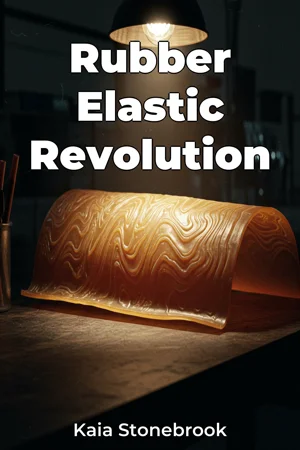
How did a sticky, temperamental tree sap transform the world? "Rubber Elastic Revolution" explores the captivating history of natural latex, from its obscure origins to its pervasive presence in modern life. This book delves into the scientific breakthroughs, historical events, and societal shifts that underpinned the rise of rubber, a material that irrevocably altered transportation, medicine, and countless other facets of civilization. At its core, this book examines three central themes. First, it meticulously chronicles the discovery and early uses of natural latex by indigenous populations of South America, emphasizing their ingenuity and understanding of the material's unique properties. Second, the narrative focuses on the pivotal development of vulcanization, a chemical process pioneered by Charles Goodyear that stabilized rubber and unlocked its vast potential. Finally, the book analyzes the transformative applications of vulcanized rubber, tracing its impact across industries and its indispensable role in shaping the modern world. Understanding the rubber revolution requires a grasp of the 19th-century industrial landscape. The burgeoning demand for materials driven by industrialization, coupled with advancements in chemistry and engineering, created the perfect environment for rubber to flourish. While no specific prior knowledge is necessary, readers with an interest in the history of science, technology, or economic development will find a particularly rich and rewarding experience. The central argument of "Rubber Elastic Revolution" is that the development and utilization of rubber represents a paradigm shift in materials science and manufacturing, one with profound and lasting consequences for global society. It highlights how a single material, through scientific innovation and entrepreneurial spirit, became a cornerstone of modern infrastructure and daily life, fundamentally altering human interactions and the pace of technological progress. The book unfolds in a structured manner. It begins by introducing the origins of natural latex and its early uses, setting the stage for the scientific challenges of working with this unstable substance. The narrative then shifts to the groundbreaking work of Charles Goodyear and others who developed vulcanization, detailing the scientific principles behind this process and its immediate impact. Subsequent chapters explore the application of vulcanized rubber in transportation, medicine, manufacturing, and other key sectors. The book culminates by examining the long-term consequences of the rubber revolution, considering its environmental impact, economic ramifications, and its ongoing role in shaping the future. To support its arguments, "Rubber Elastic Revolution" draws upon diverse sources, including historical documents, scientific papers, patents, and case studies of key industries that relied on rubber. The book integrates both qualitative and quantitative data to provide a comprehensive and nuanced understanding of rubber's impact. This book connects to several other fields of study, most notably materials science, economic history, and environmental studies. It showcases how advancements in materials directly influence economic growth and examines the trade offs between technological progress and environmental sustainability. These interdisciplinary connections enrich the narrative, providing a holistic perspective on the rubber revolution. "Rubber Elastic Revolution" offers a fresh perspective by focusing not only on the scientific breakthroughs but also on the social, economic, and environmental context in which they occurred. By connecting these disparate threads, the book paints a complex and compelling portrait of a material that has shaped the modern world in profound ways. Written in a clear and accessible style, "Rubber Elastic Revolution" is designed for a broad audience, including students, researchers, and anyone with an interest in the history of science, technology, or innovation. It offers a valuable resource for understanding the complex interplay between scientific discovery, technological development, and societal change. As a work of science and history, the book provides a factual and analytical account, avoiding speculative or fictional elements. While the book aims to provide a broad overview of the rubber revolution, it focuses primarily on the 19th and 20th centuries, with less emphasis on contemporary developments in synthetic rubber. The information presented can be applied in several practical ways, providing insights into innovation processes, the importance of materials science research, and the long-term consequences of technological advancements. While the book celebrates the transformative power of rubber, it also acknowledges the controversies surrounding its production, including issues of labor exploitation, environmental degradation, and resource management. By addressing these challenges head-on, "Rubber Elastic Revolution" aims to provide a balanced and nuanced account of this complex and important story.
How did a sticky, temperamental tree sap transform the world? "Rubber Elastic Revolution" explores the captivating history of natural latex, from its obscure origins to its pervasive presence in modern life. This book delves into the scientific breakthroughs, historical events, and societal shifts that underpinned the rise of rubber, a material that irrevocably altered transportation, medicine, and countless other facets of civilization. At its core, this book examines three central themes. First, it meticulously chronicles the discovery and early uses of natural latex by indigenous populations of South America, emphasizing their ingenuity and understanding of the material's unique properties. Second, the narrative focuses on the pivotal development of vulcanization, a chemical process pioneered by Charles Goodyear that stabilized rubber and unlocked its vast potential. Finally, the book analyzes the transformative applications of vulcanized rubber, tracing its impact across industries and its indispensable role in shaping the modern world. Understanding the rubber revolution requires a grasp of the 19th-century industrial landscape. The burgeoning demand for materials driven by industrialization, coupled with advancements in chemistry and engineering, created the perfect environment for rubber to flourish. While no specific prior knowledge is necessary, readers with an interest in the history of science, technology, or economic development will find a particularly rich and rewarding experience. The central argument of "Rubber Elastic Revolution" is that the development and utilization of rubber represents a paradigm shift in materials science and manufacturing, one with profound and lasting consequences for global society. It highlights how a single material, through scientific innovation and entrepreneurial spirit, became a cornerstone of modern infrastructure and daily life, fundamentally altering human interactions and the pace of technological progress. The book unfolds in a structured manner. It begins by introducing the origins of natural latex and its early uses, setting the stage for the scientific challenges of working with this unstable substance. The narrative then shifts to the groundbreaking work of Charles Goodyear and others who developed vulcanization, detailing the scientific principles behind this process and its immediate impact. Subsequent chapters explore the application of vulcanized rubber in transportation, medicine, manufacturing, and other key sectors. The book culminates by examining the long-term consequences of the rubber revolution, considering its environmental impact, economic ramifications, and its ongoing role in shaping the future. To support its arguments, "Rubber Elastic Revolution" draws upon diverse sources, including historical documents, scientific papers, patents, and case studies of key industries that relied on rubber. The book integrates both qualitative and quantitative data to provide a comprehensive and nuanced understanding of rubber's impact. This book connects to several other fields of study, most notably materials science, economic history, and environmental studies. It showcases how advancements in materials directly influence economic growth and examines the trade offs between technological progress and environmental sustainability. These interdisciplinary connections enrich the narrative, providing a holistic perspective on the rubber revolution. "Rubber Elastic Revolution" offers a fresh perspective by focusing not only on the scientific breakthroughs but also on the social, economic, and environmental context in which they occurred. By connecting these disparate threads, the book paints a complex and compelling portrait of a material that has shaped the modern world in profound ways. Written in a clear and accessible style, "Rubber Elastic Revolution" is designed for a broad audience, including students, researchers, and anyone with an interest in the history of science, technology, or innovation. It offers a valuable resource for understanding the complex interplay between scientific discovery, technological development, and societal change. As a work of science and history, the book provides a factual and analytical account, avoiding speculative or fictional elements. While the book aims to provide a broad overview of the rubber revolution, it focuses primarily on the 19th and 20th centuries, with less emphasis on contemporary developments in synthetic rubber. The information presented can be applied in several practical ways, providing insights into innovation processes, the importance of materials science research, and the long-term consequences of technological advancements. While the book celebrates the transformative power of rubber, it also acknowledges the controversies surrounding its production, including issues of labor exploitation, environmental degradation, and resource management. By addressing these challenges head-on, "Rubber Elastic Revolution" aims to provide a balanced and nuanced account of this complex and important story.
"Rubber Elastic Revolution" unveils the remarkable journey of natural latex, tracing its transformation from an obscure substance to an indispensable material shaping modern civilization. The book explores how indigenous populations cleverly utilized latex's unique properties long before the advent of modern science. A key turning point was Charles Goodyear's vulcanization process, which stabilized rubber and unlocked its potential for widespread industrial applications. The book highlights rubber's profound influence on transportation, medicine, and manufacturing during the Industrial Revolution, demonstrating its vital role in 19th and 20th-century economic history. By examining historical documents, scientific papers, and industry case studies, the book illustrates how rubber became a cornerstone of modern infrastructure. It begins with the origins of natural latex, progresses through the scientific breakthroughs of vulcanization, and culminates in an analysis of rubber's long-term consequences. This exploration of rubber's history uniquely emphasizes the interconnectedness of scientific innovation, technological development, and societal change. It acknowledges the environmental and economic controversies surrounding rubber production, offering a balanced perspective on this transformative material's impact.
Book Details
ISBN
9788235220769
Publisher
Publifye AS
Your Licenses
You don't own any licenses for this book
Purchase a license below to unlock this book and download the EPUB.
Purchase License
Select a tier to unlock this book
Need bulk licensing?
Contact us for enterprise agreements.