
About This Book
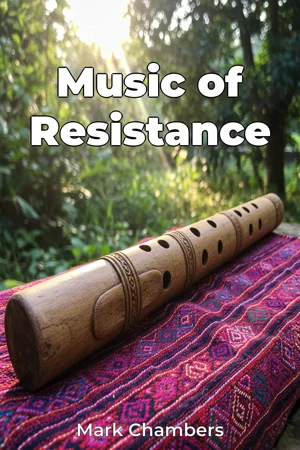
How can a song become a weapon? "Music of Resistance" explores the potent intersection of indigenous music, cultural preservation, and political activism, revealing how melodies and rhythms serve as vital tools for communities fighting to protect their heritage and assert their rights. This book examines the crucial role music plays in maintaining cultural identity and fueling movements for social change across various indigenous populations. This book delves into three core areas: the historical context of indigenous music as a repository of cultural knowledge, the ways in which music empowers activism against oppression and exploitation, and the strategies employed by indigenous musicians to navigate and challenge contemporary power structures. These topics are important because they shed light on the resilience and agency of indigenous communities in the face of ongoing threats to their land, languages, and ways of life. Understanding these dynamics is essential for anyone seeking to support indigenous rights and promote cultural understanding. "Music of Resistance" argues that indigenous music is not merely a form of artistic expression but a crucial mechanism for cultural survival and a powerful instrument for political mobilization. It acts as a living archive, transmitting ancestral knowledge, spiritual beliefs, and historical narratives from one generation to the next. Furthermore, it provides a platform for galvanizing collective action, raising awareness about critical issues, and challenging dominant narratives that often marginalize or erase indigenous experiences. The book unfolds in several stages. First, it introduces the concept of music as a cultural archive and a tool for resistance, drawing on anthropological and ethnomusicological research. Second, it examines case studies from different regions of the world, showcasing how indigenous musicians use their art to protest environmental destruction, defend land rights, and advocate for self-determination. These chapters will explore examples from the Americas, Oceania, and Asia, highlighting both the unique challenges faced by each community and the common threads that unite them in their struggle. Third, the book analyzes the complex relationship between indigenous music and the global music industry, exploring issues of cultural appropriation, commodification, and the potential for collaboration and solidarity. Finally, the book concludes by considering the future of indigenous music as a force for cultural preservation and social change, discussing the role of technology, education, and intergenerational knowledge transfer in ensuring its continued vitality. The arguments presented in "Music of Resistance" are supported by a wealth of empirical evidence, including ethnographic fieldwork, archival research, and interviews with indigenous musicians and activists. It draws on diverse sources, such as song lyrics, musical recordings, historical documents, and personal narratives, to provide a rich and nuanced understanding of the subject matter. This book connects to other fields, such as anthropology, political science, and cultural studies, offering insights into the dynamics of cultural preservation, social movements, and the power of art to shape political discourse. It provides a unique perspective by focusing specifically on the role of music in indigenous resistance movements, highlighting the agency and creativity of indigenous communities in navigating the challenges of globalization and neocolonialism. Written in an accessible yet scholarly style, "Music of Resistance" is intended for a broad audience, including students, researchers, activists, policymakers, and anyone interested in learning more about indigenous cultures and social justice movements. It offers valuable insights into the complex interplay between music, culture, and politics, providing readers with a deeper appreciation for the power of indigenous voices and the importance of supporting their struggles for self-determination. The scope of this book is intentionally broad, encompassing a wide range of indigenous cultures and musical traditions. However, it acknowledges the limitations of providing an exhaustive account of every indigenous group and musical style. Instead, it aims to provide a representative sample of case studies that illustrate the key themes and arguments of the book. The information presented in "Music of Resistance" has practical applications for readers seeking to support indigenous rights and promote cultural understanding. It provides a framework for analyzing the role of music in social movements, identifying opportunities for solidarity and collaboration, and advocating for policies that protect indigenous cultures and communities. The book also addresses ongoing debates about cultural appropriation and intellectual property rights, offering guidance for navigating these complex issues in a responsible and ethical manner.
How can a song become a weapon? "Music of Resistance" explores the potent intersection of indigenous music, cultural preservation, and political activism, revealing how melodies and rhythms serve as vital tools for communities fighting to protect their heritage and assert their rights. This book examines the crucial role music plays in maintaining cultural identity and fueling movements for social change across various indigenous populations. This book delves into three core areas: the historical context of indigenous music as a repository of cultural knowledge, the ways in which music empowers activism against oppression and exploitation, and the strategies employed by indigenous musicians to navigate and challenge contemporary power structures. These topics are important because they shed light on the resilience and agency of indigenous communities in the face of ongoing threats to their land, languages, and ways of life. Understanding these dynamics is essential for anyone seeking to support indigenous rights and promote cultural understanding. "Music of Resistance" argues that indigenous music is not merely a form of artistic expression but a crucial mechanism for cultural survival and a powerful instrument for political mobilization. It acts as a living archive, transmitting ancestral knowledge, spiritual beliefs, and historical narratives from one generation to the next. Furthermore, it provides a platform for galvanizing collective action, raising awareness about critical issues, and challenging dominant narratives that often marginalize or erase indigenous experiences. The book unfolds in several stages. First, it introduces the concept of music as a cultural archive and a tool for resistance, drawing on anthropological and ethnomusicological research. Second, it examines case studies from different regions of the world, showcasing how indigenous musicians use their art to protest environmental destruction, defend land rights, and advocate for self-determination. These chapters will explore examples from the Americas, Oceania, and Asia, highlighting both the unique challenges faced by each community and the common threads that unite them in their struggle. Third, the book analyzes the complex relationship between indigenous music and the global music industry, exploring issues of cultural appropriation, commodification, and the potential for collaboration and solidarity. Finally, the book concludes by considering the future of indigenous music as a force for cultural preservation and social change, discussing the role of technology, education, and intergenerational knowledge transfer in ensuring its continued vitality. The arguments presented in "Music of Resistance" are supported by a wealth of empirical evidence, including ethnographic fieldwork, archival research, and interviews with indigenous musicians and activists. It draws on diverse sources, such as song lyrics, musical recordings, historical documents, and personal narratives, to provide a rich and nuanced understanding of the subject matter. This book connects to other fields, such as anthropology, political science, and cultural studies, offering insights into the dynamics of cultural preservation, social movements, and the power of art to shape political discourse. It provides a unique perspective by focusing specifically on the role of music in indigenous resistance movements, highlighting the agency and creativity of indigenous communities in navigating the challenges of globalization and neocolonialism. Written in an accessible yet scholarly style, "Music of Resistance" is intended for a broad audience, including students, researchers, activists, policymakers, and anyone interested in learning more about indigenous cultures and social justice movements. It offers valuable insights into the complex interplay between music, culture, and politics, providing readers with a deeper appreciation for the power of indigenous voices and the importance of supporting their struggles for self-determination. The scope of this book is intentionally broad, encompassing a wide range of indigenous cultures and musical traditions. However, it acknowledges the limitations of providing an exhaustive account of every indigenous group and musical style. Instead, it aims to provide a representative sample of case studies that illustrate the key themes and arguments of the book. The information presented in "Music of Resistance" has practical applications for readers seeking to support indigenous rights and promote cultural understanding. It provides a framework for analyzing the role of music in social movements, identifying opportunities for solidarity and collaboration, and advocating for policies that protect indigenous cultures and communities. The book also addresses ongoing debates about cultural appropriation and intellectual property rights, offering guidance for navigating these complex issues in a responsible and ethical manner.
"Music of Resistance" explores the powerful role of indigenous music in cultural preservation and political activism. It reveals how songs become instruments of resistance, aiding communities in protecting their heritage and asserting their rights. The book showcases how music serves as a living archive, transmitting ancestral knowledge and historical narratives, and also as a tool for galvanizing collective action against oppression. The book delves into the historical context of indigenous music, demonstrating its importance as a repository of cultural knowledge. Case studies from the Americas, Oceania, and Asia highlight how indigenous musicians use their art to protest environmental destruction and advocate for self-determination. It also analyzes the complex relationship between indigenous music and the global music industry, addressing issues like cultural appropriation and commodification. Through ethnographic fieldwork and archival research, "Music of Resistance" offers a nuanced understanding of how music shapes political discourse and fosters social change. The book progresses by first introducing music as a cultural archive and then examining specific instances of resistance, concluding with a discussion on the future of indigenous music. This book is valuable for those interested in understanding the intersection of music, politics, and cultural identity.
Book Details
ISBN
9788235220684
Publisher
Publifye AS
Your Licenses
You don't own any licenses for this book
Purchase a license below to unlock this book and download the EPUB.
Purchase License
Select a tier to unlock this book
Need bulk licensing?
Contact us for enterprise agreements.