
About This Book
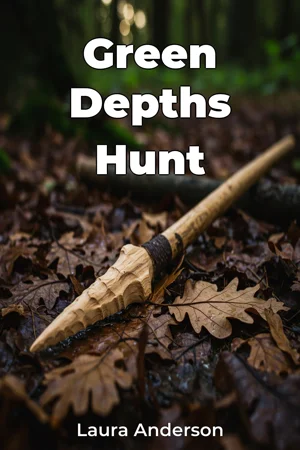
Could your survival depend on your ability to craft a spear and interpret the subtle language of the forest floor? *Green Depths Hunt* delves into the fundamental skills of wilderness survival, focusing on the interconnected arts of spear-making and animal tracking. These are not merely historical pastimes; they are critical abilities that connect us to the natural world and can dramatically increase your chances of survival in a remote environment. The book examines how an understanding of these areas provides a practical skill set, and a deeper appreciation for ecological systems. This exploration is crucial because in an age dominated by technology, we often lose touch with the fundamental skills our ancestors relied on for survival. Knowing how to procure food and water and navigate using natural signs is invaluable, whether facing an unexpected wilderness emergency or simply seeking a more profound connection with nature. *Green Depths Hunt* is divided into three primary sections. First, it lays the groundwork by examining the context of primitive survival, including a review of basic needs (shelter, water, fire) and a basic understanding of different biomes and their unique survival challenges. This section draws from ethnographic studies of hunter-gatherer societies and archaeological findings related to early tool use. The second section focuses on the art of spear-making. It details the selection of appropriate materials, the stages of crafting a functional spear using only natural tools, and variations in spear design depending on the intended prey and available resources. This segment incorporates practical knowledge derived from experiments in primitive technology as well as observations of indigenous techniques. It also addresses the physics involved in spear throwing for accuracy and power. The third section is dedicated to tracking. It begins with basic footprint identification and progresses to interpreting animal behavior from subtle signs in the environment, such as scat, feeding patterns, and disturbed vegetation. This understanding goes beyond simply identifying an animal; it involves deducing its age, health, direction of travel, and even its likely behavior, which is critical for successful hunting or avoidance. The principles of ecological relationships between predator and prey are woven throughout, emphasizing the interconnectedness of the forest ecosystem. The book also emphasizes the ethical considerations of hunting and interacting with wildlife. It explores sustainable hunting practices that minimize impact on animal populations and promote respect for the natural environment. It acknowledges ongoing debates about the role of hunting in modern conservation efforts. *Green Depths Hunt* is written in a straightforward style, suitable for outdoor enthusiasts, survivalists, naturalists, and anyone interested in learning practical wilderness skills. It complements fields like anthropology, ecology, zoology, and archaeology, allowing for a deeper understanding of human-animal interactions and the processes that shape ecosystems. The book's scope is limited to North American forest environments to provide the depth of specific information needed for the reader to effectively apply the methods described. While focusing on spear-making and tracking, the underlying principles can be adapted to other environments. By mastering the skills outlined in *Green Depths Hunt*, readers will gain not only the ability to survive in the wilderness, but also a heightened awareness of the natural world around them.
Could your survival depend on your ability to craft a spear and interpret the subtle language of the forest floor? *Green Depths Hunt* delves into the fundamental skills of wilderness survival, focusing on the interconnected arts of spear-making and animal tracking. These are not merely historical pastimes; they are critical abilities that connect us to the natural world and can dramatically increase your chances of survival in a remote environment. The book examines how an understanding of these areas provides a practical skill set, and a deeper appreciation for ecological systems. This exploration is crucial because in an age dominated by technology, we often lose touch with the fundamental skills our ancestors relied on for survival. Knowing how to procure food and water and navigate using natural signs is invaluable, whether facing an unexpected wilderness emergency or simply seeking a more profound connection with nature. *Green Depths Hunt* is divided into three primary sections. First, it lays the groundwork by examining the context of primitive survival, including a review of basic needs (shelter, water, fire) and a basic understanding of different biomes and their unique survival challenges. This section draws from ethnographic studies of hunter-gatherer societies and archaeological findings related to early tool use. The second section focuses on the art of spear-making. It details the selection of appropriate materials, the stages of crafting a functional spear using only natural tools, and variations in spear design depending on the intended prey and available resources. This segment incorporates practical knowledge derived from experiments in primitive technology as well as observations of indigenous techniques. It also addresses the physics involved in spear throwing for accuracy and power. The third section is dedicated to tracking. It begins with basic footprint identification and progresses to interpreting animal behavior from subtle signs in the environment, such as scat, feeding patterns, and disturbed vegetation. This understanding goes beyond simply identifying an animal; it involves deducing its age, health, direction of travel, and even its likely behavior, which is critical for successful hunting or avoidance. The principles of ecological relationships between predator and prey are woven throughout, emphasizing the interconnectedness of the forest ecosystem. The book also emphasizes the ethical considerations of hunting and interacting with wildlife. It explores sustainable hunting practices that minimize impact on animal populations and promote respect for the natural environment. It acknowledges ongoing debates about the role of hunting in modern conservation efforts. *Green Depths Hunt* is written in a straightforward style, suitable for outdoor enthusiasts, survivalists, naturalists, and anyone interested in learning practical wilderness skills. It complements fields like anthropology, ecology, zoology, and archaeology, allowing for a deeper understanding of human-animal interactions and the processes that shape ecosystems. The book's scope is limited to North American forest environments to provide the depth of specific information needed for the reader to effectively apply the methods described. While focusing on spear-making and tracking, the underlying principles can be adapted to other environments. By mastering the skills outlined in *Green Depths Hunt*, readers will gain not only the ability to survive in the wilderness, but also a heightened awareness of the natural world around them.
"Green Depths Hunt" explores essential wilderness survival skills, focusing on spear-making and animal tracking. It bridges the gap between modern life and ancestral knowledge, offering practical skills for survival and a deeper connection with nature. Did you know that the design of a spear can vary significantly depending on the intended prey and available resources? Or that animal tracks can reveal not just the species, but also its age, health, and direction of travel? The book begins by establishing the context of primitive survival, covering basic needs like shelter, water, and fire, while also exploring different biomes and their unique survival challenges. It then progresses into spear-making, detailing material selection, crafting techniques using natural tools, and the physics of spear throwing. Finally, it delves into the art of tracking, teaching readers to interpret animal behavior from subtle environmental signs and understand ecological relationships. This book emphasizes the importance of ethical hunting practices, ensuring minimal impact on wildlife and promoting environmental respect. This book is uniquely valuable because it provides practical, hands-on knowledge applicable in North American forest environments. By mastering the skills outlined, readers will not only enhance their survival capabilities but also gain a profound appreciation for the natural world.
Book Details
ISBN
9788235220530
Publisher
Publifye AS
Your Licenses
You don't own any licenses for this book
Purchase a license below to unlock this book and download the EPUB.
Purchase License
Select a tier to unlock this book
Need bulk licensing?
Contact us for enterprise agreements.