
About This Book
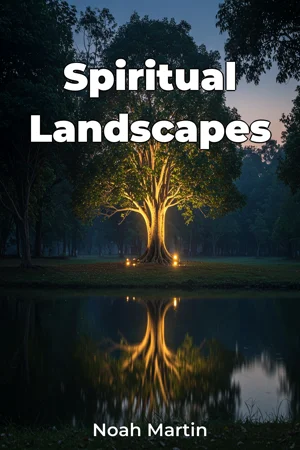
Have you ever considered the silent language spoken by mountains, rivers, and forests in the realm of faith? "Spiritual Landscapes" unveils how diverse landscapes have been employed across religions and spiritual traditions, not merely as backdrops, but as potent symbols embodying divine presence, enlightenment, and the very essence of the sacred experience. This book explores the rich tapestry of these symbolic geographies, revealing their profound impact on religious thought, practice, and art. The book’s core argument centers on the idea that landscapes are not passive settings for religious events, but active participants in shaping spiritual understanding. We delve into how specific natural features become imbued with sacred meaning, functioning as conduits to the divine and reflections of inner states. Three key topics emerge: the landscape as a mirror of the soul, revealing the psychological and emotional states of individuals seeking enlightenment; the landscape as a divine text, where natural features act as symbols communicating divine will and cosmic order; and the landscape as a sacred pilgrimage site, where journeys through specific terrains become transformative rites of passage. These are important because they offer new perspectives on understanding the interaction between humanity, spirituality and the natural world. Religions throughout history have venerated particular landscapes. From the sacred groves of ancient Greece to the pilgrimage routes of Buddhism, Hinduism, Christianity, and Islam, the environment has been an integral component of spiritual life. Understanding these connections requires a sensitivity to both the theological underpinnings of each tradition and the cultural contexts in which these beliefs developed. Prior familiarity with major world religions will enhance the reader’s appreciation, but is not strictly required. "Spiritual Landscapes" is structured to provide a comprehensive exploration of this topic. It commences by introducing foundational concepts of sacred geography and environmental symbolism. The subsequent chapters delve into specific examples from various religious traditions, examining the symbolic significance of mountains, deserts, rivers, and forests. We analyze how these landscapes are depicted in religious texts, art, and rituals. We explore the use of landscape as a metaphor for inner transformation, examining how spiritual practitioners have used natural settings for meditation and contemplation. The book culminates by exploring contemporary issues of environmental stewardship and the potential for sacred landscapes to inspire ecological responsibility. The evidence presented draws from a range of sources, including religious texts (the Bible, the Quran, the Vedas, and Buddhist sutras), archaeological findings, ethnographic studies of contemporary religious practices, and analysis of religious art and architecture. Case studies will include Mount Sinai in Judaism, the Ganges River in Hinduism, the Bodhi tree in Buddhism, and the deserts of early Christian monasticism, among others. This study intersects with several disciplines, including religious studies, environmental history, cultural geography, and art history. Religious studies provides the theological frameworks for understanding sacred landscapes, while environmental history sheds light on the historical interactions between religions and the environment. Cultural geography offers tools for analyzing the spatial dimensions of religious beliefs, and art history illuminates how landscapes are represented in religious imagery. These interdisciplinary connections enrich the analysis and offer a more holistic understanding of the subject. This book offers a fresh perspective by examining the common threads that connect diverse religious traditions through their shared appreciation for the sacredness of nature. While many studies focus on individual religions or specific landscapes, "Spiritual Landscapes" adopts a comparative approach, revealing universal patterns of environmental symbolism. Written in a clear and accessible style, "Spiritual Landscapes" aims to engage a broad audience, including students of religious studies, environmental ethics, and cultural geography, as well as anyone interested in the intersection of spirituality and nature. This book provides readers with a deeper appreciation for the role of the environment in shaping religious beliefs and practices. The scope of the book spans major world religions and various geographical regions, but it does not aim to be exhaustive. Rather, it seeks to provide a representative overview of the diverse ways in which landscapes have been sacralized. The insights found in "Spiritual Landscapes" can be applied in various ways. They can inform efforts to promote environmental conservation by highlighting the spiritual value of natural landscapes. They can also enhance cross-cultural understanding by revealing common ground between different religious traditions. While the idea of sacred landscapes may seem universally positive, it is important to acknowledge the complexities involved. There are debates about how to balance religious reverence for nature with economic development and competing land uses. The book addresses these controversies by exploring different perspectives on environmental ethics and religious stewardship.
Have you ever considered the silent language spoken by mountains, rivers, and forests in the realm of faith? "Spiritual Landscapes" unveils how diverse landscapes have been employed across religions and spiritual traditions, not merely as backdrops, but as potent symbols embodying divine presence, enlightenment, and the very essence of the sacred experience. This book explores the rich tapestry of these symbolic geographies, revealing their profound impact on religious thought, practice, and art. The book’s core argument centers on the idea that landscapes are not passive settings for religious events, but active participants in shaping spiritual understanding. We delve into how specific natural features become imbued with sacred meaning, functioning as conduits to the divine and reflections of inner states. Three key topics emerge: the landscape as a mirror of the soul, revealing the psychological and emotional states of individuals seeking enlightenment; the landscape as a divine text, where natural features act as symbols communicating divine will and cosmic order; and the landscape as a sacred pilgrimage site, where journeys through specific terrains become transformative rites of passage. These are important because they offer new perspectives on understanding the interaction between humanity, spirituality and the natural world. Religions throughout history have venerated particular landscapes. From the sacred groves of ancient Greece to the pilgrimage routes of Buddhism, Hinduism, Christianity, and Islam, the environment has been an integral component of spiritual life. Understanding these connections requires a sensitivity to both the theological underpinnings of each tradition and the cultural contexts in which these beliefs developed. Prior familiarity with major world religions will enhance the reader’s appreciation, but is not strictly required. "Spiritual Landscapes" is structured to provide a comprehensive exploration of this topic. It commences by introducing foundational concepts of sacred geography and environmental symbolism. The subsequent chapters delve into specific examples from various religious traditions, examining the symbolic significance of mountains, deserts, rivers, and forests. We analyze how these landscapes are depicted in religious texts, art, and rituals. We explore the use of landscape as a metaphor for inner transformation, examining how spiritual practitioners have used natural settings for meditation and contemplation. The book culminates by exploring contemporary issues of environmental stewardship and the potential for sacred landscapes to inspire ecological responsibility. The evidence presented draws from a range of sources, including religious texts (the Bible, the Quran, the Vedas, and Buddhist sutras), archaeological findings, ethnographic studies of contemporary religious practices, and analysis of religious art and architecture. Case studies will include Mount Sinai in Judaism, the Ganges River in Hinduism, the Bodhi tree in Buddhism, and the deserts of early Christian monasticism, among others. This study intersects with several disciplines, including religious studies, environmental history, cultural geography, and art history. Religious studies provides the theological frameworks for understanding sacred landscapes, while environmental history sheds light on the historical interactions between religions and the environment. Cultural geography offers tools for analyzing the spatial dimensions of religious beliefs, and art history illuminates how landscapes are represented in religious imagery. These interdisciplinary connections enrich the analysis and offer a more holistic understanding of the subject. This book offers a fresh perspective by examining the common threads that connect diverse religious traditions through their shared appreciation for the sacredness of nature. While many studies focus on individual religions or specific landscapes, "Spiritual Landscapes" adopts a comparative approach, revealing universal patterns of environmental symbolism. Written in a clear and accessible style, "Spiritual Landscapes" aims to engage a broad audience, including students of religious studies, environmental ethics, and cultural geography, as well as anyone interested in the intersection of spirituality and nature. This book provides readers with a deeper appreciation for the role of the environment in shaping religious beliefs and practices. The scope of the book spans major world religions and various geographical regions, but it does not aim to be exhaustive. Rather, it seeks to provide a representative overview of the diverse ways in which landscapes have been sacralized. The insights found in "Spiritual Landscapes" can be applied in various ways. They can inform efforts to promote environmental conservation by highlighting the spiritual value of natural landscapes. They can also enhance cross-cultural understanding by revealing common ground between different religious traditions. While the idea of sacred landscapes may seem universally positive, it is important to acknowledge the complexities involved. There are debates about how to balance religious reverence for nature with economic development and competing land uses. The book addresses these controversies by exploring different perspectives on environmental ethics and religious stewardship.
"Spiritual Landscapes" explores how diverse landscapes become sacred spaces across various religions and spiritual traditions. It reveals that mountains, rivers, and forests are not merely backdrops but potent symbols that embody divine presence and spiritual experiences. The book argues that these landscapes actively shape our spiritual understanding, functioning as conduits to the divine. Understanding these connections requires a sensitivity to both the theological underpinnings of each tradition and the cultural contexts in which these beliefs developed. The book examines landscapes as mirrors of the soul, reflecting inner psychological states, and as divine texts, where natural features communicate divine will. It also explores how journeys through specific terrains become transformative pilgrimages. Drawing from religious texts like the Bible and the Quran, archaeological findings, and ethnographic studies, the book presents evidence from traditions such as Judaism (Mount Sinai) and Hinduism (the Ganges River). The analysis is enriched through interdisciplinary connections with religious studies, environmental history, and cultural geography. "Spiritual Landscapes" adopts a comparative approach, revealing universal patterns of environmental symbolism across world religions. The book begins by introducing foundational concepts and then delves into specific examples of mountains, deserts, rivers, and forests. It culminates by exploring contemporary issues of environmental stewardship, highlighting the potential for sacred geography to inspire ecological responsibility. This perspective fosters a deeper appreciation for the role of the environment in shaping religious beliefs and practices.
Book Details
ISBN
9788235220523
Publisher
Publifye AS
Your Licenses
You don't own any licenses for this book
Purchase a license below to unlock this book and download the EPUB.
Purchase License
Select a tier to unlock this book
Need bulk licensing?
Contact us for enterprise agreements.