
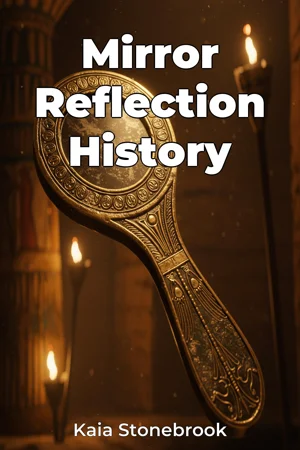
About This Book
Have you ever stopped to consider the profound impact of something as seemingly simple as a mirror? This book, "Mirror Reflection History," delves into the captivating story of reflective surfaces, tracing their evolution from rudimentary obsidian mirrors to the sophisticated glass constructions we use today. More than just a technological history, it's a cultural exploration of how these surfaces have shaped our perception of self, beauty, and reality. We will examine three critical and interconnected areas: the scientific advancements that made increasingly clear reflections possible, the diverse cultural roles mirrors have played throughout history, and the philosophical implications of seeing ourselves reflected back. These topics are important because they reveal how much our technologies influence not only our daily lives but also our understanding of consciousness and the world. Understanding the story of mirrors requires a journey through centuries of innovation and artistic expression. From the early civilizations that painstakingly polished volcanic glass to the European glassmakers who guarded their techniques as national secrets, the development of mirrors is intertwined with advances in metallurgy, chemistry, and manufacturing. At its core, this book argues that the history of mirrors is a reflection of humanity's evolving self-awareness. As mirrors became more accessible and accurate, they fostered new forms of self-scrutiny, artistic expression, and even social interaction. The ability to see oneself objectively, or at least a version of oneself, altered how humans interacted with their image and, by extension, with the world around them. This argument unfolds in several stages. First, we will introduce the basic physics of reflection and the earliest examples of reflective surfaces. We then explore the cultural significance of mirrors in ancient Egypt, Greece, and Rome, focusing on their use in religious rituals, art, and personal adornment. Next, we will examine the scientific breakthroughs of the medieval and Renaissance periods that led to the creation of modern glass mirrors, highlighting the roles of alchemy, craftsmanship, and industrialization. The book culminates with a discussion of the psychological and philosophical impact of mirrors on human consciousness, examining their influence on art, literature, and identity formation. To support our claims, we will draw upon a wide range of sources, including archaeological findings, historical texts, scientific publications, and artistic representations. We will also analyze surviving examples of early mirrors and the techniques used to create them. Additionally, the book includes data from recent studies about the psychology of self-perception and object recognition. "Mirror Reflection History" also connects with several other areas of study. It touches on sociology by examining how mirrors have influenced social norms and power dynamics. It engages with art history by analyzing the use of mirrors in paintings, sculptures, and other forms of visual art. It also intersects with psychology by exploring the relationship between self-image, body perception, and mental health. These connections enrich our understanding of mirrors and their impact on human experience. This book offers a unique perspective by integrating scientific analysis with cultural interpretation. Rather than focusing solely on either the technology or the symbolism of mirrors, we offer a unified account that reveals the complex interplay between the two. Written in a clear and accessible style, "Mirror Reflection History" is aimed at a broad audience, including anyone interested in science, history, art, and the human condition. It will be particularly valuable to students, educators, and researchers in these fields. Readers will finish this book with a richer understanding of how a seemingly mundane object has played a pivotal role in shaping human history and self-understanding. As a work of non-fiction, it adheres to rigorous standards of accuracy and objectivity, presenting evidence-based arguments in a balanced and nuanced manner. The book deliberately limits its scope to the history of physical mirrors, recognizing the broader topic of reflection as a metaphor for introspection and contemplation. The information presented here have real world applications, leading to a better understanding of the psychological effects of mirrors on body image, self-esteem, and social behavior. Finally, the book addresses ongoing debates about the relationship between technology and culture, offering a fresh perspective on how innovations can both reflect and shape our values, beliefs, and identities.
Have you ever stopped to consider the profound impact of something as seemingly simple as a mirror? This book, "Mirror Reflection History," delves into the captivating story of reflective surfaces, tracing their evolution from rudimentary obsidian mirrors to the sophisticated glass constructions we use today. More than just a technological history, it's a cultural exploration of how these surfaces have shaped our perception of self, beauty, and reality. We will examine three critical and interconnected areas: the scientific advancements that made increasingly clear reflections possible, the diverse cultural roles mirrors have played throughout history, and the philosophical implications of seeing ourselves reflected back. These topics are important because they reveal how much our technologies influence not only our daily lives but also our understanding of consciousness and the world. Understanding the story of mirrors requires a journey through centuries of innovation and artistic expression. From the early civilizations that painstakingly polished volcanic glass to the European glassmakers who guarded their techniques as national secrets, the development of mirrors is intertwined with advances in metallurgy, chemistry, and manufacturing. At its core, this book argues that the history of mirrors is a reflection of humanity's evolving self-awareness. As mirrors became more accessible and accurate, they fostered new forms of self-scrutiny, artistic expression, and even social interaction. The ability to see oneself objectively, or at least a version of oneself, altered how humans interacted with their image and, by extension, with the world around them. This argument unfolds in several stages. First, we will introduce the basic physics of reflection and the earliest examples of reflective surfaces. We then explore the cultural significance of mirrors in ancient Egypt, Greece, and Rome, focusing on their use in religious rituals, art, and personal adornment. Next, we will examine the scientific breakthroughs of the medieval and Renaissance periods that led to the creation of modern glass mirrors, highlighting the roles of alchemy, craftsmanship, and industrialization. The book culminates with a discussion of the psychological and philosophical impact of mirrors on human consciousness, examining their influence on art, literature, and identity formation. To support our claims, we will draw upon a wide range of sources, including archaeological findings, historical texts, scientific publications, and artistic representations. We will also analyze surviving examples of early mirrors and the techniques used to create them. Additionally, the book includes data from recent studies about the psychology of self-perception and object recognition. "Mirror Reflection History" also connects with several other areas of study. It touches on sociology by examining how mirrors have influenced social norms and power dynamics. It engages with art history by analyzing the use of mirrors in paintings, sculptures, and other forms of visual art. It also intersects with psychology by exploring the relationship between self-image, body perception, and mental health. These connections enrich our understanding of mirrors and their impact on human experience. This book offers a unique perspective by integrating scientific analysis with cultural interpretation. Rather than focusing solely on either the technology or the symbolism of mirrors, we offer a unified account that reveals the complex interplay between the two. Written in a clear and accessible style, "Mirror Reflection History" is aimed at a broad audience, including anyone interested in science, history, art, and the human condition. It will be particularly valuable to students, educators, and researchers in these fields. Readers will finish this book with a richer understanding of how a seemingly mundane object has played a pivotal role in shaping human history and self-understanding. As a work of non-fiction, it adheres to rigorous standards of accuracy and objectivity, presenting evidence-based arguments in a balanced and nuanced manner. The book deliberately limits its scope to the history of physical mirrors, recognizing the broader topic of reflection as a metaphor for introspection and contemplation. The information presented here have real world applications, leading to a better understanding of the psychological effects of mirrors on body image, self-esteem, and social behavior. Finally, the book addresses ongoing debates about the relationship between technology and culture, offering a fresh perspective on how innovations can both reflect and shape our values, beliefs, and identities.
"Mirror Reflection History" explores the fascinating story of mirrors, from ancient reflective surfaces to modern glass creations, revealing their profound impact on culture and self-perception. The book journeys through the science behind increasingly clear reflections, the diverse roles mirrors have played across cultures, and the philosophical implications of seeing ourselves reflected back. It's intriguing to learn how early civilizations meticulously polished volcanic glass to create mirrors, while European glassmakers guarded their mirror-making techniques as national secrets. The book emphasizes that the history of mirrors reflects humanity's evolving self-awareness. As mirrors became more accessible, they fostered new forms of self-scrutiny and artistic expression, altering how humans interacted with their image and, by extension, the world. The book begins by introducing the physics of reflection and early mirror examples, then explores their cultural significance in ancient civilizations, and finally examines the scientific breakthroughs that led to modern glass mirrors and their psychological impact.
Book Details
ISBN
9788235220431
Publisher
Publifye AS
Your Licenses
You don't own any licenses for this book
Purchase a license below to unlock this book and download the EPUB.
Purchase License
Select a tier to unlock this book
Need bulk licensing?
Contact us for enterprise agreements.