
About This Book
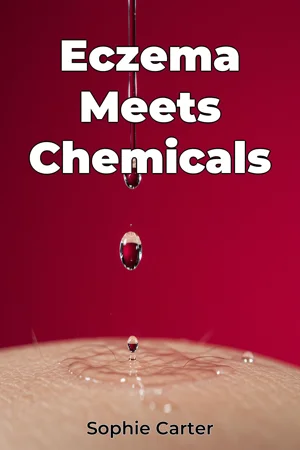
Could the very substances we use to cleanse ourselves and our surroundings be contributing to the rise in eczema and other skin sensitivities? "Eczema Meets Chemicals" delves into the often-overlooked connection between common detergents and the aggravation, or even the instigation, of eczema and related skin conditions. This book explores two key topics: the specific chemical compounds found in many household and personal care detergents and their direct impact on the skin's delicate barrier function, and the cascade of immunological responses triggered by this interaction. Understanding these elements is crucial because the prevalence of eczema continues to increase, particularly in developed nations, suggesting environmental factors play a significant role. The book provides essential historical and scientific context, tracing the evolution of detergent formulations from simple soaps to complex mixtures containing surfactants, enzymes, and fragrances. A basic understanding of skin physiology and immunology would be beneficial, but the book is structured to provide necessary background on skin structure, barrier function, and immune responses to ensure the content is accessible to a broad audience. The central argument of "Eczema Meets Chemicals" is that certain chemicals, widely used in detergents, can compromise the skin's natural defenses, leading to inflammation and the characteristic symptoms of eczema. This argument’s importance lies in the potential to empower individuals to make informed choices about the products they use daily, reducing their exposure to harmful irritants and potentially alleviating their eczema symptoms. The book's structure begins with an introduction to the fundamentals of eczema, detailing its various types, common symptoms, and known risk factors. It then transitions into an in-depth analysis of detergent chemistry, identifying the specific ingredients most likely to provoke skin irritation, such as sodium lauryl sulfate (SLS), fragrances, and preservatives. The central chapters are dedicated to explaining how these chemicals disrupt the skin barrier, triggering inflammatory pathways and immune responses. The book culminates with a discussion of practical strategies for minimizing exposure to harmful detergents, including reading product labels, choosing alternative cleaning agents, and adopting specific skincare routines. The evidence presented in "Eczema Meets Chemicals" draws from a wide range of scientific sources, including peer-reviewed studies in dermatology, immunology, and toxicology. The book references clinical trials that investigate the effects of specific detergent ingredients on skin health, as well as in vitro studies examining the mechanisms by which these chemicals interact with skin cells. This book intersects with several other fields, including environmental science (examining the broader impact of detergent chemicals on the environment), public health (addressing the rising prevalence of eczema as a public health concern), and materials science (exploring the development of gentler, more biocompatible cleaning agents). These connections enhance the book's argument by providing a holistic perspective on the issue. "Eczema Meets Chemicals" differentiates itself by directly linking the chemical composition of detergents to the biological mechanisms underlying eczema. This direct approach offers a unique perspective, moving beyond general advice on managing eczema to provide a detailed understanding of the specific chemicals to avoid and why. Written in a clear, accessible style, the book avoids technical jargon whenever possible, explaining complex scientific concepts in a way that is easy for the layperson to understand. The target audience includes individuals with eczema or other skin sensitivities, parents of children with eczema, healthcare professionals seeking a deeper understanding of environmental triggers, and anyone interested in making informed choices about the products they use. This book is valuable to them because it provides actionable information that can improve skin health and overall well-being. As a work within the genres of Biology, Health & Fitness, and Science Life Sciences, "Eczema Meets Chemicals" adheres to the standards of presenting factual, evidence-based information in a clear and unbiased manner. The scope of the book is largely limited to the impact of detergent chemicals on eczema and related skin conditions, with less emphasis on other potential triggers such as food allergies or stress. The book aims to empower readers via providing them with practical steps that could mitigate irritant based exposure scenarios. While the book acknowledges current medical treatments for eczema, its focus is on preventative measures and informed product selection. One ongoing debate in the field concerns the relative importance of genetic predisposition versus environmental factors in the development of eczema. While acknowledging the role of genetics, "Eczema Meets Chemicals" emphasizes the significant impact of environmental exposures, particularly those related to detergent chemicals, offering a proactive approach to managing this complex condition.
Could the very substances we use to cleanse ourselves and our surroundings be contributing to the rise in eczema and other skin sensitivities? "Eczema Meets Chemicals" delves into the often-overlooked connection between common detergents and the aggravation, or even the instigation, of eczema and related skin conditions. This book explores two key topics: the specific chemical compounds found in many household and personal care detergents and their direct impact on the skin's delicate barrier function, and the cascade of immunological responses triggered by this interaction. Understanding these elements is crucial because the prevalence of eczema continues to increase, particularly in developed nations, suggesting environmental factors play a significant role. The book provides essential historical and scientific context, tracing the evolution of detergent formulations from simple soaps to complex mixtures containing surfactants, enzymes, and fragrances. A basic understanding of skin physiology and immunology would be beneficial, but the book is structured to provide necessary background on skin structure, barrier function, and immune responses to ensure the content is accessible to a broad audience. The central argument of "Eczema Meets Chemicals" is that certain chemicals, widely used in detergents, can compromise the skin's natural defenses, leading to inflammation and the characteristic symptoms of eczema. This argument’s importance lies in the potential to empower individuals to make informed choices about the products they use daily, reducing their exposure to harmful irritants and potentially alleviating their eczema symptoms. The book's structure begins with an introduction to the fundamentals of eczema, detailing its various types, common symptoms, and known risk factors. It then transitions into an in-depth analysis of detergent chemistry, identifying the specific ingredients most likely to provoke skin irritation, such as sodium lauryl sulfate (SLS), fragrances, and preservatives. The central chapters are dedicated to explaining how these chemicals disrupt the skin barrier, triggering inflammatory pathways and immune responses. The book culminates with a discussion of practical strategies for minimizing exposure to harmful detergents, including reading product labels, choosing alternative cleaning agents, and adopting specific skincare routines. The evidence presented in "Eczema Meets Chemicals" draws from a wide range of scientific sources, including peer-reviewed studies in dermatology, immunology, and toxicology. The book references clinical trials that investigate the effects of specific detergent ingredients on skin health, as well as in vitro studies examining the mechanisms by which these chemicals interact with skin cells. This book intersects with several other fields, including environmental science (examining the broader impact of detergent chemicals on the environment), public health (addressing the rising prevalence of eczema as a public health concern), and materials science (exploring the development of gentler, more biocompatible cleaning agents). These connections enhance the book's argument by providing a holistic perspective on the issue. "Eczema Meets Chemicals" differentiates itself by directly linking the chemical composition of detergents to the biological mechanisms underlying eczema. This direct approach offers a unique perspective, moving beyond general advice on managing eczema to provide a detailed understanding of the specific chemicals to avoid and why. Written in a clear, accessible style, the book avoids technical jargon whenever possible, explaining complex scientific concepts in a way that is easy for the layperson to understand. The target audience includes individuals with eczema or other skin sensitivities, parents of children with eczema, healthcare professionals seeking a deeper understanding of environmental triggers, and anyone interested in making informed choices about the products they use. This book is valuable to them because it provides actionable information that can improve skin health and overall well-being. As a work within the genres of Biology, Health & Fitness, and Science Life Sciences, "Eczema Meets Chemicals" adheres to the standards of presenting factual, evidence-based information in a clear and unbiased manner. The scope of the book is largely limited to the impact of detergent chemicals on eczema and related skin conditions, with less emphasis on other potential triggers such as food allergies or stress. The book aims to empower readers via providing them with practical steps that could mitigate irritant based exposure scenarios. While the book acknowledges current medical treatments for eczema, its focus is on preventative measures and informed product selection. One ongoing debate in the field concerns the relative importance of genetic predisposition versus environmental factors in the development of eczema. While acknowledging the role of genetics, "Eczema Meets Chemicals" emphasizes the significant impact of environmental exposures, particularly those related to detergent chemicals, offering a proactive approach to managing this complex condition.
"Eczema Meets Chemicals" explores the connection between common detergents and the rise of eczema. It examines chemical compounds found in household and personal care products and their impact on the skin's barrier function, as well as the immune responses triggered by these chemicals. The book provides historical and scientific context, tracing the evolution of detergent formulations and offering background on skin structure, barrier function, and immune responses. The book argues that certain chemicals in detergents can compromise the skin's natural defenses, leading to inflammation. For example, ingredients like sodium lauryl sulfate (SLS), fragrances, and preservatives can disrupt the skin barrier. It emphasizes empowering individuals to make informed choices about products, reducing exposure to harmful irritants. The book differentiates itself by directly linking detergent chemicals to the biological mechanisms underlying eczema. Beginning with an introduction to eczema fundamentals, the book transitions into an in-depth analysis of detergent chemistry. Central chapters explain how chemicals disrupt the skin barrier, triggering inflammatory pathways. It concludes with practical strategies for minimizing exposure, such as reading product labels and choosing alternative cleaning agents.
Book Details
ISBN
9788235220363
Publisher
Publifye AS
Your Licenses
You don't own any licenses for this book
Purchase a license below to unlock this book and download the EPUB.
Purchase License
Select a tier to unlock this book
Need bulk licensing?
Contact us for enterprise agreements.