
About This Book
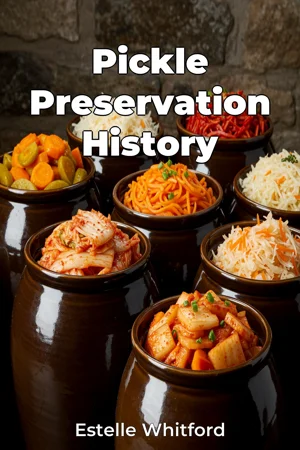
Have you ever considered the pivotal role that pickles played beyond just a tasty side dish, acting as vital agents in preserving food across civilizations? "Pickle Preservation History" delves into the world of vegetable preservation through acid and salt, exploring its rich tapestry across Middle Eastern, Asian, and Eastern European culinary traditions. It reveals how pickling, far from being a mere culinary practice, acted as a cornerstone of societal resilience, enabling survival, trade, and cultural exchange throughout history. This book examines the historical context, techniques, and cultural significance of pickling across these diverse regions. The book's main topics are the development and evolution of acid and salt-based vegetable preservation techniques; the socio-economic impact of these methods on different cultures; and the enduring legacy of pickling in modern cuisine. These topics are important as pickling offered food security in times of scarcity, facilitated long-distance trade by preventing spoilage, and created unique regional culinary identities. To fully understand pickling's importance, the book provides historical context about food preservation challenges before modern refrigeration. It explores the scientific principles behind pickling, explaining how acid and salt inhibit microbial growth and extend shelf life. No prior scientific knowledge is needed, as the book explains these processes clearly. The central argument is that pickling transcends mere culinary technique; it is a cultural bridge connecting people, trade, and history. By examining the diverse applications of pickling across different regions, the book showcases its crucial role in shaping culinary traditions and enabling communities to thrive even under challenging conditions. The book is structured in three main sections. First, it introduces the fundamental concepts of acid and salt preservation, setting the stage by explaining the science and history. The second section delves into regional explorations. It features chapters dedicated to pickling traditions in the Middle East (fermented vegetables like torshi), Asia (kimchi and tsukemono), and Eastern Europe (sauerkraut and pickled cucumbers). Each chapter examines the specific techniques, ingredients, and cultural significance of pickling in that region. The final section synthesizes the information, addresses the evolution of pickling towards industrial scale production, and explores its place in modern food culture, including artisan pickles and fermentation trends. Evidence comes from a variety of sources: archaeological findings of preserved foods, historical texts and recipes documenting pickling methods, and anthropological studies examining the social and cultural significance of preserved foods. Scientific analysis of preserved foods provides insight into the effectiveness of different pickling techniques. The book adopts an interdisciplinary approach, connecting history, food science, and cultural anthropology. It highlights how pickling intersects with trade routes, agricultural practices, and even religious customs. By examining these connections, the book provides a holistic understanding of pickling's pervasive influence. The book's unique approach lies in its comparative analysis of pickling traditions across diverse regions. It highlights common threads while celebrating the unique adaptations and innovations that emerged in each culture. This comparative perspective reveals the universal importance of pickling as a food preservation strategy while respecting the distinct culinary identities that it has fostered. The book is written in a clear, accessible style that balances scholarly rigor with engaging storytelling. It aims to appeal to food enthusiasts, history buffs, and anyone interested in the cultural dimensions of food. This book offers food historians a comparative global overview of pickling traditions and provides unique perspectives on the interconnectedness of food, culture, and history. The book's scope includes pickling traditions in the Middle East, Asia, and Eastern Europe, but it does not delve into pickling methods used in other regions like South America or Africa in significant detail. The information here can be of practical use in the home kitchen. The book helps you understand the science and art behind creating delicious and safe pickled products, empowering them to experiment with different flavors and techniques. The book addresses ongoing debates about industrialization of food and the preservation of traditional pickling methods, exploring the tension between mass production and artisanal techniques, as well as the impact of globalization on local food cultures.
Have you ever considered the pivotal role that pickles played beyond just a tasty side dish, acting as vital agents in preserving food across civilizations? "Pickle Preservation History" delves into the world of vegetable preservation through acid and salt, exploring its rich tapestry across Middle Eastern, Asian, and Eastern European culinary traditions. It reveals how pickling, far from being a mere culinary practice, acted as a cornerstone of societal resilience, enabling survival, trade, and cultural exchange throughout history. This book examines the historical context, techniques, and cultural significance of pickling across these diverse regions. The book's main topics are the development and evolution of acid and salt-based vegetable preservation techniques; the socio-economic impact of these methods on different cultures; and the enduring legacy of pickling in modern cuisine. These topics are important as pickling offered food security in times of scarcity, facilitated long-distance trade by preventing spoilage, and created unique regional culinary identities. To fully understand pickling's importance, the book provides historical context about food preservation challenges before modern refrigeration. It explores the scientific principles behind pickling, explaining how acid and salt inhibit microbial growth and extend shelf life. No prior scientific knowledge is needed, as the book explains these processes clearly. The central argument is that pickling transcends mere culinary technique; it is a cultural bridge connecting people, trade, and history. By examining the diverse applications of pickling across different regions, the book showcases its crucial role in shaping culinary traditions and enabling communities to thrive even under challenging conditions. The book is structured in three main sections. First, it introduces the fundamental concepts of acid and salt preservation, setting the stage by explaining the science and history. The second section delves into regional explorations. It features chapters dedicated to pickling traditions in the Middle East (fermented vegetables like torshi), Asia (kimchi and tsukemono), and Eastern Europe (sauerkraut and pickled cucumbers). Each chapter examines the specific techniques, ingredients, and cultural significance of pickling in that region. The final section synthesizes the information, addresses the evolution of pickling towards industrial scale production, and explores its place in modern food culture, including artisan pickles and fermentation trends. Evidence comes from a variety of sources: archaeological findings of preserved foods, historical texts and recipes documenting pickling methods, and anthropological studies examining the social and cultural significance of preserved foods. Scientific analysis of preserved foods provides insight into the effectiveness of different pickling techniques. The book adopts an interdisciplinary approach, connecting history, food science, and cultural anthropology. It highlights how pickling intersects with trade routes, agricultural practices, and even religious customs. By examining these connections, the book provides a holistic understanding of pickling's pervasive influence. The book's unique approach lies in its comparative analysis of pickling traditions across diverse regions. It highlights common threads while celebrating the unique adaptations and innovations that emerged in each culture. This comparative perspective reveals the universal importance of pickling as a food preservation strategy while respecting the distinct culinary identities that it has fostered. The book is written in a clear, accessible style that balances scholarly rigor with engaging storytelling. It aims to appeal to food enthusiasts, history buffs, and anyone interested in the cultural dimensions of food. This book offers food historians a comparative global overview of pickling traditions and provides unique perspectives on the interconnectedness of food, culture, and history. The book's scope includes pickling traditions in the Middle East, Asia, and Eastern Europe, but it does not delve into pickling methods used in other regions like South America or Africa in significant detail. The information here can be of practical use in the home kitchen. The book helps you understand the science and art behind creating delicious and safe pickled products, empowering them to experiment with different flavors and techniques. The book addresses ongoing debates about industrialization of food and the preservation of traditional pickling methods, exploring the tension between mass production and artisanal techniques, as well as the impact of globalization on local food cultures.
"Pickle Preservation History" explores pickling's profound historical impact, revealing it as far more than a mere culinary practice. Examining vegetable preservation through acid and salt across the Middle East, Asia, and Eastern Europe, the book highlights pickling’s crucial role in enabling trade, ensuring survival, and fostering cultural exchange. For example, fermented vegetables like torshi in the Middle East and kimchi in Asia showcase the diverse applications of pickling. The book delves into the evolution of pickling techniques and their socio-economic impact, illustrating how these methods offered food security and shaped regional culinary identities. It begins by introducing the science and history of acid and salt preservation, then progresses through regional explorations before synthesizing the information to discuss its modern place, including artisanal pickles. The book employs an interdisciplinary approach, connecting history, food science, and cultural anthropology to reveal pickling's impact on trade routes and agricultural practices. By comparatively analyzing pickling traditions, "Pickle Preservation History" emphasizes its universal importance while celebrating unique cultural adaptations, providing valuable insights for food enthusiasts and history buffs alike.
Book Details
ISBN
9788235220202
Publisher
Publifye AS
Your Licenses
You don't own any licenses for this book
Purchase a license below to unlock this book and download the EPUB.
Purchase License
Select a tier to unlock this book
Need bulk licensing?
Contact us for enterprise agreements.