
About This Book
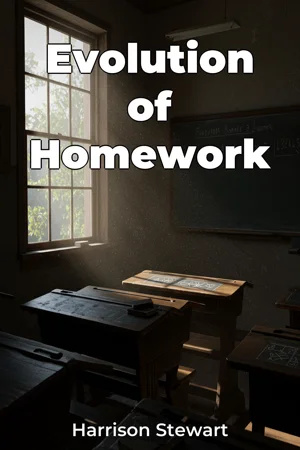
Why do students spend countless hours toiling over assignments outside of the classroom? "Evolution of Homework" delves into the surprisingly complex history of homework, tracing its development from a relatively rare practice to its current ubiquitous role in modern education. This book will explore how homework evolved, the varying philosophies that have shaped its use, and an analysis of its impact on student academic performance. Understanding the history of homework provides critical context to assess its current role and consider its future in education. This book will cover three main topics: the historical development of homework, the shifting pedagogical philosophies underpinning homework assignments, and the measurable effects homework has on academic outcomes. Each topic is vital to understanding the complete picture of homework's place in education today. Without understanding the history, we cannot see how cultural and societal shifts influenced the practice. Without looking at the pedagogical philosophies we cannot see how the intentions for homework evolved over time and influenced its designs. And, perhaps most importantly, examining the effects of homework on student performance allows us to question whether its implementation is effective and equitable. To understand the evolution of homework, it is important to consider the broader history of education and changing societal expectations of children. The book looks at educational practices from the Prussian model to progressive education movements, and how these influenced the role of homework. A basic understanding of these historical shifts is helpful, but not essential, as the book provides the necessary context. The central argument of "Evolution of Homework" is that the purpose and effectiveness of homework have constantly been in flux, reflecting changing educational goals and societal values. The book challenges the assumption that homework is simply an inherent and positive element of education, instead arguing that it is a practice with a complex and often contradictory history. Understanding this history allows for a more nuanced evaluation of its present role and future potential. The book will be structured to guide readers through this history. First, it will introduce the earliest known uses of homework and the rationales behind them. The next section will detail the expansion of homework during the periods of industrialization and mass schooling. Then, it will discuss the challenges to homework that arose during the progressive education movement and subsequent debates about workload and educational effectiveness. Following that, it will focus on contemporary research into homework and its links to academic performance, student well-being, and equity. Finally, the book will tie these observations together, examining the implications for educators, policymakers, and parents, offering evidence-based recommendations for a more thoughtful and effective approach to homework. The evidence presented consists of historical documents, educational research studies, statistical analyses of academic performance data, and case studies of different homework policies in various school systems. The research will include previously published data and incorporate meta-analyses of existing studies to provide a comprehensive overview. This book also connects to broader academic discussions in several fields, including sociology (how homework reflects social inequalities), psychology (the effects of homework on student motivation and mental health), and public policy (the role of government in setting homework guidelines). These connections enhance the comprehensive analysis of homework's multifaceted effects. "Evolution of Homework" stands out by providing a comprehensive historical analysis combined with a review of contemporary research, challenging readers to reconsider their preconceived notions about homework. It avoids simply advocating for or against homework, instead offering a fact-based, nuanced perspective. The book adopts an academic yet accessible tone, aiming to present complex information in a clear and engaging manner. The goal is to reach a broad audience, including educators, education students, policymakers, parents, and anyone interested in understanding the history and impact of homework. As a work of non-fiction, this book adheres to the conventions of rigorous research, accurate sourcing, and objective analysis. The scope of the book is intentionally limited to the history and effects of homework within formal educational settings, excluding informal learning environments. The information in this book can be applied practically by educators seeking to design more effective homework assignments, policymakers aiming to create more equitable education policies, and parents wanting to support their children's learning without overburdening them. Finally, the book acknowledges and addresses the ongoing debates surrounding homework, including questions about its value, optimal quantity, and impact on student well-being, offering a balanced perspective on these contentious issues.
Why do students spend countless hours toiling over assignments outside of the classroom? "Evolution of Homework" delves into the surprisingly complex history of homework, tracing its development from a relatively rare practice to its current ubiquitous role in modern education. This book will explore how homework evolved, the varying philosophies that have shaped its use, and an analysis of its impact on student academic performance. Understanding the history of homework provides critical context to assess its current role and consider its future in education. This book will cover three main topics: the historical development of homework, the shifting pedagogical philosophies underpinning homework assignments, and the measurable effects homework has on academic outcomes. Each topic is vital to understanding the complete picture of homework's place in education today. Without understanding the history, we cannot see how cultural and societal shifts influenced the practice. Without looking at the pedagogical philosophies we cannot see how the intentions for homework evolved over time and influenced its designs. And, perhaps most importantly, examining the effects of homework on student performance allows us to question whether its implementation is effective and equitable. To understand the evolution of homework, it is important to consider the broader history of education and changing societal expectations of children. The book looks at educational practices from the Prussian model to progressive education movements, and how these influenced the role of homework. A basic understanding of these historical shifts is helpful, but not essential, as the book provides the necessary context. The central argument of "Evolution of Homework" is that the purpose and effectiveness of homework have constantly been in flux, reflecting changing educational goals and societal values. The book challenges the assumption that homework is simply an inherent and positive element of education, instead arguing that it is a practice with a complex and often contradictory history. Understanding this history allows for a more nuanced evaluation of its present role and future potential. The book will be structured to guide readers through this history. First, it will introduce the earliest known uses of homework and the rationales behind them. The next section will detail the expansion of homework during the periods of industrialization and mass schooling. Then, it will discuss the challenges to homework that arose during the progressive education movement and subsequent debates about workload and educational effectiveness. Following that, it will focus on contemporary research into homework and its links to academic performance, student well-being, and equity. Finally, the book will tie these observations together, examining the implications for educators, policymakers, and parents, offering evidence-based recommendations for a more thoughtful and effective approach to homework. The evidence presented consists of historical documents, educational research studies, statistical analyses of academic performance data, and case studies of different homework policies in various school systems. The research will include previously published data and incorporate meta-analyses of existing studies to provide a comprehensive overview. This book also connects to broader academic discussions in several fields, including sociology (how homework reflects social inequalities), psychology (the effects of homework on student motivation and mental health), and public policy (the role of government in setting homework guidelines). These connections enhance the comprehensive analysis of homework's multifaceted effects. "Evolution of Homework" stands out by providing a comprehensive historical analysis combined with a review of contemporary research, challenging readers to reconsider their preconceived notions about homework. It avoids simply advocating for or against homework, instead offering a fact-based, nuanced perspective. The book adopts an academic yet accessible tone, aiming to present complex information in a clear and engaging manner. The goal is to reach a broad audience, including educators, education students, policymakers, parents, and anyone interested in understanding the history and impact of homework. As a work of non-fiction, this book adheres to the conventions of rigorous research, accurate sourcing, and objective analysis. The scope of the book is intentionally limited to the history and effects of homework within formal educational settings, excluding informal learning environments. The information in this book can be applied practically by educators seeking to design more effective homework assignments, policymakers aiming to create more equitable education policies, and parents wanting to support their children's learning without overburdening them. Finally, the book acknowledges and addresses the ongoing debates surrounding homework, including questions about its value, optimal quantity, and impact on student well-being, offering a balanced perspective on these contentious issues.
"Evolution of Homework" explores the surprisingly complex history of homework, from its rare origins to its current, almost universal presence in education. It examines the changing pedagogical philosophies that have shaped homework, highlighting how cultural and societal shifts have influenced its practice. The book delves into whether homework's implementation is effective and equitable, providing a critical context to assess its role and future in education. The book is structured to guide readers through this history, beginning with the earliest known uses of homework and their rationales, then detailing its expansion during industrialization. It addresses challenges to homework that arose during the progressive education movement and subsequent debates about workload and educational effectiveness. Contemporary research into homework and its links to academic performance, student well-being, and equity are also explored. This book differentiates itself by providing a historical analysis combined with a review of contemporary research, challenging readers to reconsider their preconceived notions about homework. It avoids simply advocating for or against homework, instead offering a fact-based, nuanced perspective relevant to educators, policymakers, and parents.
Book Details
ISBN
9788235219961
Publisher
Publifye AS
Your Licenses
You don't own any licenses for this book
Purchase a license below to unlock this book and download the EPUB.
Purchase License
Select a tier to unlock this book
Need bulk licensing?
Contact us for enterprise agreements.