
About This Book
Why, for centuries, was the pursuit of knowledge deemed a privilege reserved primarily for men? "Education for Women" meticulously examines the arduous journey women have undertaken to gain access to formal education and dismantle the societal barriers erected in their path. This book delves into the historical, social, and cultural forces that have shaped women's educational opportunities, providing a comprehensive analysis of both the struggles endured and the progress achieved. The book primarily focuses on three key topics: the historical denial of education to women, the emergence of female educational pioneers and institutions, and the ongoing challenges and disparities that persist in contemporary education systems. Understanding these topics is crucial for comprehending the systemic inequalities that have impacted women's lives and continue to influence gender dynamics in various sectors, including the workforce and leadership positions. To provide a thorough understanding, the book establishes a historical context, tracing the evolution of societal attitudes towards women’s roles and intellect. It explores the philosophical and religious justifications used to limit women's access to learning, as well as the gradual shift in these perspectives during the Enlightenment and subsequent periods of social reform. No specific prerequisite knowledge is required; the book is designed to be accessible to a broad audience interested in the history of education and gender studies. The central argument of "Education for Women" is that the fight for equal educational opportunities for women has been a continuous and multifaceted struggle against deeply ingrained patriarchal structures. While significant progress has been made, the book posits that true gender equality in education remains an unfulfilled goal, requiring ongoing effort and critical examination of existing systems. This argument is vital because it highlights the need for continued advocacy and policy changes to address persistent disparities. The book is structured in a logical sequence, beginning with an introduction that establishes the historical backdrop and defines key concepts related to gender, education, and social inequality. Subsequent chapters explore the denial of education to women in different historical periods and geographical regions, examining the specific barriers encountered in each context. A dedicated section focuses on the women who defied societal norms and established educational institutions or advocated for reform. The book culminates with an analysis of contemporary challenges, such as gender bias in STEM fields, the impact of socio-economic factors on educational attainment, and the role of education in empowering women globally. It also considers practical implications, such as policy recommendations and strategies for promoting gender equality in educational settings. The analysis presented is supported by a wide range of historical documents, statistical data, and case studies. Primary sources, such as letters, diaries, and educational records, are used to provide firsthand accounts of women's experiences. Quantitative data on enrollment rates, graduation rates, and representation in different fields of study are analyzed to demonstrate trends and disparities. "Education for Women" also connects to other fields of study, including sociology, gender studies, and economics. By examining the social and economic consequences of unequal educational opportunities, the book underscores the importance of interdisciplinary perspectives in understanding and addressing gender inequality. This book offers a unique perspective by combining historical analysis with contemporary insights, providing a nuanced understanding of the ongoing struggle for gender equality in education. The tone is academic yet accessible, aiming to engage a broad readership without compromising scholarly rigor. The primary target audience includes students, educators, policymakers, and anyone interested in the history of education, gender studies, and social justice. It would be valuable to readers seeking a comprehensive and well-researched overview of the topic, as well as those interested in understanding the historical roots of contemporary gender inequalities. As a work of history and a textbook, "Education for Women" adheres to the conventions of providing accurate and well-documented information, presenting diverse perspectives, and engaging with existing scholarship in the field. The scope is broad, covering a wide range of historical periods and geographical regions, but it is limited by the focus on formal education systems, acknowledging that informal education and other forms of learning also play a significant role in women's lives. The information in this book can be applied practically by readers to inform their own understanding of gender dynamics in education, to advocate for policy changes, and to support initiatives that promote gender equality in their communities and workplaces. The book also addresses ongoing debates in the field, such as the role of single-sex education, the impact of standardized testing on gender disparities, and the effectiveness of different interventions aimed at promoting women's participation in STEM fields.
Why, for centuries, was the pursuit of knowledge deemed a privilege reserved primarily for men? "Education for Women" meticulously examines the arduous journey women have undertaken to gain access to formal education and dismantle the societal barriers erected in their path. This book delves into the historical, social, and cultural forces that have shaped women's educational opportunities, providing a comprehensive analysis of both the struggles endured and the progress achieved. The book primarily focuses on three key topics: the historical denial of education to women, the emergence of female educational pioneers and institutions, and the ongoing challenges and disparities that persist in contemporary education systems. Understanding these topics is crucial for comprehending the systemic inequalities that have impacted women's lives and continue to influence gender dynamics in various sectors, including the workforce and leadership positions. To provide a thorough understanding, the book establishes a historical context, tracing the evolution of societal attitudes towards women’s roles and intellect. It explores the philosophical and religious justifications used to limit women's access to learning, as well as the gradual shift in these perspectives during the Enlightenment and subsequent periods of social reform. No specific prerequisite knowledge is required; the book is designed to be accessible to a broad audience interested in the history of education and gender studies. The central argument of "Education for Women" is that the fight for equal educational opportunities for women has been a continuous and multifaceted struggle against deeply ingrained patriarchal structures. While significant progress has been made, the book posits that true gender equality in education remains an unfulfilled goal, requiring ongoing effort and critical examination of existing systems. This argument is vital because it highlights the need for continued advocacy and policy changes to address persistent disparities. The book is structured in a logical sequence, beginning with an introduction that establishes the historical backdrop and defines key concepts related to gender, education, and social inequality. Subsequent chapters explore the denial of education to women in different historical periods and geographical regions, examining the specific barriers encountered in each context. A dedicated section focuses on the women who defied societal norms and established educational institutions or advocated for reform. The book culminates with an analysis of contemporary challenges, such as gender bias in STEM fields, the impact of socio-economic factors on educational attainment, and the role of education in empowering women globally. It also considers practical implications, such as policy recommendations and strategies for promoting gender equality in educational settings. The analysis presented is supported by a wide range of historical documents, statistical data, and case studies. Primary sources, such as letters, diaries, and educational records, are used to provide firsthand accounts of women's experiences. Quantitative data on enrollment rates, graduation rates, and representation in different fields of study are analyzed to demonstrate trends and disparities. "Education for Women" also connects to other fields of study, including sociology, gender studies, and economics. By examining the social and economic consequences of unequal educational opportunities, the book underscores the importance of interdisciplinary perspectives in understanding and addressing gender inequality. This book offers a unique perspective by combining historical analysis with contemporary insights, providing a nuanced understanding of the ongoing struggle for gender equality in education. The tone is academic yet accessible, aiming to engage a broad readership without compromising scholarly rigor. The primary target audience includes students, educators, policymakers, and anyone interested in the history of education, gender studies, and social justice. It would be valuable to readers seeking a comprehensive and well-researched overview of the topic, as well as those interested in understanding the historical roots of contemporary gender inequalities. As a work of history and a textbook, "Education for Women" adheres to the conventions of providing accurate and well-documented information, presenting diverse perspectives, and engaging with existing scholarship in the field. The scope is broad, covering a wide range of historical periods and geographical regions, but it is limited by the focus on formal education systems, acknowledging that informal education and other forms of learning also play a significant role in women's lives. The information in this book can be applied practically by readers to inform their own understanding of gender dynamics in education, to advocate for policy changes, and to support initiatives that promote gender equality in their communities and workplaces. The book also addresses ongoing debates in the field, such as the role of single-sex education, the impact of standardized testing on gender disparities, and the effectiveness of different interventions aimed at promoting women's participation in STEM fields.
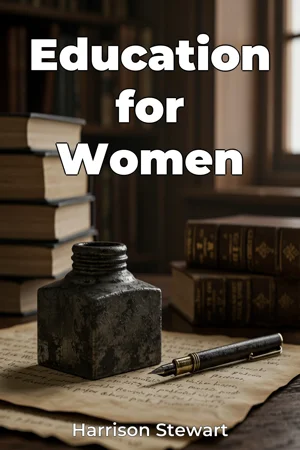
"Education for Women" explores the historical struggle for women's access to formal education, revealing the societal barriers and patriarchal structures that long denied them equal opportunities. It examines how philosophical and religious justifications were employed to limit women's learning, with a deep dive into the gradual shifts during the Enlightenment and beyond. Highlighting both the historical denial of education and the emergence of pioneering female educators, the book emphasizes the ongoing challenges in contemporary education. The book uniquely combines historical analysis with contemporary insights, offering a nuanced understanding of the ongoing struggle for gender equality. Primary sources like letters and educational records offer firsthand accounts, while statistical data demonstrates trends and disparities. Though significant progress has occurred, the book argues that true gender equality remains an unfulfilled goal. Structured logically, "Education for Women" begins by establishing a historical backdrop and defining key concepts. Subsequent chapters explore the denial of education in different periods and regions, dedicating a section to women who defied norms. The book culminates with an analysis of contemporary challenges, such as gender bias in STEM fields, and considers policy recommendations for promoting gender equality.
Book Details
ISBN
9788235219947
Publisher
Publifye AS
Your Licenses
You don't own any licenses for this book
Purchase a license below to unlock this book and download the EPUB.
Purchase License
Select a tier to unlock this book
Need bulk licensing?
Contact us for enterprise agreements.