
About This Book
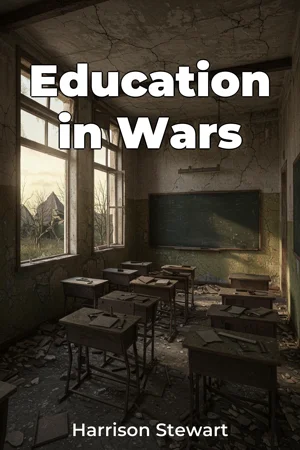
How does a society educate its children amidst the chaos of war? "Education in Wars" delves into precisely this question, examining the profound disruptions conflicts inflict on schooling and the remarkable adaptations education systems undertake in times of crisis. This book is important because it sheds light on the resilience of education as a fundamental human endeavor, its role in societal continuity, and its power to shape future generations, even under the most challenging circumstances. The central argument of this book is that while war invariably disrupts education, it also often spurs innovation and adaptation within educational systems. These adaptations, driven by necessity, reveal deep-seated societal values and priorities concerning the role of education in preserving cultural identity, fostering social cohesion, and preparing youth for an uncertain future. The text explores how these adaptations occur across varied historical periods and geographical locations, demonstrating both the universality of the challenges and the diversity of responses. "Education in Wars" is structured to provide a comprehensive understanding of this complex interplay. It begins by establishing a theoretical framework for understanding the impact of conflict on education, examining the immediate effects of war, such as school closures, displacement of students and teachers, and the destruction of infrastructure. The subsequent sections explore specific case studies, analyzing how different societies have grappled with educating their youth during wartime. These case studies are categorized thematically, addressing issues such as curriculum reform, the use of alternative educational spaces, and the role of technology in maintaining access to learning. The book examines examples such as the adaptations in education systems during the World Wars, the use of underground schools in Nazi-occupied territories, and the challenges of providing education in contemporary conflict zones. The evidence presented in "Education in Wars" draws from a diverse range of sources, including archival documents, government reports, personal narratives from students and educators, and statistical data on educational outcomes. The book also incorporates research from fields such as sociology, political science, and international relations to provide a holistic perspective on the topic. Interdisciplinary connections enhance the book's argument by highlighting the social, political, and economic factors that shape educational responses to conflict. For example, the book explores the relationship between education and national identity, examining how wartime curricula are often designed to promote patriotism and social cohesion. It also considers the role of international organizations in providing educational aid and support to conflict-affected regions. "Education in Wars" adopts an academic yet accessible writing style, aiming to engage both scholars and general readers interested in the intersection of education, history, and conflict studies. The book's scope is intentionally broad, covering a range of historical periods and geographical locations to provide a global perspective on the topic, but it acknowledges the limitations of generalizing across diverse contexts and acknowledges that specific case studies are examined in detail to provide nuanced understanding. It does not attempt to provide a definitive solution to the challenges of wartime education. The information presented in this book has real-world applications for policymakers, educators, and humanitarian workers involved in education in conflict-affected areas. By understanding the historical patterns of educational disruption and adaptation, these stakeholders can develop more effective strategies for mitigating the impact of conflict on schooling and ensuring that children continue to have access to quality education, even in the midst of war. While the importance of education during conflict is widely recognized, debates persist regarding the most effective approaches to providing this education. This book addresses these debates, examining the trade-offs between different educational strategies and considering the ethical implications of educational interventions in conflict zones. "Education in Wars" contributes a detailed examination of how education systems transform when confronted with armed conflict, offering crucial insights for understanding the complex relationship between education and society.
How does a society educate its children amidst the chaos of war? "Education in Wars" delves into precisely this question, examining the profound disruptions conflicts inflict on schooling and the remarkable adaptations education systems undertake in times of crisis. This book is important because it sheds light on the resilience of education as a fundamental human endeavor, its role in societal continuity, and its power to shape future generations, even under the most challenging circumstances. The central argument of this book is that while war invariably disrupts education, it also often spurs innovation and adaptation within educational systems. These adaptations, driven by necessity, reveal deep-seated societal values and priorities concerning the role of education in preserving cultural identity, fostering social cohesion, and preparing youth for an uncertain future. The text explores how these adaptations occur across varied historical periods and geographical locations, demonstrating both the universality of the challenges and the diversity of responses. "Education in Wars" is structured to provide a comprehensive understanding of this complex interplay. It begins by establishing a theoretical framework for understanding the impact of conflict on education, examining the immediate effects of war, such as school closures, displacement of students and teachers, and the destruction of infrastructure. The subsequent sections explore specific case studies, analyzing how different societies have grappled with educating their youth during wartime. These case studies are categorized thematically, addressing issues such as curriculum reform, the use of alternative educational spaces, and the role of technology in maintaining access to learning. The book examines examples such as the adaptations in education systems during the World Wars, the use of underground schools in Nazi-occupied territories, and the challenges of providing education in contemporary conflict zones. The evidence presented in "Education in Wars" draws from a diverse range of sources, including archival documents, government reports, personal narratives from students and educators, and statistical data on educational outcomes. The book also incorporates research from fields such as sociology, political science, and international relations to provide a holistic perspective on the topic. Interdisciplinary connections enhance the book's argument by highlighting the social, political, and economic factors that shape educational responses to conflict. For example, the book explores the relationship between education and national identity, examining how wartime curricula are often designed to promote patriotism and social cohesion. It also considers the role of international organizations in providing educational aid and support to conflict-affected regions. "Education in Wars" adopts an academic yet accessible writing style, aiming to engage both scholars and general readers interested in the intersection of education, history, and conflict studies. The book's scope is intentionally broad, covering a range of historical periods and geographical locations to provide a global perspective on the topic, but it acknowledges the limitations of generalizing across diverse contexts and acknowledges that specific case studies are examined in detail to provide nuanced understanding. It does not attempt to provide a definitive solution to the challenges of wartime education. The information presented in this book has real-world applications for policymakers, educators, and humanitarian workers involved in education in conflict-affected areas. By understanding the historical patterns of educational disruption and adaptation, these stakeholders can develop more effective strategies for mitigating the impact of conflict on schooling and ensuring that children continue to have access to quality education, even in the midst of war. While the importance of education during conflict is widely recognized, debates persist regarding the most effective approaches to providing this education. This book addresses these debates, examining the trade-offs between different educational strategies and considering the ethical implications of educational interventions in conflict zones. "Education in Wars" contributes a detailed examination of how education systems transform when confronted with armed conflict, offering crucial insights for understanding the complex relationship between education and society.
"Education in Wars" explores how societies educate children amidst wartime chaos, highlighting the disruptions conflicts inflict on schooling and the adaptations education systems undertake. The book emphasizes education's resilience as a fundamental human endeavor and its role in societal continuity, even under challenging circumstances. One insight is how wartime curricula often promote patriotism and social cohesion, reflecting deep-seated societal values. Another aspect is how conflict can spur educational innovation, driven by necessity. This textbook adopts an academic yet accessible approach, presenting a comprehensive understanding of the complex interplay between war and education. It establishes a theoretical framework, examines immediate war effects like school closures, and explores case studies thematically, addressing curriculum reform and alternative educational spaces. The book draws from diverse sources, including archival documents and personal narratives, providing a global perspective on the topic. The book progresses by first establishing a theoretical framework for understanding the impact of conflict on education. Subsequent sections explore specific case studies, categorized thematically, such as curriculum reform and alternative educational spaces. Ultimately, "Education in Wars" offers valuable insights for policymakers and educators involved in conflict-affected areas, aiding them in developing effective strategies for mitigating conflict's impact on schooling.
Book Details
ISBN
9788235219930
Publisher
Publifye AS
Your Licenses
You don't own any licenses for this book
Purchase a license below to unlock this book and download the EPUB.
Purchase License
Select a tier to unlock this book
Need bulk licensing?
Contact us for enterprise agreements.