
About This Book
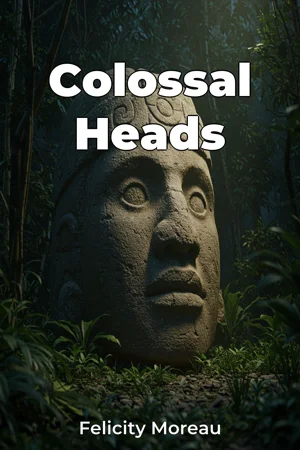
What secrets lie hidden within the silent stone faces that watch over ancient civilizations? Colossal Heads delves into the captivating mysteries surrounding monumental sculpted heads across diverse cultures, from the iconic Olmec heads of Mesoamerica to the enigmatic Moai of Easter Island, exploring not just their creation but also their profound cultural significance. This book presents a comprehensive investigation into these impressive sculptures, examining the historical, artistic, and anthropological contexts that illuminate their origins and purposes. The central argument of Colossal Heads posits that these monumental sculptures represent more than mere artistic expression; they are powerful symbols of authority, identity, and cultural memory. By understanding the creation, placement, and meaning of these heads, we can gain invaluable insights into the societies that produced them. Their construction often involved significant resource allocation and complex social organization, revealing crucial details about the political structures and religious beliefs of these civilizations. The book is structured to guide readers through a fascinating exploration of these topics. It begins by introducing the major sites where colossal heads have been discovered, focusing specifically on the Olmec civilization and Easter Island. It details the discovery and initial interpretations of the sculptures, setting the stage for a comparative analysis. Subsequent sections delve into the specific artistic techniques used in creating the heads, discussing the sourcing and transportation of materials, the labor involved, and the tools employed. We explore the iconography and symbolism embedded within the sculptures, analyzing facial features, headdresses, and other decorative elements to decipher their potential meanings. This involves examining relevant archaeological findings, deciphering hieroglyphic texts (where applicable), and considering ethnographic data from descendant cultures. The research presented in Colossal Heads relies on a diverse range of sources, including archaeological reports, geological surveys, iconographic analyses, and ethnographic studies. The book also considers the impact of environmental factors, such as erosion and volcanic activity, on the preservation and interpretation of the heads. Furthermore, it explores the controversies surrounding the dating of the sculptures and the identity of the individuals they depict. Colossal Heads benefits from its interdisciplinary approach, drawing connections between art history, archaeology, and anthropology. The artistic analysis provides insight into the aesthetic values and technical skills of the cultures, while the archaeological context establishes the historical timelines and settings. The anthropological perspective explores the social and cultural meanings embedded in the heads, linking them to broader patterns of human behavior and belief. This integrated approach provides a richer and more complete understanding of these significant cultural artifacts. The tone of Colossal Heads is informative and engaging, making complex topics accessible to a broad audience. The writing style balances scholarly rigor with narrative clarity, presenting the information in a way that is both accurate and compelling. The primary audience for this book includes students and scholars of art history, archaeology, and anthropology, as well as general readers with an interest in ancient civilizations and monumental art. It offers a unique and insightful perspective that will appeal to anyone interested in discovering the hidden stories behind these enduring symbols of human creativity and ingenuity. In terms of scope, the book focuses primarily on the Olmec heads and the Easter Island Moai, while also briefly touching on similar monumental sculptures from other cultures, such as the sculptures of ancient Java and other Pacific islands. This deliberate limitation allows for a more in-depth analysis of the primary examples. While the book delves into various interpretations that have been proposed about the sculptures, it acknowledges the ongoing debates surrounding their precise meaning and purpose. It addresses the limitations of current knowledge and emphasizes the need for continued research and exploration.
What secrets lie hidden within the silent stone faces that watch over ancient civilizations? Colossal Heads delves into the captivating mysteries surrounding monumental sculpted heads across diverse cultures, from the iconic Olmec heads of Mesoamerica to the enigmatic Moai of Easter Island, exploring not just their creation but also their profound cultural significance. This book presents a comprehensive investigation into these impressive sculptures, examining the historical, artistic, and anthropological contexts that illuminate their origins and purposes. The central argument of Colossal Heads posits that these monumental sculptures represent more than mere artistic expression; they are powerful symbols of authority, identity, and cultural memory. By understanding the creation, placement, and meaning of these heads, we can gain invaluable insights into the societies that produced them. Their construction often involved significant resource allocation and complex social organization, revealing crucial details about the political structures and religious beliefs of these civilizations. The book is structured to guide readers through a fascinating exploration of these topics. It begins by introducing the major sites where colossal heads have been discovered, focusing specifically on the Olmec civilization and Easter Island. It details the discovery and initial interpretations of the sculptures, setting the stage for a comparative analysis. Subsequent sections delve into the specific artistic techniques used in creating the heads, discussing the sourcing and transportation of materials, the labor involved, and the tools employed. We explore the iconography and symbolism embedded within the sculptures, analyzing facial features, headdresses, and other decorative elements to decipher their potential meanings. This involves examining relevant archaeological findings, deciphering hieroglyphic texts (where applicable), and considering ethnographic data from descendant cultures. The research presented in Colossal Heads relies on a diverse range of sources, including archaeological reports, geological surveys, iconographic analyses, and ethnographic studies. The book also considers the impact of environmental factors, such as erosion and volcanic activity, on the preservation and interpretation of the heads. Furthermore, it explores the controversies surrounding the dating of the sculptures and the identity of the individuals they depict. Colossal Heads benefits from its interdisciplinary approach, drawing connections between art history, archaeology, and anthropology. The artistic analysis provides insight into the aesthetic values and technical skills of the cultures, while the archaeological context establishes the historical timelines and settings. The anthropological perspective explores the social and cultural meanings embedded in the heads, linking them to broader patterns of human behavior and belief. This integrated approach provides a richer and more complete understanding of these significant cultural artifacts. The tone of Colossal Heads is informative and engaging, making complex topics accessible to a broad audience. The writing style balances scholarly rigor with narrative clarity, presenting the information in a way that is both accurate and compelling. The primary audience for this book includes students and scholars of art history, archaeology, and anthropology, as well as general readers with an interest in ancient civilizations and monumental art. It offers a unique and insightful perspective that will appeal to anyone interested in discovering the hidden stories behind these enduring symbols of human creativity and ingenuity. In terms of scope, the book focuses primarily on the Olmec heads and the Easter Island Moai, while also briefly touching on similar monumental sculptures from other cultures, such as the sculptures of ancient Java and other Pacific islands. This deliberate limitation allows for a more in-depth analysis of the primary examples. While the book delves into various interpretations that have been proposed about the sculptures, it acknowledges the ongoing debates surrounding their precise meaning and purpose. It addresses the limitations of current knowledge and emphasizes the need for continued research and exploration.
"Colossal Heads" explores the mysteries behind monumental sculpted heads found in ancient civilizations, focusing on the Olmec heads of Mesoamerica and the Moai of Easter Island. These sculptures, far from simple artworks, represent potent symbols of authority, cultural identity, and collective memory. The book investigates the extensive resources and complex social organization required for their creation, offering insights into the political structures and religious beliefs of these societies. The book progresses systematically, starting with the discovery and initial interpretations of these impressive sculptures. It then examines the artistic techniques employed, detailing material sourcing, transportation, labor, and tools. By analyzing facial features, headdresses, and other decorative elements, "Colossal Heads" deciphers the iconography and symbolism embedded within the sculptures. For instance, the unique headdresses on Olmec heads may represent rulers or deities, reflecting the civilization's hierarchical structure. Drawing upon archaeological reports, geological surveys, iconographic analyses, and ethnographic studies, the book adopts an interdisciplinary approach, connecting art history, archaeology, and anthropology. This integrated perspective provides a richer understanding of these significant cultural artifacts, appealing to students, scholars, and general readers interested in ancient civilizations and monumental art.
Book Details
ISBN
9788235219701
Publisher
Publifye AS
Your Licenses
You don't own any licenses for this book
Purchase a license below to unlock this book and download the EPUB.
Purchase License
Select a tier to unlock this book
Need bulk licensing?
Contact us for enterprise agreements.