
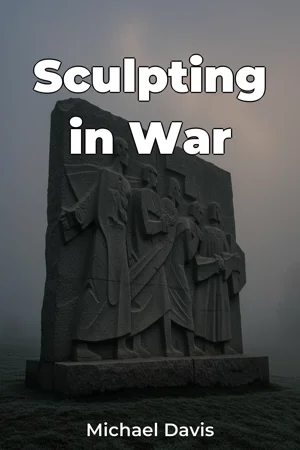
About This Book
How have artists transformed the brutal realities of war into enduring monuments of remembrance and reflection? Sculpting in War explores the profound intersection of art, history, and military conflict, revealing how sculptors throughout the ages have grappled with the complexities of warfare, creating powerful visual narratives that capture both its devastating horrors and the extraordinary acts of heroism it elicits. This book examines the creation, meaning, and impact of war-related sculptures, from ancient victory monuments to contemporary memorials, offering a comprehensive analysis of their role in shaping collective memory and understanding. The central argument of Sculpting in War is that war-related sculptures are not merely aesthetic objects but are potent historical documents that reflect the evolving attitudes, ideologies, and cultural values surrounding armed conflict. These sculptures serve as tangible links to the past, prompting viewers to confront the human cost of war and to grapple with its enduring legacies. The book asserts that understanding these sculptures requires a multi-faceted approach, considering their artistic merit, historical context, and social impact. Sculpting in War is structured to provide a comprehensive overview of the subject. It begins by introducing the fundamental concepts of war memorials and their historical development, examining the earliest forms of war commemoration and their symbolic significance. The book then progresses through distinct historical periods, analyzing key examples of war-related sculptures from classical antiquity, the medieval era, the age of nationalism, and the two World Wars, to modern conflicts. Each chapter focuses on the specific artistic styles, technological innovations, and socio-political contexts that shaped the creation and reception of these works. This exploration culminates in a discussion of contemporary approaches to war memorialization, including the use of interactive technologies and participatory art practices. The book draws upon a diverse range of sources, including archival documents, historical photographs, artist biographies, critical essays, and first-hand accounts. It presents detailed case studies of iconic sculptures, such as the Winged Victory of Samothrace, the Vietnam Veterans Memorial, and the Motherland Calls statue in Volgograd, providing in-depth analyses of their design, construction, and cultural significance. Furthermore, it incorporates interdisciplinary perspectives from art history, military history, sociology, and political science to offer a nuanced understanding of the complex relationship between art and war. Sculpting in War connects to several related fields of study. It contributes to the broader discussion of cultural memory and historical representation, exploring how societies choose to remember and commemorate significant events. It also intersects with the field of military history, providing a unique artistic lens through which to examine the causes, consequences, and human experiences of war. Furthermore, the book engages with the study of public art and its role in shaping civic identity and promoting social cohesion. A unique aspect of Sculpting in War is its focus on the emotional and psychological impact of war-related sculptures. It examines how artists use form, material, and symbolism to evoke feelings of grief, loss, anger, and hope, and how these emotional responses contribute to the process of collective healing and reconciliation. The book maintains an academic yet accessible tone, aiming to engage both scholars and general readers with an interest in art, history, and military affairs. The target audience includes art historians, military historians, students of cultural studies, veterans, and anyone interested in understanding the role of art in shaping our understanding of war. Sculpting in War offers valuable insights for policymakers, museum curators, and memorial designers who are involved in the creation and preservation of war memorials. The book acknowledges certain limitations in its scope. While it strives to provide a global perspective, it primarily focuses on examples from Western cultures, with some representation of Eastern European and Asian examples. Future research could expand the geographical scope to include a more comprehensive analysis of war-related sculptures from Africa, Latin America, and other underrepresented regions. Sculpting in War has real-world applications for understanding and interpreting existing war memorials, as well as designing new ones. It provides a framework for analyzing the artistic, historical, and social factors that contribute to the effectiveness of war memorials and offers guidance for creating meaningful and impactful works of remembrance. The book also addresses ongoing debates surrounding the representation of war in art, including questions about the glorification of violence, the depiction of trauma, and the ethics of memorializing controversial figures or events. By presenting a balanced and nuanced perspective, Sculpting in War encourages critical reflection on the role of art in shaping our understanding of war and its legacies.
How have artists transformed the brutal realities of war into enduring monuments of remembrance and reflection? Sculpting in War explores the profound intersection of art, history, and military conflict, revealing how sculptors throughout the ages have grappled with the complexities of warfare, creating powerful visual narratives that capture both its devastating horrors and the extraordinary acts of heroism it elicits. This book examines the creation, meaning, and impact of war-related sculptures, from ancient victory monuments to contemporary memorials, offering a comprehensive analysis of their role in shaping collective memory and understanding. The central argument of Sculpting in War is that war-related sculptures are not merely aesthetic objects but are potent historical documents that reflect the evolving attitudes, ideologies, and cultural values surrounding armed conflict. These sculptures serve as tangible links to the past, prompting viewers to confront the human cost of war and to grapple with its enduring legacies. The book asserts that understanding these sculptures requires a multi-faceted approach, considering their artistic merit, historical context, and social impact. Sculpting in War is structured to provide a comprehensive overview of the subject. It begins by introducing the fundamental concepts of war memorials and their historical development, examining the earliest forms of war commemoration and their symbolic significance. The book then progresses through distinct historical periods, analyzing key examples of war-related sculptures from classical antiquity, the medieval era, the age of nationalism, and the two World Wars, to modern conflicts. Each chapter focuses on the specific artistic styles, technological innovations, and socio-political contexts that shaped the creation and reception of these works. This exploration culminates in a discussion of contemporary approaches to war memorialization, including the use of interactive technologies and participatory art practices. The book draws upon a diverse range of sources, including archival documents, historical photographs, artist biographies, critical essays, and first-hand accounts. It presents detailed case studies of iconic sculptures, such as the Winged Victory of Samothrace, the Vietnam Veterans Memorial, and the Motherland Calls statue in Volgograd, providing in-depth analyses of their design, construction, and cultural significance. Furthermore, it incorporates interdisciplinary perspectives from art history, military history, sociology, and political science to offer a nuanced understanding of the complex relationship between art and war. Sculpting in War connects to several related fields of study. It contributes to the broader discussion of cultural memory and historical representation, exploring how societies choose to remember and commemorate significant events. It also intersects with the field of military history, providing a unique artistic lens through which to examine the causes, consequences, and human experiences of war. Furthermore, the book engages with the study of public art and its role in shaping civic identity and promoting social cohesion. A unique aspect of Sculpting in War is its focus on the emotional and psychological impact of war-related sculptures. It examines how artists use form, material, and symbolism to evoke feelings of grief, loss, anger, and hope, and how these emotional responses contribute to the process of collective healing and reconciliation. The book maintains an academic yet accessible tone, aiming to engage both scholars and general readers with an interest in art, history, and military affairs. The target audience includes art historians, military historians, students of cultural studies, veterans, and anyone interested in understanding the role of art in shaping our understanding of war. Sculpting in War offers valuable insights for policymakers, museum curators, and memorial designers who are involved in the creation and preservation of war memorials. The book acknowledges certain limitations in its scope. While it strives to provide a global perspective, it primarily focuses on examples from Western cultures, with some representation of Eastern European and Asian examples. Future research could expand the geographical scope to include a more comprehensive analysis of war-related sculptures from Africa, Latin America, and other underrepresented regions. Sculpting in War has real-world applications for understanding and interpreting existing war memorials, as well as designing new ones. It provides a framework for analyzing the artistic, historical, and social factors that contribute to the effectiveness of war memorials and offers guidance for creating meaningful and impactful works of remembrance. The book also addresses ongoing debates surrounding the representation of war in art, including questions about the glorification of violence, the depiction of trauma, and the ethics of memorializing controversial figures or events. By presenting a balanced and nuanced perspective, Sculpting in War encourages critical reflection on the role of art in shaping our understanding of war and its legacies.
"Sculpting in War" delves into the profound connection between art, military history, and remembrance, exploring how sculptors have transformed the harsh realities of war into lasting monuments. These war sculptures serve not only as aesthetic objects but also as potent historical documents, reflecting evolving societal attitudes toward armed conflict. From ancient victory monuments to contemporary memorials, the book examines the creation, meaning, and impact of these sculptures, revealing their role in shaping cultural memory. One intriguing aspect is how these works evoke emotions like grief and hope, contributing to collective healing. The book progresses chronologically, starting with the earliest forms of war commemoration and moving through distinct historical periods, including classical antiquity, the World Wars, and modern conflicts. Each chapter focuses on specific artistic styles, technological innovations, and socio-political contexts that influenced the creation and reception of these works. By drawing on diverse sources, including historical photographs and artist biographies, "Sculpting in War" offers a nuanced understanding of the complex relationship between art and war, making it valuable for art historians, military historians, and anyone interested in understanding the role of art in shaping our understanding of war.
Book Details
ISBN
9788235219640
Publisher
Publifye AS
Your Licenses
You don't own any licenses for this book
Purchase a license below to unlock this book and download the EPUB.
Purchase License
Select a tier to unlock this book
Need bulk licensing?
Contact us for enterprise agreements.