
About This Book
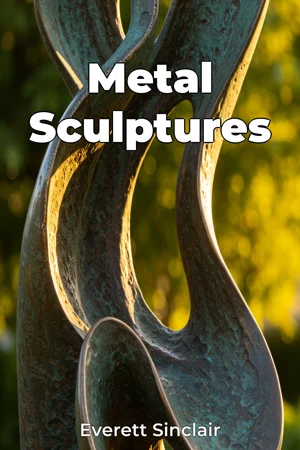
What transforms raw, unyielding metal into breathtaking works of art that capture our imaginations and define public spaces? "Metal Sculptures" delves deep into the diverse and fascinating world of metal as a medium for artistic expression, exploring its historical evolution, technical applications, and aesthetic possibilities. This book examines how sculptors throughout history and in contemporary practice have harnessed the unique properties of various metals to create objects ranging from delicate filigree jewelry to monumental outdoor installations. This comprehensive study is significant because it bridges the gap between artistic vision and material reality, offering insights into the creative processes and technical skills required to manipulate metals into compelling sculptural forms. Understanding the specific characteristics of different metals – their strength, malleability, resistance to corrosion, and aesthetic qualities – is crucial for both artists and appreciators of art. We will explore how these properties dictate the scale, form, and longevity of metal sculptures, ultimately shaping their impact on viewers and their environments. The historical context will be considered, tracing the use of metals in sculpture from ancient civilizations to the modern era. This historical overview will provide a foundation for understanding the technological advancements and artistic movements that have influenced metal sculpture. A basic understanding of art history and materials science would enhance the reader’s experience, although the book will also include introductions to relevant concepts within these fields. The central argument of "Metal Sculptures" is that the choice of metal is not merely a practical consideration, but a fundamental aspect of the artistic statement. Each metal carries its own symbolic weight and inherent aesthetic, influencing the meaning and impact of the final sculpture. This argument is essential for appreciating the intentionality behind the artist's choices and for understanding how metal contributes to the overall narrative and emotional resonance of the artwork. The book’s structure begins with an introduction to the fundamental properties of various metals commonly used in sculpture, including bronze, steel, aluminum, copper, and precious metals like gold and silver. Following this, it will explore various metalworking techniques, such as casting, welding, forging, and fabrication, highlighting their historical development and contemporary applications. Specific chapters will focus on case studies of significant metal sculptures and the artists who created them, analyzing their methods, materials, and artistic intentions. The book culminates in a discussion of the role of metal sculpture in public art, architecture, and design, examining its impact on urban landscapes and cultural identity. The analysis is supported by historical records, technical manuals, artist interviews, and photographic documentation of sculptures from around the world. The book will also include visual examples from art history, contemporary sculpture, and technical diagrams to illustrate processes. "Metal Sculptures" connects to several disciplines, including materials science, engineering, architecture, and cultural studies. The exploration of material properties connects to material science, the use of metals in large structures relates to engineering and architecture, and the cultural significance of metalwork relates to cultural studies. These interdisciplinary connections deepen the understanding of metal sculpture as a complex and multifaceted art form. This book distinguishes itself by its comprehensive approach, integrating technical information with art historical analysis and contemporary artistic practices. It offers a user-friendly exploration of the interplay between material properties, technical processes, and artistic expression. The writing style will be informative and accessible, avoiding overly technical jargon while maintaining scholarly rigor. The book will rely on clear explanations supported by visual aids. The target audience includes art students, sculptors, architects, designers, art collectors, and anyone interested in the intersection of art, design, and technology. It would be valuable to those seeking a deeper understanding of the materials and processes behind metal sculpture. As a work of non-fiction in the genres of Design, Art, and Design General, it will adhere to the conventions of presenting factual information, providing evidence-based arguments, and offering a balanced perspective on the subject matter. The scope of "Metal Sculptures" is intentionally broad, encompassing a wide range of metals, techniques, and artistic styles. However, it will focus primarily on sculpture and will not delve deeply into other forms of metalwork, such as functional objects or industrial design. The information presented in "Metal Sculptures" can be applied practically by artists seeking to expand their knowledge of metalworking techniques, designers looking to incorporate metal sculpture into architectural projects, and art enthusiasts hoping to deepen their appreciation of this versatile medium. The book will touch upon ongoing debates regarding the environmental impact of metal production and the ethics of using certain materials in sculpture, providing a balanced discussion of these important issues.
What transforms raw, unyielding metal into breathtaking works of art that capture our imaginations and define public spaces? "Metal Sculptures" delves deep into the diverse and fascinating world of metal as a medium for artistic expression, exploring its historical evolution, technical applications, and aesthetic possibilities. This book examines how sculptors throughout history and in contemporary practice have harnessed the unique properties of various metals to create objects ranging from delicate filigree jewelry to monumental outdoor installations. This comprehensive study is significant because it bridges the gap between artistic vision and material reality, offering insights into the creative processes and technical skills required to manipulate metals into compelling sculptural forms. Understanding the specific characteristics of different metals – their strength, malleability, resistance to corrosion, and aesthetic qualities – is crucial for both artists and appreciators of art. We will explore how these properties dictate the scale, form, and longevity of metal sculptures, ultimately shaping their impact on viewers and their environments. The historical context will be considered, tracing the use of metals in sculpture from ancient civilizations to the modern era. This historical overview will provide a foundation for understanding the technological advancements and artistic movements that have influenced metal sculpture. A basic understanding of art history and materials science would enhance the reader’s experience, although the book will also include introductions to relevant concepts within these fields. The central argument of "Metal Sculptures" is that the choice of metal is not merely a practical consideration, but a fundamental aspect of the artistic statement. Each metal carries its own symbolic weight and inherent aesthetic, influencing the meaning and impact of the final sculpture. This argument is essential for appreciating the intentionality behind the artist's choices and for understanding how metal contributes to the overall narrative and emotional resonance of the artwork. The book’s structure begins with an introduction to the fundamental properties of various metals commonly used in sculpture, including bronze, steel, aluminum, copper, and precious metals like gold and silver. Following this, it will explore various metalworking techniques, such as casting, welding, forging, and fabrication, highlighting their historical development and contemporary applications. Specific chapters will focus on case studies of significant metal sculptures and the artists who created them, analyzing their methods, materials, and artistic intentions. The book culminates in a discussion of the role of metal sculpture in public art, architecture, and design, examining its impact on urban landscapes and cultural identity. The analysis is supported by historical records, technical manuals, artist interviews, and photographic documentation of sculptures from around the world. The book will also include visual examples from art history, contemporary sculpture, and technical diagrams to illustrate processes. "Metal Sculptures" connects to several disciplines, including materials science, engineering, architecture, and cultural studies. The exploration of material properties connects to material science, the use of metals in large structures relates to engineering and architecture, and the cultural significance of metalwork relates to cultural studies. These interdisciplinary connections deepen the understanding of metal sculpture as a complex and multifaceted art form. This book distinguishes itself by its comprehensive approach, integrating technical information with art historical analysis and contemporary artistic practices. It offers a user-friendly exploration of the interplay between material properties, technical processes, and artistic expression. The writing style will be informative and accessible, avoiding overly technical jargon while maintaining scholarly rigor. The book will rely on clear explanations supported by visual aids. The target audience includes art students, sculptors, architects, designers, art collectors, and anyone interested in the intersection of art, design, and technology. It would be valuable to those seeking a deeper understanding of the materials and processes behind metal sculpture. As a work of non-fiction in the genres of Design, Art, and Design General, it will adhere to the conventions of presenting factual information, providing evidence-based arguments, and offering a balanced perspective on the subject matter. The scope of "Metal Sculptures" is intentionally broad, encompassing a wide range of metals, techniques, and artistic styles. However, it will focus primarily on sculpture and will not delve deeply into other forms of metalwork, such as functional objects or industrial design. The information presented in "Metal Sculptures" can be applied practically by artists seeking to expand their knowledge of metalworking techniques, designers looking to incorporate metal sculpture into architectural projects, and art enthusiasts hoping to deepen their appreciation of this versatile medium. The book will touch upon ongoing debates regarding the environmental impact of metal production and the ethics of using certain materials in sculpture, providing a balanced discussion of these important issues.
"Metal Sculptures" explores the captivating world of metal as an artistic medium, tracing its evolution from ancient civilizations to contemporary installations. The book highlights how sculptors leverage the unique properties of metals—like bronze, steel, and aluminum—to craft diverse forms, from intricate jewelry to monumental public art. Understanding these properties is crucial, as a metal's strength, malleability, and resistance to corrosion directly influence a sculpture's scale, form, and longevity. The book examines various metalworking techniques like casting, welding, and forging, detailing their historical development and modern applications. It argues that the choice of metal is not merely practical but fundamentally integral to the artistic statement, with each metal carrying its own symbolic weight. Through case studies of significant sculptures and artists, the book analyzes their methods and artistic intentions. Ultimately, "Metal Sculptures" bridges the gap between artistic vision and material reality. Beginning with an introduction to metal properties, it then progresses to metalworking techniques, artist case studies, and concludes with the role of metal sculpture in public spaces. This comprehensive approach makes it a valuable resource for anyone interested in art, design, and the innovative use of metals in sculpture.
Book Details
ISBN
9788235219626
Publisher
Publifye AS
Your Licenses
You don't own any licenses for this book
Purchase a license below to unlock this book and download the EPUB.
Purchase License
Select a tier to unlock this book
Need bulk licensing?
Contact us for enterprise agreements.