
About This Book
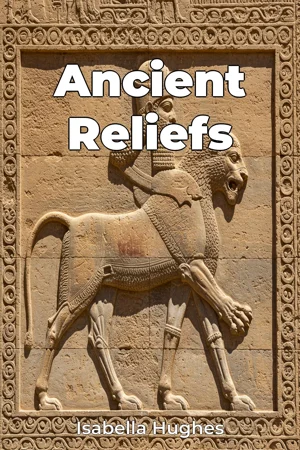
Have you ever wondered how ancient civilizations communicated complex narratives without the written word as we know it? "Ancient Reliefs" unveils the captivating world of relief sculpture, demonstrating its crucial role in preserving history, conveying cultural values, and showcasing artistic ingenuity across diverse ancient societies. This book explores how these carved stone surfaces adorning temples, palaces, and tombs served as powerful visual records, offering invaluable insight into the beliefs, rituals, and daily lives of past civilizations. "Ancient Reliefs" primarily focuses on two central themes: the evolution of relief sculpture techniques across different cultures and the interpretation of these reliefs as historical documents. Relief carving, from the sunk relief of ancient Egypt to the high-relief sculptures of the Roman Empire, evolved significantly in style and execution. Understanding these techniques provides insight into the artistic sensibilities and technological capabilities of each civilization. More importantly, the book delves into deciphering the narratives embedded within these reliefs, revealing stories of military campaigns, religious ceremonies, royal lineages, and everyday existence. The historical and social context is paramount to understanding ancient reliefs. The book introduces the religious beliefs, political structures, and social hierarchies that influenced the creation and content of these sculptures. Prior knowledge of ancient history is helpful but not essential, as the book provides sufficient background information to contextualize each example. The central argument of "Ancient Reliefs" posits that relief sculptures are more than just decorative elements; they are primary source documents that provide unique and often unfiltered perspectives on the past. Their importance lies in their ability to corroborate, supplement, or even challenge traditional historical accounts derived from texts. The book is structured to first introduce the fundamentals of relief sculpture, including the different types of relief and the materials and tools used. It then proceeds with case studies, examining significant examples from ancient Egypt, Assyria, Greece, and Rome. Each case study analyzes the artistic style, historical context, and narrative content of the reliefs. A concluding section synthesizes the findings, exploring the common themes and divergent approaches across cultures. It also considers later interpretations and modern understandings, acknowledging gaps in knowledge, and posing relevant questions for future research. The evidence presented consists of detailed photographs and drawings of relief sculptures, alongside archaeological reports and historical texts. Special attention is given to recent archaeological discoveries and new interpretations of established findings. This involves considering the biases and limitations associated with each source. "Ancient Reliefs" connects to various disciplines, including art history, archaeology, anthropology, and classical studies. Art historians will appreciate the detailed analysis of artistic styles and techniques. Archaeologists will find value in the discussion of material culture and contextual analysis. Anthropologists will find the insights into social structures and cultural beliefs valuable, while classicists will find details on the classical periods and cultures. This book takes a unique approach by combining detailed art historical analysis with rigorous historical interpretation. Rather than simply describing the aesthetic qualities of relief sculptures, it focuses on deciphering their meaning as historical records. This approach provides a fresh perspective on understanding ancient civilizations. The tone is academic yet accessible, aiming to engage both scholars and general readers with an interest in ancient history and art. The writing style is clear, concise, and engaging, avoiding jargon and technical terms where possible. The target audience includes students of art history, archaeology, and ancient history, as well as general readers with a passion for the ancient world. It would be valuable to anyone seeking a deeper understanding of ancient cultures through their artistic and material remains. As a non-fiction book in the genres of History and Art, "Ancient Reliefs" adheres to the conventions of providing accurate and well-researched information, supported by evidence and presented in a clear and organized manner. The scope of the book is limited to the ancient world, focusing primarily on cultures in the Mediterranean region and the Near East. While other cultures also produced relief sculptures, these are beyond the scope of this work. The information presented in "Ancient Reliefs" has practical applications for museum curators, art conservators, and educators. It provides valuable insights into the preservation, interpretation, and presentation of relief sculptures. While this book strives to present current knowledge, it also recognizes that ongoing debates persist regarding the interpretation and significance of certain reliefs. Where such controversies exist, the book presents different viewpoints and encourages critical thinking.
Have you ever wondered how ancient civilizations communicated complex narratives without the written word as we know it? "Ancient Reliefs" unveils the captivating world of relief sculpture, demonstrating its crucial role in preserving history, conveying cultural values, and showcasing artistic ingenuity across diverse ancient societies. This book explores how these carved stone surfaces adorning temples, palaces, and tombs served as powerful visual records, offering invaluable insight into the beliefs, rituals, and daily lives of past civilizations. "Ancient Reliefs" primarily focuses on two central themes: the evolution of relief sculpture techniques across different cultures and the interpretation of these reliefs as historical documents. Relief carving, from the sunk relief of ancient Egypt to the high-relief sculptures of the Roman Empire, evolved significantly in style and execution. Understanding these techniques provides insight into the artistic sensibilities and technological capabilities of each civilization. More importantly, the book delves into deciphering the narratives embedded within these reliefs, revealing stories of military campaigns, religious ceremonies, royal lineages, and everyday existence. The historical and social context is paramount to understanding ancient reliefs. The book introduces the religious beliefs, political structures, and social hierarchies that influenced the creation and content of these sculptures. Prior knowledge of ancient history is helpful but not essential, as the book provides sufficient background information to contextualize each example. The central argument of "Ancient Reliefs" posits that relief sculptures are more than just decorative elements; they are primary source documents that provide unique and often unfiltered perspectives on the past. Their importance lies in their ability to corroborate, supplement, or even challenge traditional historical accounts derived from texts. The book is structured to first introduce the fundamentals of relief sculpture, including the different types of relief and the materials and tools used. It then proceeds with case studies, examining significant examples from ancient Egypt, Assyria, Greece, and Rome. Each case study analyzes the artistic style, historical context, and narrative content of the reliefs. A concluding section synthesizes the findings, exploring the common themes and divergent approaches across cultures. It also considers later interpretations and modern understandings, acknowledging gaps in knowledge, and posing relevant questions for future research. The evidence presented consists of detailed photographs and drawings of relief sculptures, alongside archaeological reports and historical texts. Special attention is given to recent archaeological discoveries and new interpretations of established findings. This involves considering the biases and limitations associated with each source. "Ancient Reliefs" connects to various disciplines, including art history, archaeology, anthropology, and classical studies. Art historians will appreciate the detailed analysis of artistic styles and techniques. Archaeologists will find value in the discussion of material culture and contextual analysis. Anthropologists will find the insights into social structures and cultural beliefs valuable, while classicists will find details on the classical periods and cultures. This book takes a unique approach by combining detailed art historical analysis with rigorous historical interpretation. Rather than simply describing the aesthetic qualities of relief sculptures, it focuses on deciphering their meaning as historical records. This approach provides a fresh perspective on understanding ancient civilizations. The tone is academic yet accessible, aiming to engage both scholars and general readers with an interest in ancient history and art. The writing style is clear, concise, and engaging, avoiding jargon and technical terms where possible. The target audience includes students of art history, archaeology, and ancient history, as well as general readers with a passion for the ancient world. It would be valuable to anyone seeking a deeper understanding of ancient cultures through their artistic and material remains. As a non-fiction book in the genres of History and Art, "Ancient Reliefs" adheres to the conventions of providing accurate and well-researched information, supported by evidence and presented in a clear and organized manner. The scope of the book is limited to the ancient world, focusing primarily on cultures in the Mediterranean region and the Near East. While other cultures also produced relief sculptures, these are beyond the scope of this work. The information presented in "Ancient Reliefs" has practical applications for museum curators, art conservators, and educators. It provides valuable insights into the preservation, interpretation, and presentation of relief sculptures. While this book strives to present current knowledge, it also recognizes that ongoing debates persist regarding the interpretation and significance of certain reliefs. Where such controversies exist, the book presents different viewpoints and encourages critical thinking.
"Ancient Reliefs" explores the world of ancient relief sculpture, revealing how civilizations used carved images to communicate narratives and preserve their history. These reliefs, found on temples, palaces, and tombs, offer invaluable insights into the beliefs, rituals, and daily lives of ancient societies. The book argues that these sculptures are more than just decoration; they are primary historical documents, offering unique perspectives that can corroborate or challenge traditional accounts. The book examines the evolution of relief sculpture techniques, from the sunk relief of ancient Egypt to the high-relief sculptures of the Roman Empire, showcasing the artistic and technological capabilities of each culture. It also delves into interpreting the narratives within these reliefs, revealing stories of military campaigns, religious ceremonies, and royal lineages. Understanding the historical and social context is key, and the book provides background information on the religious beliefs, political structures, and social hierarchies that influenced their creation. The book begins by introducing the fundamentals of relief sculpture and then progresses through case studies from ancient Egypt, Assyria, Greece, and Rome. Each case study analyzes the artistic style, historical context, and narrative content of the reliefs. This unique approach combines art historical analysis with historical interpretation, providing a fresh perspective on understanding ancient civilizations.
Book Details
ISBN
9788235219572
Publisher
Publifye AS
Your Licenses
You don't own any licenses for this book
Purchase a license below to unlock this book and download the EPUB.
Purchase License
Select a tier to unlock this book
Need bulk licensing?
Contact us for enterprise agreements.