
About This Book
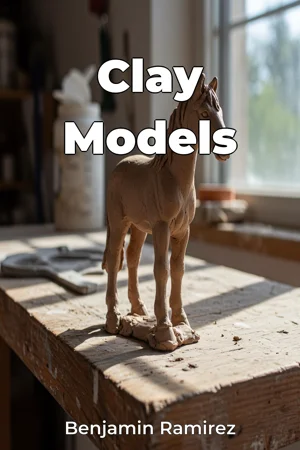
Have you ever wondered how a sculptor initially captures the fluid dynamism of a figure or the intricate detail of a complex design before committing to a permanent medium? "Clay Models" delves into the foundational role of clay in the sculptor's process, illuminating its crucial function as a preliminary medium for shaping ideas and exploring forms. This book examines how clay models serve as vital stepping stones in the creation of enduring works of art in materials like stone, bronze, and metal. This exploration unfolds around three core tenets: clay's unique affordances as a modeling material, the historical evolution of clay modeling techniques, and the practical applications of clay models in realizing large-scale or complex sculptural projects. These elements are significant because they underscore that, more than just a preparatory step, clay modeling is an artistic practice in its own right, informing the final artwork in profound ways. Within the context of artistic creation, clay offers a malleability unmatched by more permanent materials. Its responsiveness to touch allows sculptors to rapidly iterate on designs, experiment with different compositions, and refine details with ease. While a basic understanding of sculptural principles might enhance the reader's appreciation, no prior expertise is required to grasp the concepts presented. The central argument of "Clay Models" is that the temporary and versatile nature of clay empowers sculptors to push the boundaries of their artistic vision and problem-solve structural and aesthetic challenges before investing in more costly and permanent materials. This argument highlights the essential contribution of clay modeling to the broader field of sculpture, emphasizing its role in fostering innovation and minimizing risk. The book begins by introducing the fundamental properties of various types of clay and their suitability for different modeling techniques. It then progresses to examine the historical development of clay modeling, tracing its use from ancient civilizations to contemporary practices, with an emphasis on how sculptors in different periods have capitalized on clay's unique characteristics. Major points include an analysis of Renaissance sculptors’ use of clay for bozzetti (small preliminary models), a study of 19th-century academic practices employing clay for anatomical studies, and a survey of contemporary artists using clay models in conjunction with digital fabrication technologies. The book culminates with case studies of specific sculptural projects, demonstrating how clay models have been used to overcome technical hurdles, refine aesthetic choices, and ultimately inform the creation of successful finished works. The evidence presented draws from a range of sources, including historical treatises on sculpture, archival photographs of artists' studios, detailed analyses of surviving clay models, and interviews with contemporary sculptors. Unique insights are derived from the study of preparatory sketches and maquettes alongside the final sculptures they informed. "Clay Models" connects to various disciplines, including art history, materials science, and engineering. Art history provides the chronological and cultural context for understanding the evolution of clay modeling, while materials science informs the discussion of clay's physical properties and its interaction with other materials. Engineering principles are relevant in understanding the structural considerations involved in scaling up clay models to larger sculptures. The book offers a unique perspective by emphasizing the often-overlooked artistic merit of clay models themselves. It highlights how these ephemeral creations, often discarded after serving their initial purpose, can offer valuable insights into the sculptor's creative process and aesthetic intentions. The writing style is accessible and informative, aimed at a broad audience of art enthusiasts, students, and practicing sculptors. Technical terminology is clearly explained, and concepts are illustrated with concrete examples and visual aids. The target audience includes anyone interested in sculpture, art history, or the creative process. Practicing sculptors will find practical guidance on clay modeling techniques, while art historians and enthusiasts will gain a deeper appreciation for the role of clay in shaping sculptural masterpieces. As a work of design and art, "Clay Models" adheres to the conventions of academic rigor while presenting its subject matter in an engaging and visually appealing manner. The scope of the book is limited to the use of clay as a preliminary modeling material in sculpture. It does not delve into the broader uses of clay in ceramics or other art forms. The information presented has practical applications for sculptors seeking to improve their modeling skills, as well as for art educators looking for effective teaching methods. It also provides valuable insights for curators and collectors interested in understanding the creative process behind sculptural works. While the value of clay modeling is widely acknowledged, debates persist regarding the extent to which these preliminary models should be considered finished works of art in their own right. "Clay Models" contributes to this discussion by showcasing the artistic merit and historical significance of these often-underappreciated creations.
Have you ever wondered how a sculptor initially captures the fluid dynamism of a figure or the intricate detail of a complex design before committing to a permanent medium? "Clay Models" delves into the foundational role of clay in the sculptor's process, illuminating its crucial function as a preliminary medium for shaping ideas and exploring forms. This book examines how clay models serve as vital stepping stones in the creation of enduring works of art in materials like stone, bronze, and metal. This exploration unfolds around three core tenets: clay's unique affordances as a modeling material, the historical evolution of clay modeling techniques, and the practical applications of clay models in realizing large-scale or complex sculptural projects. These elements are significant because they underscore that, more than just a preparatory step, clay modeling is an artistic practice in its own right, informing the final artwork in profound ways. Within the context of artistic creation, clay offers a malleability unmatched by more permanent materials. Its responsiveness to touch allows sculptors to rapidly iterate on designs, experiment with different compositions, and refine details with ease. While a basic understanding of sculptural principles might enhance the reader's appreciation, no prior expertise is required to grasp the concepts presented. The central argument of "Clay Models" is that the temporary and versatile nature of clay empowers sculptors to push the boundaries of their artistic vision and problem-solve structural and aesthetic challenges before investing in more costly and permanent materials. This argument highlights the essential contribution of clay modeling to the broader field of sculpture, emphasizing its role in fostering innovation and minimizing risk. The book begins by introducing the fundamental properties of various types of clay and their suitability for different modeling techniques. It then progresses to examine the historical development of clay modeling, tracing its use from ancient civilizations to contemporary practices, with an emphasis on how sculptors in different periods have capitalized on clay's unique characteristics. Major points include an analysis of Renaissance sculptors’ use of clay for bozzetti (small preliminary models), a study of 19th-century academic practices employing clay for anatomical studies, and a survey of contemporary artists using clay models in conjunction with digital fabrication technologies. The book culminates with case studies of specific sculptural projects, demonstrating how clay models have been used to overcome technical hurdles, refine aesthetic choices, and ultimately inform the creation of successful finished works. The evidence presented draws from a range of sources, including historical treatises on sculpture, archival photographs of artists' studios, detailed analyses of surviving clay models, and interviews with contemporary sculptors. Unique insights are derived from the study of preparatory sketches and maquettes alongside the final sculptures they informed. "Clay Models" connects to various disciplines, including art history, materials science, and engineering. Art history provides the chronological and cultural context for understanding the evolution of clay modeling, while materials science informs the discussion of clay's physical properties and its interaction with other materials. Engineering principles are relevant in understanding the structural considerations involved in scaling up clay models to larger sculptures. The book offers a unique perspective by emphasizing the often-overlooked artistic merit of clay models themselves. It highlights how these ephemeral creations, often discarded after serving their initial purpose, can offer valuable insights into the sculptor's creative process and aesthetic intentions. The writing style is accessible and informative, aimed at a broad audience of art enthusiasts, students, and practicing sculptors. Technical terminology is clearly explained, and concepts are illustrated with concrete examples and visual aids. The target audience includes anyone interested in sculpture, art history, or the creative process. Practicing sculptors will find practical guidance on clay modeling techniques, while art historians and enthusiasts will gain a deeper appreciation for the role of clay in shaping sculptural masterpieces. As a work of design and art, "Clay Models" adheres to the conventions of academic rigor while presenting its subject matter in an engaging and visually appealing manner. The scope of the book is limited to the use of clay as a preliminary modeling material in sculpture. It does not delve into the broader uses of clay in ceramics or other art forms. The information presented has practical applications for sculptors seeking to improve their modeling skills, as well as for art educators looking for effective teaching methods. It also provides valuable insights for curators and collectors interested in understanding the creative process behind sculptural works. While the value of clay modeling is widely acknowledged, debates persist regarding the extent to which these preliminary models should be considered finished works of art in their own right. "Clay Models" contributes to this discussion by showcasing the artistic merit and historical significance of these often-underappreciated creations.
"Clay Models" explores the pivotal role of clay in sculpture, revealing how these preliminary models, including bozzetti and maquettes, are far more than just stepping stones. They are essential to the artistic creation process. The book highlights how clay's unique malleability allows sculptors to rapidly experiment with form and design, offering flexibility unmatched by more permanent materials. It underscores that clay modeling is an artistic practice in its own right, profoundly influencing the final artwork. The book investigates clay's properties, the evolution of clay modeling techniques, and its application in complex sculptural projects. You'll discover how Renaissance sculptors used clay for preliminary models and how 19th-century academics employed it for anatomical studies. Contemporary artists now integrate clay models with digital fabrication. The book progresses from the fundamentals of clay to historical practices and culminates in case studies demonstrating how clay models solve technical and aesthetic challenges. By emphasizing the artistic merit of these often-overlooked creations, "Clay Models" provides valuable insights into the sculptor's creative process. It offers a unique perspective on how these ephemeral works contribute to the broader field of sculpture and artistic creation.
Book Details
ISBN
9788235219558
Publisher
Publifye AS
Your Licenses
You don't own any licenses for this book
Purchase a license below to unlock this book and download the EPUB.
Purchase License
Select a tier to unlock this book
Need bulk licensing?
Contact us for enterprise agreements.