
About This Book
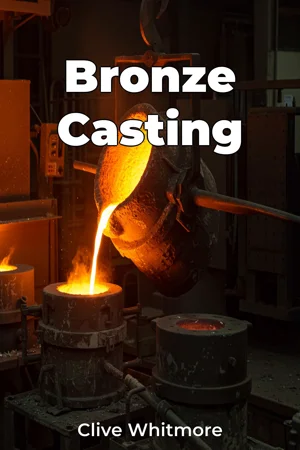
How did a fiery alchemy transform base metals into enduring monuments of civilization? "Bronze Casting" delves into the captivating history and intricate techniques behind the creation of bronze sculptures, exploring their profound impact on art, culture, and commemoration across diverse societies and artistic movements. This book serves as a comprehensive investigation into the world of bronze casting, a practice that has shaped artistic expression and preserved historical narratives for millennia. This book will primarily focus on the lost-wax casting process known as 'cire perdue', its variations, and its evolution across different cultures, and how it enabled the replication of intricate forms and the creation of lasting artworks. We will also explore the historical context of bronze casting, examining its emergence in various civilizations, including ancient Mesopotamia, Egypt, Greece, Rome, China, and the Benin Empire, and its role in shaping their artistic and cultural identities. Finally, we will explore the artistic movements that embraced bronze casting, such as the Renaissance, Neoclassicism, and modern sculpture, and how artists pushed the boundaries of the medium to create innovative and expressive works. "Bronze Casting" argues that the development and refinement of bronze casting techniques were not merely technological advancements but pivotal forces that shaped artistic expression, facilitated cultural exchange, and perpetuated historical narratives. This argument is crucial because it illuminates the often-overlooked relationship between technological innovation and artistic creation, demonstrating how material processes can profoundly influence the development of aesthetic forms and cultural values. The book begins by introducing the fundamental principles of bronze casting, explaining the properties of bronze alloys, the tools and materials used in the process, and the various casting methods employed throughout history. It then embarks on a chronological journey, tracing the origins of bronze casting in the ancient world and examining its evolution, delving into case studies of significant bronze sculptures from different eras and cultures, analyzing their technical features, artistic styles, and historical contexts. It further examines the revival of bronze casting during the Renaissance and its subsequent development in modern art, highlighting the contributions of influential sculptors and movements that redefined the possibilities of the medium. The book culminates by discussing the conservation and preservation of bronze sculptures, addressing the challenges of aging, corrosion, and environmental degradation, and outlining best practices for safeguarding these cultural treasures for future generations. The book's arguments are supported by a wealth of evidence derived from archaeological findings, historical texts, technical analyses of bronze sculptures, and scholarly literature on art history and metallurgy. It integrates insights from diverse fields, including archaeology, art history, materials science, and cultural studies, providing a holistic understanding of bronze casting and its significance. This book connects to the fields of archaeology, anthropology, and materials science by examining the social and technological factors that influenced the adoption and development of bronze casting in different societies. It also resonates with art conservation and museum studies by addressing the challenges of preserving bronze sculptures for future generations. "Bronze Casting" offers a comprehensive and accessible exploration of bronze casting, bridging the gap between technical expertise and artistic appreciation. It is written in a clear and engaging style, making it suitable for students, art enthusiasts, historians, and anyone interested in the intersection of art, technology, and culture. The scope of this book is limited to the history and techniques of bronze casting, with a focus on sculpture. While it acknowledges the use of bronze in other applications, such as tools and weaponry, it does not delve into these areas in detail. The knowledge gained from reading "Bronze Casting" can be applied practically by artists, art students, and conservators to gain a deeper understanding of the materials, processes, and conservation challenges associated with bronze sculptures. It is also invaluable for curators, museum professionals, and collectors who seek to authenticate, interpret, and preserve bronze artifacts. The book also touches on debates surrounding the repatriation of looted or illicitly traded bronze artifacts, particularly those from ancient civilizations.
How did a fiery alchemy transform base metals into enduring monuments of civilization? "Bronze Casting" delves into the captivating history and intricate techniques behind the creation of bronze sculptures, exploring their profound impact on art, culture, and commemoration across diverse societies and artistic movements. This book serves as a comprehensive investigation into the world of bronze casting, a practice that has shaped artistic expression and preserved historical narratives for millennia. This book will primarily focus on the lost-wax casting process known as 'cire perdue', its variations, and its evolution across different cultures, and how it enabled the replication of intricate forms and the creation of lasting artworks. We will also explore the historical context of bronze casting, examining its emergence in various civilizations, including ancient Mesopotamia, Egypt, Greece, Rome, China, and the Benin Empire, and its role in shaping their artistic and cultural identities. Finally, we will explore the artistic movements that embraced bronze casting, such as the Renaissance, Neoclassicism, and modern sculpture, and how artists pushed the boundaries of the medium to create innovative and expressive works. "Bronze Casting" argues that the development and refinement of bronze casting techniques were not merely technological advancements but pivotal forces that shaped artistic expression, facilitated cultural exchange, and perpetuated historical narratives. This argument is crucial because it illuminates the often-overlooked relationship between technological innovation and artistic creation, demonstrating how material processes can profoundly influence the development of aesthetic forms and cultural values. The book begins by introducing the fundamental principles of bronze casting, explaining the properties of bronze alloys, the tools and materials used in the process, and the various casting methods employed throughout history. It then embarks on a chronological journey, tracing the origins of bronze casting in the ancient world and examining its evolution, delving into case studies of significant bronze sculptures from different eras and cultures, analyzing their technical features, artistic styles, and historical contexts. It further examines the revival of bronze casting during the Renaissance and its subsequent development in modern art, highlighting the contributions of influential sculptors and movements that redefined the possibilities of the medium. The book culminates by discussing the conservation and preservation of bronze sculptures, addressing the challenges of aging, corrosion, and environmental degradation, and outlining best practices for safeguarding these cultural treasures for future generations. The book's arguments are supported by a wealth of evidence derived from archaeological findings, historical texts, technical analyses of bronze sculptures, and scholarly literature on art history and metallurgy. It integrates insights from diverse fields, including archaeology, art history, materials science, and cultural studies, providing a holistic understanding of bronze casting and its significance. This book connects to the fields of archaeology, anthropology, and materials science by examining the social and technological factors that influenced the adoption and development of bronze casting in different societies. It also resonates with art conservation and museum studies by addressing the challenges of preserving bronze sculptures for future generations. "Bronze Casting" offers a comprehensive and accessible exploration of bronze casting, bridging the gap between technical expertise and artistic appreciation. It is written in a clear and engaging style, making it suitable for students, art enthusiasts, historians, and anyone interested in the intersection of art, technology, and culture. The scope of this book is limited to the history and techniques of bronze casting, with a focus on sculpture. While it acknowledges the use of bronze in other applications, such as tools and weaponry, it does not delve into these areas in detail. The knowledge gained from reading "Bronze Casting" can be applied practically by artists, art students, and conservators to gain a deeper understanding of the materials, processes, and conservation challenges associated with bronze sculptures. It is also invaluable for curators, museum professionals, and collectors who seek to authenticate, interpret, and preserve bronze artifacts. The book also touches on debates surrounding the repatriation of looted or illicitly traded bronze artifacts, particularly those from ancient civilizations.
"Bronze Casting" explores the rich history and complex techniques behind bronze sculpture, revealing its profound influence on art and culture across civilizations. The book emphasizes the lost-wax casting process ('cire perdue') and its evolution, which enabled the replication of intricate forms. Discover how bronze casting played a vital role in shaping the artistic identities of ancient civilizations, from Mesopotamia to the Benin Empire, and how artistic movements like the Renaissance redefined the medium's possibilities. The book argues that bronze casting's development was not just technological but a pivotal force shaping artistic expression and cultural exchange. For example, advancements allowed for more complex and lasting artworks, influencing aesthetic forms and cultural values. Beginning with the fundamentals of bronze alloys and casting methods, the book journeys chronologically through the history of bronze, delving into case studies of significant sculptures and culminating in a discussion of conservation practices.
Book Details
ISBN
9788235219534
Publisher
Publifye AS
Your Licenses
You don't own any licenses for this book
Purchase a license below to unlock this book and download the EPUB.
Purchase License
Select a tier to unlock this book
Need bulk licensing?
Contact us for enterprise agreements.