
About This Book
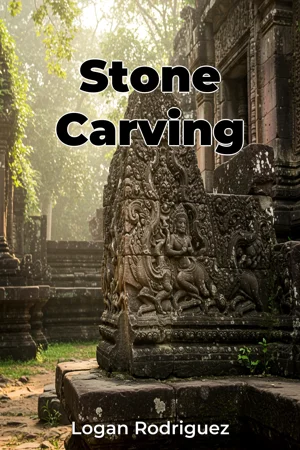
What if the silent stones around us could speak, revealing not just the history of civilizations, but the enduring human spirit embedded within their very form? “Stone Carving” explores the multifaceted world of stone sculpture, transitioning from ancient reliefs that narrated the dawn of humanity to modern architectural marvels that redefine our public spaces. This book delves into the history, techniques, and conceptual frameworks that have shaped this art form across cultures and millennia, offering a comprehensive understanding of its cultural significance and aesthetic power. We will examine two primary concepts. First, the historical evolution of stone carving, tracing its development from rudimentary tools and techniques to sophisticated methods employing advanced technology. Second, the interplay between artistic vision and the inherent properties of stone, revealing how sculptors have consistently adapted their approaches to harness the unique characteristics—texture, hardness, color—of different stone types. These topics are vital because they illuminate the intricate relationship between human creativity, material culture, and the built environment. The narrative unfolds against a backdrop of societal shifts, technological advancements, and evolving artistic philosophies. Understanding the geological origins of various stones, basic principles of sculptural design, and the historical contexts of artistic movements, such as the Renaissance or Modernism, enhances the reader's appreciation. Prior knowledge of art history or basic architectural concepts is helpful, but not essential. The central argument of "Stone Carving" posits that stone sculpture is more than mere decoration; it embodies cultural values, reflects technological capabilities, and shapes our collective memory. It underscores the idea that stone carving serves as a tangible record of human aspirations and a powerful medium for expressing complex ideas. The book is structured in three sections: introduction, development, and culmination. The introduction establishes the fundamental principles of stone carving, including types of stone, essential tools, and initial techniques. The development sections explore major periods and styles in stone sculpture, such as Ancient Egyptian reliefs, Classical Greek statuary, Roman architectural carvings, Medieval cathedral sculptures, Renaissance innovations, and Modernist abstractions. Each of these points will examine specific works, analyzing their techniques, historical context, and artistic significance. The culmination focuses on contemporary stone carving, examining its role in public art, architectural design, and environmental installations, addressing questions of preservation, sustainability, and the future of stone carving in a digital age. The analysis is supported by a diverse range of evidence, including detailed photographs of sculptures, technical diagrams of carving methods, historical documents, and scholarly research from art history, archaeology, and architectural studies. The book also draws on interviews with contemporary stone carvers, offering firsthand accounts of their creative processes and challenges. "Stone Carving" connects to several interdisciplinary fields: geology (understanding stone properties), history (contextualizing sculptural works within their time), and architectural design (examining the integration of stone sculpture into buildings and public spaces). These connections enrich the reader's understanding of stone carving as a nexus of art, science, and culture. A distinctive feature of this book is its balanced and nuanced approach to the subject. It aims to provide an overview of the field without being overly specialized. It recognizes the importance of technical knowledge while emphasizing the artistic and cultural significance of stone carving. The tone is informative and accessible, catering to a broad audience, including art enthusiasts, architecture students, historians, and anyone intrigued by the art of sculpting with stone. The book's blend of historical analysis, technical explanations, and visual examples makes it valuable for both academic and general readers. As a work of non-fiction art and architecture, “Stone Carving” adheres to principles of factual accuracy, objectivity, and clear presentation of evidence. It avoids speculation and adheres to established scholarly standards. While the book provides a detailed exploration of stone carving across different cultures and periods, it does not offer a step-by-step guide to stone carving techniques. Instead, its focus is on understanding the aesthetic and cultural context of stone sculpture. The book is not just an academic exercise; it has real-world applications. By understanding the principles of stone carving, readers gain insights into the design and construction of buildings, the creation of public art, and the preservation of cultural heritage. Finally, this book addresses ongoing debates surrounding the use of traditional materials in contemporary architecture and the ethical considerations of sourcing stone from different regions of the world. In doing so, the book aims to foster a more informed and responsible approach to stone carving in the 21st century.
What if the silent stones around us could speak, revealing not just the history of civilizations, but the enduring human spirit embedded within their very form? “Stone Carving” explores the multifaceted world of stone sculpture, transitioning from ancient reliefs that narrated the dawn of humanity to modern architectural marvels that redefine our public spaces. This book delves into the history, techniques, and conceptual frameworks that have shaped this art form across cultures and millennia, offering a comprehensive understanding of its cultural significance and aesthetic power. We will examine two primary concepts. First, the historical evolution of stone carving, tracing its development from rudimentary tools and techniques to sophisticated methods employing advanced technology. Second, the interplay between artistic vision and the inherent properties of stone, revealing how sculptors have consistently adapted their approaches to harness the unique characteristics—texture, hardness, color—of different stone types. These topics are vital because they illuminate the intricate relationship between human creativity, material culture, and the built environment. The narrative unfolds against a backdrop of societal shifts, technological advancements, and evolving artistic philosophies. Understanding the geological origins of various stones, basic principles of sculptural design, and the historical contexts of artistic movements, such as the Renaissance or Modernism, enhances the reader's appreciation. Prior knowledge of art history or basic architectural concepts is helpful, but not essential. The central argument of "Stone Carving" posits that stone sculpture is more than mere decoration; it embodies cultural values, reflects technological capabilities, and shapes our collective memory. It underscores the idea that stone carving serves as a tangible record of human aspirations and a powerful medium for expressing complex ideas. The book is structured in three sections: introduction, development, and culmination. The introduction establishes the fundamental principles of stone carving, including types of stone, essential tools, and initial techniques. The development sections explore major periods and styles in stone sculpture, such as Ancient Egyptian reliefs, Classical Greek statuary, Roman architectural carvings, Medieval cathedral sculptures, Renaissance innovations, and Modernist abstractions. Each of these points will examine specific works, analyzing their techniques, historical context, and artistic significance. The culmination focuses on contemporary stone carving, examining its role in public art, architectural design, and environmental installations, addressing questions of preservation, sustainability, and the future of stone carving in a digital age. The analysis is supported by a diverse range of evidence, including detailed photographs of sculptures, technical diagrams of carving methods, historical documents, and scholarly research from art history, archaeology, and architectural studies. The book also draws on interviews with contemporary stone carvers, offering firsthand accounts of their creative processes and challenges. "Stone Carving" connects to several interdisciplinary fields: geology (understanding stone properties), history (contextualizing sculptural works within their time), and architectural design (examining the integration of stone sculpture into buildings and public spaces). These connections enrich the reader's understanding of stone carving as a nexus of art, science, and culture. A distinctive feature of this book is its balanced and nuanced approach to the subject. It aims to provide an overview of the field without being overly specialized. It recognizes the importance of technical knowledge while emphasizing the artistic and cultural significance of stone carving. The tone is informative and accessible, catering to a broad audience, including art enthusiasts, architecture students, historians, and anyone intrigued by the art of sculpting with stone. The book's blend of historical analysis, technical explanations, and visual examples makes it valuable for both academic and general readers. As a work of non-fiction art and architecture, “Stone Carving” adheres to principles of factual accuracy, objectivity, and clear presentation of evidence. It avoids speculation and adheres to established scholarly standards. While the book provides a detailed exploration of stone carving across different cultures and periods, it does not offer a step-by-step guide to stone carving techniques. Instead, its focus is on understanding the aesthetic and cultural context of stone sculpture. The book is not just an academic exercise; it has real-world applications. By understanding the principles of stone carving, readers gain insights into the design and construction of buildings, the creation of public art, and the preservation of cultural heritage. Finally, this book addresses ongoing debates surrounding the use of traditional materials in contemporary architecture and the ethical considerations of sourcing stone from different regions of the world. In doing so, the book aims to foster a more informed and responsible approach to stone carving in the 21st century.
"Stone Carving" explores the rich history and multifaceted techniques of stone sculpture, revealing how this art form has shaped civilizations and continues to influence contemporary architecture. Delving into the evolution from rudimentary tools to advanced technology, the book highlights how sculptors adapt their vision to the unique properties of stone. Discover how the texture, hardness, and color of different stones influence artistic expression, and understand why stone sculpture is more than mere decoration; it's a tangible record of human aspirations. The book traces the development of stone carving through major periods, from Ancient Egyptian reliefs to Renaissance innovations and Modernist abstractions. By examining specific works and analyzing their techniques and historical context, "Stone Carving" reveals the cultural values and technological capabilities embedded in these creations. The culmination focuses on contemporary stone carving, examining its role in public art and addressing questions of preservation and sustainability. This comprehensive exploration offers a balanced view, blending historical analysis with technical explanations and visual examples. Structured in three sections—introduction, development, and culmination—the book is accessible to art enthusiasts, architecture students, and anyone intrigued by the art of sculpting with stone, providing valuable insights into the interplay between art, science, and culture.
Book Details
ISBN
9788235219510
Publisher
Publifye AS
Your Licenses
You don't own any licenses for this book
Purchase a license below to unlock this book and download the EPUB.
Purchase License
Select a tier to unlock this book
Need bulk licensing?
Contact us for enterprise agreements.