
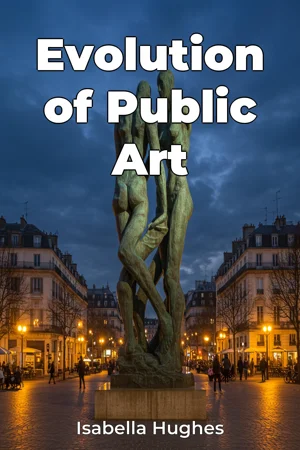
About This Book
How did sculpture transcend gallery walls to become an integral part of our shared spaces, shaping not just landscapes but also cultural identities? "Evolution of Public Art" explores this fascinating transformation, charting the trajectory of sculpture from mere ornamentation to a powerful force in placemaking and social commentary. This book delves into the historical, social, and artistic factors that propelled this evolution, examining how public art installations have come to reflect and influence our collective consciousness. The book focuses primarily on three interconnected themes. First, the changing definition of 'public' and how this impacts artistic expression. Second, the role of patronage, from royal commissions to contemporary crowdfunding, in shaping the nature and accessibility of public art. Finally, the increasing engagement of public art with social and political issues, transforming urban spaces into arenas for dialogue and dissent. These themes are crucial because they highlight the dynamic relationship between art, society, and power, illustrating how public art serves as both a mirror and a catalyst for social change. Historically, sculpture was often confined to religious or aristocratic settings, accessible only to a privileged few. Over time, as cities grew and democratic ideals spread, the concept of art for the people gained traction. Technological advancements in materials and fabrication further enabled the creation of large-scale, durable artworks suitable for outdoor display. "Evolution of Public Art" traces this historical progression, analyzing pivotal moments and movements that redefined the purpose and placement of sculpture in public spaces. The central argument of this book is that public art is not merely decorative; it is a dynamic agent that actively shapes our understanding of place, identity, and community. Public art installations can invite reflection, spark debate, and foster a sense of belonging, making them essential components of vibrant and inclusive urban environments. This argument is vital because it challenges the perception of art as a passive commodity and underscores its potential to contribute to social cohesion and civic engagement. The book begins by defining public art and exploring its historical roots, from ancient monuments to early modern plazas. It then transitions into a detailed examination of the key themes outlined above: the evolution of the 'public,' the shifting dynamics of patronage, and the rise of socially and politically engaged art. Each section includes case studies of significant public artworks from various periods and locations, illustrating the theoretical concepts with concrete examples. The final chapters analyze the contemporary landscape of public art, addressing issues such as funding, community involvement, and the challenges of maintaining and preserving public artworks. "Evolution of Public Art" culminates by considering the future of public art in an increasingly globalized and digitized world, examining how new technologies and evolving social values are shaping its trajectory. The arguments presented are supported by a range of evidence, including historical documents, artistic manifestos, critical analyses, and interviews with artists, curators, and community members. The book also draws on urban planning literature and sociological studies to provide a comprehensive understanding of the social impact of public art. Unique data sources include archival records of public art commissions and surveys of public opinion on specific artworks. Interdisciplinary connections are explored through the lenses of urban planning, sociology, and political science. Urban planning informs the discussion of how public art integrates into the built environment, while sociology provides insights into the social dynamics that shape its reception and impact. Political science helps analyze the power structures and ideologies that influence the selection and interpretation of public artworks. These connections enrich the book's argument by demonstrating the multifaceted nature of public art and its relevance to a broad range of disciplines. "Evolution of Public Art" adopts a scholarly yet accessible tone, striving to engage both academic and general audiences. The writing style is clear, concise, and avoids jargon, making the complex ideas readily understandable. The book is targeted towards art historians, architects, urban planners, and anyone interested in the role of art in public life. It offers valuable insights for professionals involved in the commissioning, creation, and management of public art, as well as for citizens who want to better understand and appreciate the art that surrounds them. The scope of the book is intentionally broad, covering a wide range of historical periods, geographical locations, and artistic styles. However, it focuses primarily on Western art traditions, acknowledging the need for further research into the diverse and evolving landscape of public art in non-Western contexts. It also offers real-world applications by providing practical guidance on how to evaluate the effectiveness of public art installations and how to foster meaningful community engagement in the public art process. The book also touches on the ongoing debates surrounding issues such as censorship, artistic freedom, and the role of public art in gentrification, acknowledging the complex and often contested nature of public art in contemporary society.
How did sculpture transcend gallery walls to become an integral part of our shared spaces, shaping not just landscapes but also cultural identities? "Evolution of Public Art" explores this fascinating transformation, charting the trajectory of sculpture from mere ornamentation to a powerful force in placemaking and social commentary. This book delves into the historical, social, and artistic factors that propelled this evolution, examining how public art installations have come to reflect and influence our collective consciousness. The book focuses primarily on three interconnected themes. First, the changing definition of 'public' and how this impacts artistic expression. Second, the role of patronage, from royal commissions to contemporary crowdfunding, in shaping the nature and accessibility of public art. Finally, the increasing engagement of public art with social and political issues, transforming urban spaces into arenas for dialogue and dissent. These themes are crucial because they highlight the dynamic relationship between art, society, and power, illustrating how public art serves as both a mirror and a catalyst for social change. Historically, sculpture was often confined to religious or aristocratic settings, accessible only to a privileged few. Over time, as cities grew and democratic ideals spread, the concept of art for the people gained traction. Technological advancements in materials and fabrication further enabled the creation of large-scale, durable artworks suitable for outdoor display. "Evolution of Public Art" traces this historical progression, analyzing pivotal moments and movements that redefined the purpose and placement of sculpture in public spaces. The central argument of this book is that public art is not merely decorative; it is a dynamic agent that actively shapes our understanding of place, identity, and community. Public art installations can invite reflection, spark debate, and foster a sense of belonging, making them essential components of vibrant and inclusive urban environments. This argument is vital because it challenges the perception of art as a passive commodity and underscores its potential to contribute to social cohesion and civic engagement. The book begins by defining public art and exploring its historical roots, from ancient monuments to early modern plazas. It then transitions into a detailed examination of the key themes outlined above: the evolution of the 'public,' the shifting dynamics of patronage, and the rise of socially and politically engaged art. Each section includes case studies of significant public artworks from various periods and locations, illustrating the theoretical concepts with concrete examples. The final chapters analyze the contemporary landscape of public art, addressing issues such as funding, community involvement, and the challenges of maintaining and preserving public artworks. "Evolution of Public Art" culminates by considering the future of public art in an increasingly globalized and digitized world, examining how new technologies and evolving social values are shaping its trajectory. The arguments presented are supported by a range of evidence, including historical documents, artistic manifestos, critical analyses, and interviews with artists, curators, and community members. The book also draws on urban planning literature and sociological studies to provide a comprehensive understanding of the social impact of public art. Unique data sources include archival records of public art commissions and surveys of public opinion on specific artworks. Interdisciplinary connections are explored through the lenses of urban planning, sociology, and political science. Urban planning informs the discussion of how public art integrates into the built environment, while sociology provides insights into the social dynamics that shape its reception and impact. Political science helps analyze the power structures and ideologies that influence the selection and interpretation of public artworks. These connections enrich the book's argument by demonstrating the multifaceted nature of public art and its relevance to a broad range of disciplines. "Evolution of Public Art" adopts a scholarly yet accessible tone, striving to engage both academic and general audiences. The writing style is clear, concise, and avoids jargon, making the complex ideas readily understandable. The book is targeted towards art historians, architects, urban planners, and anyone interested in the role of art in public life. It offers valuable insights for professionals involved in the commissioning, creation, and management of public art, as well as for citizens who want to better understand and appreciate the art that surrounds them. The scope of the book is intentionally broad, covering a wide range of historical periods, geographical locations, and artistic styles. However, it focuses primarily on Western art traditions, acknowledging the need for further research into the diverse and evolving landscape of public art in non-Western contexts. It also offers real-world applications by providing practical guidance on how to evaluate the effectiveness of public art installations and how to foster meaningful community engagement in the public art process. The book also touches on the ongoing debates surrounding issues such as censorship, artistic freedom, and the role of public art in gentrification, acknowledging the complex and often contested nature of public art in contemporary society.
"Evolution of Public Art" charts the fascinating journey of how sculpture moved beyond gallery walls to become a vital component of our public spaces. The book examines the historical, social, and artistic factors driving this evolution, revealing how public art reflects and influences our shared consciousness. It highlights the changing idea of what "public" means, how patronage affects art, and how art engages with social and political issues. Did you know that technological advancements significantly contributed to the creation of large-scale, durable artworks suitable for outdoor display? Or that public art can foster a sense of belonging, making urban environments more vibrant and inclusive? This book argues that public art is more than just decoration; it actively shapes our understanding of place, identity, and community. Beginning with the historical roots of public art, from ancient monuments to modern plazas, "Evolution of Public Art" progresses through key themes, offering case studies to illustrate its points. It adopts a scholarly yet accessible tone, making complex ideas understandable for a wide audience, including art historians, architects, and anyone interested in art's role in public life. The book also addresses contemporary issues like funding and community involvement.
Book Details
ISBN
9788235219480
Publisher
Publifye AS
Your Licenses
You don't own any licenses for this book
Purchase a license below to unlock this book and download the EPUB.
Purchase License
Select a tier to unlock this book
Need bulk licensing?
Contact us for enterprise agreements.