
About This Book
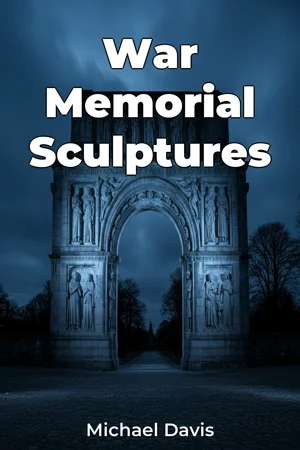
How do we remember war, and who decides what stories are etched in stone? "War Memorial Sculptures" examines the complex narrative of conflict as told through public monuments, exploring how sculptors across different eras and cultures have grappled with the intertwined themes of heroism and tragedy. This book is crucial because it unpacks the biases and intentions embedded within these seemingly objective tributes, revealing how they shape our collective memory and understanding of warfare. The book delves into three central themes: the evolution of heroic representation in war memorials, the depiction of grief and loss, and the sociopolitical context influencing monument design. Understanding these areas is important because war memorials are not simply artistic creations; they are powerful tools that governments and communities use to construct national identity, justify past actions, and promote specific interpretations of history. Historically, war memorials have served various functions, from commemorating individual acts of bravery to symbolizing national sacrifice. Socially, these monuments act as gathering places for remembrance ceremonies and sites for public mourning. Politically, they serve as platforms for reinforcing or challenging dominant ideologies. The reader needs no specialist art training; an interest in history and public art will be sufficient. The central argument of this book is that war memorial sculptures are never neutral; they are carefully constructed narratives that reflect the values, ideologies, and power dynamics of the societies that commission them. Recognizing this inherent subjectivity is crucial for a more nuanced and critical understanding of history. "War Memorial Sculptures" is structured into three major sections. First, it introduces the evolution of war memorial design, from classical triumphal arches to modern abstract forms, analyzing how changing artistic styles reflect shifting attitudes toward war. Second, the book examines case studies of specific monuments from different geographical locations and time periods, focusing on the choices sculptors made in portraying heroism, sacrifice, and the human cost of conflict. These case studies range from classical antiquity to the present day. Third, it analyzes the controversies surrounding war memorials, including debates over historical accuracy, the representation of marginalized groups, and the ethics of glorifying violence. The book draws upon a variety of sources, including archival documents, photographs, sketches, and critical analyses of individual monuments. It also incorporates historical accounts of the wars being commemorated and sociological studies of public memory. Original photographs of lesser-known memorials are included to illustrate key themes. This book connects to several other academic fields, including art history, political science, and sociology. Art history provides the framework for understanding the aesthetic and stylistic elements of the sculptures. Political science examines the role of monuments in shaping national identity and promoting political agendas. Sociology explores how public memory is constructed and maintained through these physical representations of the past. "War Memorial Sculptures" offers a unique perspective by analyzing the artistic and political dimensions of war memorials together, revealing how these seemingly disparate elements are inextricably linked. It moves beyond simple aesthetic appreciation to explore the complex ways in which monuments shape our understanding of war and its consequences. The book adopts an academic yet accessible tone. Complex ideas are explained clearly and concisely, making it suitable for both scholars and general readers interested in art, history, and public memory. The target audience includes students of art history, military history, and political science, as well as anyone interested in the role of public art in shaping our understanding of the past. Readers will gain a deeper appreciation for the complexities of war memorial design and the ways in which these monuments reflect and shape our collective memory. As a work of non-fiction, it delivers researched facts and citations. The scope of this book is limited to three-dimensional sculpted war memorials. It focuses primarily on Western examples but includes selected case studies from other parts of the world to provide a broader perspective. The insights gained from this book can be applied in various practical ways. Understanding the biases inherent in war memorials can help us to critically evaluate the narratives of the past and to engage in more informed discussions about contemporary conflicts. It can also inform the design of future memorials, ensuring that they are more inclusive and representative of the diverse experiences of war. The book addresses ongoing debates about the appropriateness of celebrating military victories and the challenges of representing the suffering of civilians in war memorials. It explores the controversies surrounding monuments that have been accused of glorifying violence or perpetuating harmful stereotypes.
How do we remember war, and who decides what stories are etched in stone? "War Memorial Sculptures" examines the complex narrative of conflict as told through public monuments, exploring how sculptors across different eras and cultures have grappled with the intertwined themes of heroism and tragedy. This book is crucial because it unpacks the biases and intentions embedded within these seemingly objective tributes, revealing how they shape our collective memory and understanding of warfare. The book delves into three central themes: the evolution of heroic representation in war memorials, the depiction of grief and loss, and the sociopolitical context influencing monument design. Understanding these areas is important because war memorials are not simply artistic creations; they are powerful tools that governments and communities use to construct national identity, justify past actions, and promote specific interpretations of history. Historically, war memorials have served various functions, from commemorating individual acts of bravery to symbolizing national sacrifice. Socially, these monuments act as gathering places for remembrance ceremonies and sites for public mourning. Politically, they serve as platforms for reinforcing or challenging dominant ideologies. The reader needs no specialist art training; an interest in history and public art will be sufficient. The central argument of this book is that war memorial sculptures are never neutral; they are carefully constructed narratives that reflect the values, ideologies, and power dynamics of the societies that commission them. Recognizing this inherent subjectivity is crucial for a more nuanced and critical understanding of history. "War Memorial Sculptures" is structured into three major sections. First, it introduces the evolution of war memorial design, from classical triumphal arches to modern abstract forms, analyzing how changing artistic styles reflect shifting attitudes toward war. Second, the book examines case studies of specific monuments from different geographical locations and time periods, focusing on the choices sculptors made in portraying heroism, sacrifice, and the human cost of conflict. These case studies range from classical antiquity to the present day. Third, it analyzes the controversies surrounding war memorials, including debates over historical accuracy, the representation of marginalized groups, and the ethics of glorifying violence. The book draws upon a variety of sources, including archival documents, photographs, sketches, and critical analyses of individual monuments. It also incorporates historical accounts of the wars being commemorated and sociological studies of public memory. Original photographs of lesser-known memorials are included to illustrate key themes. This book connects to several other academic fields, including art history, political science, and sociology. Art history provides the framework for understanding the aesthetic and stylistic elements of the sculptures. Political science examines the role of monuments in shaping national identity and promoting political agendas. Sociology explores how public memory is constructed and maintained through these physical representations of the past. "War Memorial Sculptures" offers a unique perspective by analyzing the artistic and political dimensions of war memorials together, revealing how these seemingly disparate elements are inextricably linked. It moves beyond simple aesthetic appreciation to explore the complex ways in which monuments shape our understanding of war and its consequences. The book adopts an academic yet accessible tone. Complex ideas are explained clearly and concisely, making it suitable for both scholars and general readers interested in art, history, and public memory. The target audience includes students of art history, military history, and political science, as well as anyone interested in the role of public art in shaping our understanding of the past. Readers will gain a deeper appreciation for the complexities of war memorial design and the ways in which these monuments reflect and shape our collective memory. As a work of non-fiction, it delivers researched facts and citations. The scope of this book is limited to three-dimensional sculpted war memorials. It focuses primarily on Western examples but includes selected case studies from other parts of the world to provide a broader perspective. The insights gained from this book can be applied in various practical ways. Understanding the biases inherent in war memorials can help us to critically evaluate the narratives of the past and to engage in more informed discussions about contemporary conflicts. It can also inform the design of future memorials, ensuring that they are more inclusive and representative of the diverse experiences of war. The book addresses ongoing debates about the appropriateness of celebrating military victories and the challenges of representing the suffering of civilians in war memorials. It explores the controversies surrounding monuments that have been accused of glorifying violence or perpetuating harmful stereotypes.
"War Memorial Sculptures" examines how societies remember and represent war through public monuments, revealing the stories etched in stone and bronze. These sculptures, often seen as objective tributes, are actually complex narratives reflecting values, ideologies, and power dynamics. The book argues that war memorials are never neutral; they are carefully crafted to shape national identity and promote specific interpretations of military history. The book delves into the evolution of war memorial design, tracing its path from classical triumphal arches to modern abstract forms, showcasing how artistic styles mirror shifting attitudes towards war. Case studies from various locations and time periods analyze the choices sculptors make in portraying heroism, sacrifice, and the human cost of conflict. Controversies surrounding war memorials, including debates over historical accuracy and representation, are also explored, offering insight into why some public monuments spark intense debate. The approach is both academic and accessible, using archival documents, photographs, and critical analyses to unpack the sociopolitical context of these monuments. Structured into three major sections, the book progresses from introducing design evolution to examining specific monuments and analyzing controversies, providing a comprehensive understanding of how public art shapes our collective memory of military events.
Book Details
ISBN
9788235219381
Publisher
Publifye AS
Your Licenses
You don't own any licenses for this book
Purchase a license below to unlock this book and download the EPUB.
Purchase License
Select a tier to unlock this book
Need bulk licensing?
Contact us for enterprise agreements.