
About This Book
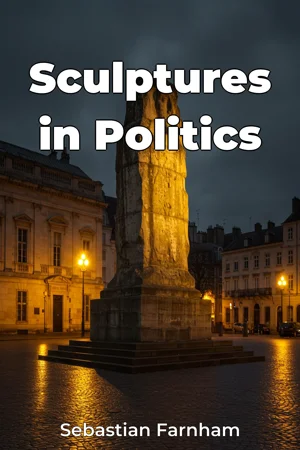
How have sculpted figures shaped our understanding of history and power? "Sculptures in Politics" examines the multifaceted role of statues and monuments as powerful tools for political propaganda and the construction of historical narratives. This book explores how these seemingly static objects actively influence public opinion, reinforce dominant ideologies, and shape collective memory. Their significance lies in their ability to communicate complex messages visually and emotionally, often transcending linguistic and cultural barriers. The book is structured around three central themes. First, it analyzes the creation and deployment of statues as instruments of state power, looking at how regimes throughout history have commissioned and utilized these works to legitimize their rule and disseminate their ideologies. Second, it investigates the ways in which monuments are used to construct and reinforce historical narratives, focusing on how choices about who and what to commemorate contribute to a particular understanding of the past, often at the expense of marginalized voices. Third, it examines the controversies surrounding the removal or alteration of statues, exploring the challenges in reconciling conflicting interpretations of history and the enduring political implications of these actions. To provide context, the book delves into the history of monumental sculpture from ancient civilizations to the present day, examining the evolving techniques, styles, and symbolic languages employed by artists and political actors. Understanding the socio-political context in which these objects were created and displayed is crucial for interpreting their intended meaning and impact. The central argument of "Sculptures in Politics" is that statues and monuments are not merely decorative or commemorative objects, but active agents in the political sphere. They are carefully crafted instruments used to shape public opinion, legitimize power structures, and perpetuate specific historical narratives. The importance of this argument lies in its challenge to a passive view of these objects, urging readers to critically examine the messages they convey and the interests they serve. The book begins by introducing core concepts related to memory, power, and representation in sculpture. It then proceeds to a chronological examination of case studies, ranging from ancient Roman imperial portraiture to Soviet-era monuments and contemporary debates over Confederate statues in the United States. It will culminate in an analysis of the ethical and political considerations involved in preserving, modifying, or removing controversial monuments, and a framework for understanding their ongoing impact in the 21st century. The research is based on diverse sources, including art historical analyses, political theory, archival documents, and ethnographic studies of public spaces where these sculptures are displayed. "Sculptures in Politics" connects to several other fields, including art history, political science, and sociology. Art history provides the tools for analyzing the visual language and aesthetic qualities of the sculptures themselves. Political science illuminates the power dynamics and ideological agendas that shape their creation and deployment. Sociology offers insights into the ways in which these objects influence social cohesion, identity formation, and collective memory. Examining the interactions between these disciplines gives the reader a fuller understanding of the role that sculptures play in society. This book adopts an interdisciplinary approach, combining art historical analysis with political and social theory to offer a comprehensive understanding of the political agency of sculpture. The writing style is factual and analytical, aiming to provide a reasoned and balanced perspective on a complex and often contentious subject. The intended audience includes students and scholars of history, political science, art history, and cultural studies, as well as general readers interested in understanding the power of visual culture to shape our understanding of the world. This book analyzes a focused topic and creates an opportunity for readers to examine how art can impact politics and power. The scope of the book is limited to politically motivated or significant sculptures and monuments created in the Western world and former Soviet sphere, though comparative examples from other cultures are referenced. It does not delve into the technical aspects of sculpting or focus on purely artistic interpretations. The information presented can be applied practically by readers in analyzing and interpreting the monuments and public art they encounter in their own communities, fostering a more informed and critical understanding of the messages these objects convey. The debates surrounding Confederate monuments in the United States and the legacy of colonial statues in Europe are addressed, offering diverse perspectives and encouraging critical reflection on the complexities of historical interpretation. It invites the reader to consider the ethics of preserving, recontextualizing, or removing such monuments and to acknowledge the ongoing power of these objects to shape public discourse and memory.
How have sculpted figures shaped our understanding of history and power? "Sculptures in Politics" examines the multifaceted role of statues and monuments as powerful tools for political propaganda and the construction of historical narratives. This book explores how these seemingly static objects actively influence public opinion, reinforce dominant ideologies, and shape collective memory. Their significance lies in their ability to communicate complex messages visually and emotionally, often transcending linguistic and cultural barriers. The book is structured around three central themes. First, it analyzes the creation and deployment of statues as instruments of state power, looking at how regimes throughout history have commissioned and utilized these works to legitimize their rule and disseminate their ideologies. Second, it investigates the ways in which monuments are used to construct and reinforce historical narratives, focusing on how choices about who and what to commemorate contribute to a particular understanding of the past, often at the expense of marginalized voices. Third, it examines the controversies surrounding the removal or alteration of statues, exploring the challenges in reconciling conflicting interpretations of history and the enduring political implications of these actions. To provide context, the book delves into the history of monumental sculpture from ancient civilizations to the present day, examining the evolving techniques, styles, and symbolic languages employed by artists and political actors. Understanding the socio-political context in which these objects were created and displayed is crucial for interpreting their intended meaning and impact. The central argument of "Sculptures in Politics" is that statues and monuments are not merely decorative or commemorative objects, but active agents in the political sphere. They are carefully crafted instruments used to shape public opinion, legitimize power structures, and perpetuate specific historical narratives. The importance of this argument lies in its challenge to a passive view of these objects, urging readers to critically examine the messages they convey and the interests they serve. The book begins by introducing core concepts related to memory, power, and representation in sculpture. It then proceeds to a chronological examination of case studies, ranging from ancient Roman imperial portraiture to Soviet-era monuments and contemporary debates over Confederate statues in the United States. It will culminate in an analysis of the ethical and political considerations involved in preserving, modifying, or removing controversial monuments, and a framework for understanding their ongoing impact in the 21st century. The research is based on diverse sources, including art historical analyses, political theory, archival documents, and ethnographic studies of public spaces where these sculptures are displayed. "Sculptures in Politics" connects to several other fields, including art history, political science, and sociology. Art history provides the tools for analyzing the visual language and aesthetic qualities of the sculptures themselves. Political science illuminates the power dynamics and ideological agendas that shape their creation and deployment. Sociology offers insights into the ways in which these objects influence social cohesion, identity formation, and collective memory. Examining the interactions between these disciplines gives the reader a fuller understanding of the role that sculptures play in society. This book adopts an interdisciplinary approach, combining art historical analysis with political and social theory to offer a comprehensive understanding of the political agency of sculpture. The writing style is factual and analytical, aiming to provide a reasoned and balanced perspective on a complex and often contentious subject. The intended audience includes students and scholars of history, political science, art history, and cultural studies, as well as general readers interested in understanding the power of visual culture to shape our understanding of the world. This book analyzes a focused topic and creates an opportunity for readers to examine how art can impact politics and power. The scope of the book is limited to politically motivated or significant sculptures and monuments created in the Western world and former Soviet sphere, though comparative examples from other cultures are referenced. It does not delve into the technical aspects of sculpting or focus on purely artistic interpretations. The information presented can be applied practically by readers in analyzing and interpreting the monuments and public art they encounter in their own communities, fostering a more informed and critical understanding of the messages these objects convey. The debates surrounding Confederate monuments in the United States and the legacy of colonial statues in Europe are addressed, offering diverse perspectives and encouraging critical reflection on the complexities of historical interpretation. It invites the reader to consider the ethics of preserving, recontextualizing, or removing such monuments and to acknowledge the ongoing power of these objects to shape public discourse and memory.
"Sculptures in Politics" explores how statues and monuments serve as potent tools of political propaganda and vital components in shaping historical narratives. These sculpted figures, often viewed as static objects, actively mold public opinion and reinforce dominant ideologies. The book argues that these works communicate complex messages visually, transcending linguistic barriers to influence collective memory. The book examines the creation of statues as instruments of state power, illustrating how regimes commission these pieces to legitimize their rule. It also investigates how monuments reinforce specific historical narratives, often marginalizing certain voices. The debates surrounding the removal of controversial monuments are discussed, revealing challenges in reconciling conflicting interpretations of history. Using an interdisciplinary approach, the book combines art historical analysis with political and social theory to understand sculptures' political agency. Starting with core concepts of memory and power, it progresses chronologically through case studies, from ancient Roman portraiture to contemporary debates over Confederate monuments, equipping readers to critically analyze the monuments they encounter and understand their ongoing impact.
Book Details
ISBN
9788235219350
Publisher
Publifye AS
Your Licenses
You don't own any licenses for this book
Purchase a license below to unlock this book and download the EPUB.
Purchase License
Select a tier to unlock this book
Need bulk licensing?
Contact us for enterprise agreements.