
About This Book
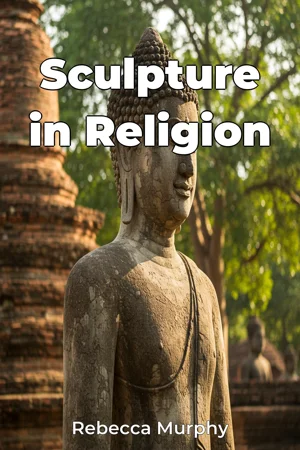
How have physical forms shaped faith itself? "Sculpture in Religion" explores the profound and multifaceted relationship between religious sculpture, spiritual traditions, and the architectural environments they inhabit. It delves into the ways in which three-dimensional representations of deities, saints, and sacred narratives have influenced religious beliefs, practices, and the very construction of sacred spaces. Understanding this interplay is essential for comprehending the tangible expressions of faith and their lasting impact on human culture; sculpture provides a unique lens through which to examine the intersection of art, religion, and societal values. This book examines three central themes. First, it investigates the theological rationales behind religious imagery across various cultures. Why do some religions embrace figural representation while others strictly prohibit it? Second, it analyzes the social and political functions of religious sculpture, exploring how these objects have been used to legitimize power, reinforce social hierarchies, and propagate religious ideologies. Third, it examines the aesthetic principles and artistic techniques employed in creating religious sculptures, paying close attention to how these formal elements contribute to the overall religious experience. “Sculpture in Religion” argues that religious sculpture is not merely decorative or illustrative but is, in fact, a dynamic force in shaping religious thought and practice. It demonstrates how the creation, veneration, destruction, and interpretation of these sculptures have played a critical role in defining and redefining religious identities. This understanding is crucial because it illuminates the complex and often contested nature of religious expression, revealing how material culture actively participates in the ongoing negotiation of meaning within religious communities. The book begins by establishing a theoretical framework for understanding the relationship between religion and visual culture. It then proceeds by examining case studies from diverse religious traditions, including but not limited to: ancient Egyptian, Greek and Roman polytheism, Buddhism, Hinduism, Christianity, and Islam (addressing specific examples of representational art where relevant). Each chapter will focus on a different aspect of the relationship between sculpture, religion, and architecture. The initial chapters introduce cross-religious approaches to sacred iconographies, and the central chapters explore the development of localized traditions like reliquaries and the use of statuary in state-sponsored religion. The later chapters look at iconoclasm and reform. The concluding chapter synthesizes these diverse perspectives to offer a comprehensive understanding of the enduring power of religious sculpture. The analysis relies on a range of evidence, including archaeological findings, textual sources (scriptures, theological treatises, hagiographies), ethnographic studies of contemporary religious practices, and art-historical analyses of sculptural styles and techniques. The book uses comparative methodologies to identify common themes and divergent approaches across different religious traditions. "Sculpture in Religion" connects to several disciplines, including religious studies, art history, anthropology, and archaeology, and it offers valuable insights for anyone interested in understanding the material dimensions of religious experience. Its unique perspective lies in its synthesis of diverse methodologies and its emphasis on the active role of sculpture in shaping religious beliefs and practices. The book embraces a conversational, yet academic, tone, aiming to be both informative and engaging for a broad audience. It is intended for students, scholars, and general readers interested in religion, art history, and cultural studies. It provides a comprehensive overview of the topic and offers new perspectives on the power of religious imagery. The scope of "Sculpture in Religion" is broad, encompassing a wide range of religious traditions and historical periods. However, it acknowledges certain limitations, such as its primary focus on monumental sculpture and its limited exploration of ephemeral or performance-based religious art forms. The insights presented in this book have practical applications for museum professionals, religious leaders, and anyone involved in the preservation and interpretation of religious art. It fosters a deeper appreciation for the complexities of religious expression and encourages a more nuanced understanding of the relationship between art and faith. While avoiding explicit engagement with contemporary debates surrounding religious representation, the book provides a historical framework for understanding these issues.
How have physical forms shaped faith itself? "Sculpture in Religion" explores the profound and multifaceted relationship between religious sculpture, spiritual traditions, and the architectural environments they inhabit. It delves into the ways in which three-dimensional representations of deities, saints, and sacred narratives have influenced religious beliefs, practices, and the very construction of sacred spaces. Understanding this interplay is essential for comprehending the tangible expressions of faith and their lasting impact on human culture; sculpture provides a unique lens through which to examine the intersection of art, religion, and societal values. This book examines three central themes. First, it investigates the theological rationales behind religious imagery across various cultures. Why do some religions embrace figural representation while others strictly prohibit it? Second, it analyzes the social and political functions of religious sculpture, exploring how these objects have been used to legitimize power, reinforce social hierarchies, and propagate religious ideologies. Third, it examines the aesthetic principles and artistic techniques employed in creating religious sculptures, paying close attention to how these formal elements contribute to the overall religious experience. “Sculpture in Religion” argues that religious sculpture is not merely decorative or illustrative but is, in fact, a dynamic force in shaping religious thought and practice. It demonstrates how the creation, veneration, destruction, and interpretation of these sculptures have played a critical role in defining and redefining religious identities. This understanding is crucial because it illuminates the complex and often contested nature of religious expression, revealing how material culture actively participates in the ongoing negotiation of meaning within religious communities. The book begins by establishing a theoretical framework for understanding the relationship between religion and visual culture. It then proceeds by examining case studies from diverse religious traditions, including but not limited to: ancient Egyptian, Greek and Roman polytheism, Buddhism, Hinduism, Christianity, and Islam (addressing specific examples of representational art where relevant). Each chapter will focus on a different aspect of the relationship between sculpture, religion, and architecture. The initial chapters introduce cross-religious approaches to sacred iconographies, and the central chapters explore the development of localized traditions like reliquaries and the use of statuary in state-sponsored religion. The later chapters look at iconoclasm and reform. The concluding chapter synthesizes these diverse perspectives to offer a comprehensive understanding of the enduring power of religious sculpture. The analysis relies on a range of evidence, including archaeological findings, textual sources (scriptures, theological treatises, hagiographies), ethnographic studies of contemporary religious practices, and art-historical analyses of sculptural styles and techniques. The book uses comparative methodologies to identify common themes and divergent approaches across different religious traditions. "Sculpture in Religion" connects to several disciplines, including religious studies, art history, anthropology, and archaeology, and it offers valuable insights for anyone interested in understanding the material dimensions of religious experience. Its unique perspective lies in its synthesis of diverse methodologies and its emphasis on the active role of sculpture in shaping religious beliefs and practices. The book embraces a conversational, yet academic, tone, aiming to be both informative and engaging for a broad audience. It is intended for students, scholars, and general readers interested in religion, art history, and cultural studies. It provides a comprehensive overview of the topic and offers new perspectives on the power of religious imagery. The scope of "Sculpture in Religion" is broad, encompassing a wide range of religious traditions and historical periods. However, it acknowledges certain limitations, such as its primary focus on monumental sculpture and its limited exploration of ephemeral or performance-based religious art forms. The insights presented in this book have practical applications for museum professionals, religious leaders, and anyone involved in the preservation and interpretation of religious art. It fosters a deeper appreciation for the complexities of religious expression and encourages a more nuanced understanding of the relationship between art and faith. While avoiding explicit engagement with contemporary debates surrounding religious representation, the book provides a historical framework for understanding these issues.
"Sculpture in Religion" explores the multifaceted role of three-dimensional art in shaping religious beliefs and practices across various cultures. The book examines how sculptures of deities, saints, and sacred narratives influence both the construction of sacred spaces and the evolution of religious thought. A key insight is the exploration of theological rationales behind religious imagery, asking why some religions embrace it while others prohibit it. Another focus looks at how religious sculpture has been used to legitimize power and reinforce social hierarchies. The book analyzes religious sculpture not just as decorative but as a dynamic force in shaping religious identities. Beginning with a theoretical framework, it proceeds through case studies from ancient Egyptian, Greek, Roman, Buddhist, Hindu, Christian, and Islamic traditions, showing cross-religious approaches to sacred iconography. The central chapters explore localized traditions, while later chapters address iconoclasm and reform. It uses archaeological findings, textual sources, and art-historical analyses to provide a comprehensive understanding of religious sculpture's enduring power.
Book Details
ISBN
9788235219312
Publisher
Publifye AS
Your Licenses
You don't own any licenses for this book
Purchase a license below to unlock this book and download the EPUB.
Purchase License
Select a tier to unlock this book
Need bulk licensing?
Contact us for enterprise agreements.