
About This Book
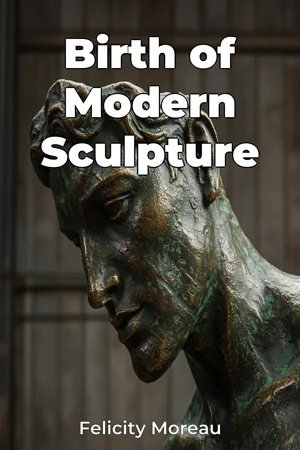
What happens when artists shatter centuries of tradition and forge entirely new forms of expression? "Birth of Modern Sculpture" explores this pivotal moment, tracing the evolution of sculpture from its classical roots to the radical innovations that defined the modern era. This book examines how sculptors, driven by societal shifts and technological advancements, redefined the very essence of three-dimensional art. The book focuses on three core areas: the rejection of academic conventions, the embrace of new materials and techniques, and the exploration of abstraction and non-representational forms. These themes are crucial because they represent a fundamental shift in artistic thinking, influencing not only sculpture but also painting, architecture, and design. Understanding this transformation provides insight into the broader currents of modernism and its lasting impact on contemporary art. The context for this artistic revolution lies in the late 19th and early 20th centuries, a period of rapid industrialization, social upheaval, and intellectual ferment. The rise of new technologies, such as steel production and welding, offered sculptors unprecedented possibilities, while the decline of traditional patronage and the emergence of new philosophies challenged established artistic norms. A basic understanding of art history, particularly the neoclassical and romantic periods, will enhance the reader’s appreciation of the profound changes discussed. The central argument of "Birth of Modern Sculpture" is that the birth of modern sculpture was not merely a stylistic evolution but a profound paradigm shift, driven by a desire to express the complexities and contradictions of modern life. This argument is significant because it challenges the traditional view of art history as a linear progression and emphasizes the role of social, technological, and intellectual forces in shaping artistic expression. The book is structured chronologically and thematically. It begins by introducing the prevailing sculptural traditions of the 19th century, highlighting the dominance of idealized forms and historical narratives. It then examines the emergence of early modern sculptors, such as Auguste Rodin, who challenged these conventions through expressive modeling and psychological depth. The next section explores the impact of Cubism, Futurism, and other avant-garde movements on sculpture, focusing on artists like Constantin Brancusi, Umberto Boccioni, and Pablo Picasso, who experimented with abstraction, fragmentation, and unconventional materials. The book culminates by analyzing the rise of constructivism and other non-representational forms, demonstrating how sculptors moved beyond imitation to create purely abstract objects that explored the inherent properties of materials and the principles of spatial organization. The analysis is supported by a range of evidence, including primary source documents, such as artists' letters and manifestos, as well as critical reviews and exhibition catalogs. The book also draws on extensive visual analysis of key sculptures, examining their formal qualities, material properties, and historical context. Unique data sources include newly translated archival materials and previously unpublished photographs of artists in their studios. "Birth of Modern Sculpture" connects to other fields of study in several ways. First, it intersects with social history, illustrating how changes in society influenced artistic production. Second, it relates to the history of technology, exploring how new materials and techniques enabled sculptors to create innovative forms. Third, it connects to philosophy, examining how modernist sculpture reflected new ways of thinking about perception, representation, and the nature of reality. The book takes a fresh by examining the shift to modern sculpture not as an isolated event, but as a cultural and intellectual phenomenon deeply intertwined with broader historical and social forces. The writing style will be accessible and engaging, aimed at a general audience with an interest in art history and modernism. The target audience includes art students, art enthusiasts, and anyone interested in the history of modernism. The book would be valuable to them because it provides a comprehensive and accessible overview of a crucial period in the history of art, offering new insights into the creative processes and intellectual debates that shaped modern sculpture. This book respects the conventions of art history writing, including detailed documentation, rigorous analysis, and clear presentation of evidence. The scope of the book is limited to sculpture created roughly between 1880 and 1945, focusing primarily on European and North American artists. This limitation allows for a more in-depth exploration of the key developments and debates that defined the birth of modern sculpture. The knowledge gained from "Birth of Modern Sculpture" can be applied practically by readers in several ways. It can provide a deeper understanding of the artistic principles and historical context behind modern and contemporary sculpture, enhancing their appreciation of art in museums, galleries, and public spaces. It can also inspire artists and designers to experiment with new materials, techniques, and forms. While the narrative focuses on the progressive evolution of sculptural forms, the book also addresses some ongoing debates within the field, such as the role of patronage, the influence of technology versus artistic vision, and questions surrounding the definition of "art" itself.
What happens when artists shatter centuries of tradition and forge entirely new forms of expression? "Birth of Modern Sculpture" explores this pivotal moment, tracing the evolution of sculpture from its classical roots to the radical innovations that defined the modern era. This book examines how sculptors, driven by societal shifts and technological advancements, redefined the very essence of three-dimensional art. The book focuses on three core areas: the rejection of academic conventions, the embrace of new materials and techniques, and the exploration of abstraction and non-representational forms. These themes are crucial because they represent a fundamental shift in artistic thinking, influencing not only sculpture but also painting, architecture, and design. Understanding this transformation provides insight into the broader currents of modernism and its lasting impact on contemporary art. The context for this artistic revolution lies in the late 19th and early 20th centuries, a period of rapid industrialization, social upheaval, and intellectual ferment. The rise of new technologies, such as steel production and welding, offered sculptors unprecedented possibilities, while the decline of traditional patronage and the emergence of new philosophies challenged established artistic norms. A basic understanding of art history, particularly the neoclassical and romantic periods, will enhance the reader’s appreciation of the profound changes discussed. The central argument of "Birth of Modern Sculpture" is that the birth of modern sculpture was not merely a stylistic evolution but a profound paradigm shift, driven by a desire to express the complexities and contradictions of modern life. This argument is significant because it challenges the traditional view of art history as a linear progression and emphasizes the role of social, technological, and intellectual forces in shaping artistic expression. The book is structured chronologically and thematically. It begins by introducing the prevailing sculptural traditions of the 19th century, highlighting the dominance of idealized forms and historical narratives. It then examines the emergence of early modern sculptors, such as Auguste Rodin, who challenged these conventions through expressive modeling and psychological depth. The next section explores the impact of Cubism, Futurism, and other avant-garde movements on sculpture, focusing on artists like Constantin Brancusi, Umberto Boccioni, and Pablo Picasso, who experimented with abstraction, fragmentation, and unconventional materials. The book culminates by analyzing the rise of constructivism and other non-representational forms, demonstrating how sculptors moved beyond imitation to create purely abstract objects that explored the inherent properties of materials and the principles of spatial organization. The analysis is supported by a range of evidence, including primary source documents, such as artists' letters and manifestos, as well as critical reviews and exhibition catalogs. The book also draws on extensive visual analysis of key sculptures, examining their formal qualities, material properties, and historical context. Unique data sources include newly translated archival materials and previously unpublished photographs of artists in their studios. "Birth of Modern Sculpture" connects to other fields of study in several ways. First, it intersects with social history, illustrating how changes in society influenced artistic production. Second, it relates to the history of technology, exploring how new materials and techniques enabled sculptors to create innovative forms. Third, it connects to philosophy, examining how modernist sculpture reflected new ways of thinking about perception, representation, and the nature of reality. The book takes a fresh by examining the shift to modern sculpture not as an isolated event, but as a cultural and intellectual phenomenon deeply intertwined with broader historical and social forces. The writing style will be accessible and engaging, aimed at a general audience with an interest in art history and modernism. The target audience includes art students, art enthusiasts, and anyone interested in the history of modernism. The book would be valuable to them because it provides a comprehensive and accessible overview of a crucial period in the history of art, offering new insights into the creative processes and intellectual debates that shaped modern sculpture. This book respects the conventions of art history writing, including detailed documentation, rigorous analysis, and clear presentation of evidence. The scope of the book is limited to sculpture created roughly between 1880 and 1945, focusing primarily on European and North American artists. This limitation allows for a more in-depth exploration of the key developments and debates that defined the birth of modern sculpture. The knowledge gained from "Birth of Modern Sculpture" can be applied practically by readers in several ways. It can provide a deeper understanding of the artistic principles and historical context behind modern and contemporary sculpture, enhancing their appreciation of art in museums, galleries, and public spaces. It can also inspire artists and designers to experiment with new materials, techniques, and forms. While the narrative focuses on the progressive evolution of sculptural forms, the book also addresses some ongoing debates within the field, such as the role of patronage, the influence of technology versus artistic vision, and questions surrounding the definition of "art" itself.
"Birth of Modern Sculpture" delves into the revolutionary period when artists redefined sculpture, breaking from classical traditions to embrace innovation. The book explores this transformation, highlighting how sculptors responded to societal shifts and technological advancements, leading to the birth of entirely new forms of artistic expression. Notably, the rise of steel production and welding provided unprecedented possibilities, and the decline of traditional patronage challenged established norms. The book examines the rejection of academic conventions, the embrace of new materials, and the exploration of abstraction. Beginning with 19th-century traditions, it progresses through the influence of early modern sculptors like Auguste Rodin and avant-garde movements such as Cubism and Futurism. Ultimately, the book analyzes the rise of constructivism and non-representational forms, revealing how sculptors moved beyond mere imitation. This exploration provides a comprehensive overview of a pivotal period in art history, offering new insights into the forces that shaped modern sculpture.
Book Details
ISBN
9788235219305
Publisher
Publifye AS
Your Licenses
You don't own any licenses for this book
Purchase a license below to unlock this book and download the EPUB.
Purchase License
Select a tier to unlock this book
Need bulk licensing?
Contact us for enterprise agreements.