
About This Book
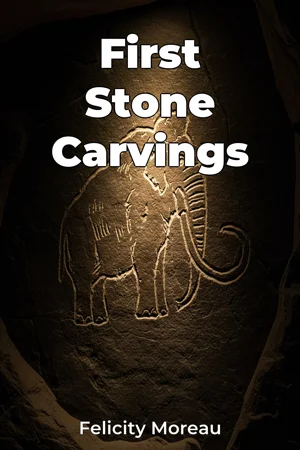
What can the earliest human carvings tell us about the dawn of art, ritual, and symbolic thought? *First Stone Carvings* delves into the world of prehistoric artistry, exploring the origins and significance of the first deliberate marks and figures etched into stone. This book unveils how these ancient carvings acted as a fundamental form of communication, storytelling, and ritual practice for early human populations, and their lasting impact on the development of artistic traditions. This study focuses on two central themes: the evolution of carving techniques and the interpretation of the carvings' symbolic meaning. The importance lies in understanding how early humans began to translate their experiences and beliefs into tangible forms, and how these forms shaped their understanding of the world. This exploration necessitates a journey through the Paleolithic and Mesolithic periods, beginning roughly 40,000 years ago, examining a variety of archaeological sites across Europe, Africa, and Asia. A basic understanding of archaeological methods and early human history will provide a solid foundation for appreciating the book’s findings. The central argument of *First Stone Carvings* is that these carvings represent a critical juncture in human cognitive development, offering insights into the emergence of abstract thought and symbolic expression. It's a lens through which to re-evaluate the cognitive capabilities of early humans and their capacity for complex communication. The book unfolds in three parts. First, it introduces the fundamental concepts of Paleolithic art and the methods used to analyze it, including techniques for dating carvings and identifying the tools used. Then, it investigates specific examples of carvings, categorized by region and subject matter, analyzing their potential meaning and context. Finally, the book culminates in a synthesis of these findings, proposing a framework for understanding the role of stone carvings in the evolution of human culture and cognition. The book's conclusions are based on a synthesis of archaeological evidence, including detailed analyses of the carvings themselves, contextual information from excavation sites, and comparative studies of ethnographic data from contemporary hunter-gatherer societies. It also incorporates findings from experimental archaeology, replicating carving techniques to better understand the processes involved. *First Stone Carvings* connects to various fields, including anthropology, cognitive science, and art history, offering a holistic perspective on the origins of human artistic expression. The interdisciplinary nature of this study bridges these fields to enhance the understanding of early human cognitive processes and social structures. The book adopts a unique approach by integrating recent advancements in cognitive archaeology with traditional art historical analysis, emphasizing the cognitive processes that underpin the creation and interpretation of these carvings. This study takes a balanced and comprehensive approach, considering diverse interpretations and viewpoints while maintaining a clear and accessible writing style. The target audience includes students and scholars of archaeology, art history, and anthropology, as well as anyone interested in the origins of human culture and creativity. The book provides a comprehensive overview of the topic, making it suitable for both academic and general readers. As a work of non-fiction, *First Stone Carvings* adheres to the genre's expectations of factual accuracy, objectivity, and rigorous citation of sources. The book is carefully researched and presents evidence in a clear and balanced manner. While the book aims to provide a broad overview of early stone carvings, it also acknowledges the limitations of the available evidence. The book focuses primarily on portable art and carvings found within cave systems, with less emphasis on monumental stone structures. Understanding the role of carvings as communication tools can offer insights into the visual culture and symbolic systems of different societies throughout history. Additionally, the book touches on the ongoing debates surrounding the interpretation of Paleolithic art, acknowledging different perspectives and offering reasoned arguments for its conclusions.
What can the earliest human carvings tell us about the dawn of art, ritual, and symbolic thought? *First Stone Carvings* delves into the world of prehistoric artistry, exploring the origins and significance of the first deliberate marks and figures etched into stone. This book unveils how these ancient carvings acted as a fundamental form of communication, storytelling, and ritual practice for early human populations, and their lasting impact on the development of artistic traditions. This study focuses on two central themes: the evolution of carving techniques and the interpretation of the carvings' symbolic meaning. The importance lies in understanding how early humans began to translate their experiences and beliefs into tangible forms, and how these forms shaped their understanding of the world. This exploration necessitates a journey through the Paleolithic and Mesolithic periods, beginning roughly 40,000 years ago, examining a variety of archaeological sites across Europe, Africa, and Asia. A basic understanding of archaeological methods and early human history will provide a solid foundation for appreciating the book’s findings. The central argument of *First Stone Carvings* is that these carvings represent a critical juncture in human cognitive development, offering insights into the emergence of abstract thought and symbolic expression. It's a lens through which to re-evaluate the cognitive capabilities of early humans and their capacity for complex communication. The book unfolds in three parts. First, it introduces the fundamental concepts of Paleolithic art and the methods used to analyze it, including techniques for dating carvings and identifying the tools used. Then, it investigates specific examples of carvings, categorized by region and subject matter, analyzing their potential meaning and context. Finally, the book culminates in a synthesis of these findings, proposing a framework for understanding the role of stone carvings in the evolution of human culture and cognition. The book's conclusions are based on a synthesis of archaeological evidence, including detailed analyses of the carvings themselves, contextual information from excavation sites, and comparative studies of ethnographic data from contemporary hunter-gatherer societies. It also incorporates findings from experimental archaeology, replicating carving techniques to better understand the processes involved. *First Stone Carvings* connects to various fields, including anthropology, cognitive science, and art history, offering a holistic perspective on the origins of human artistic expression. The interdisciplinary nature of this study bridges these fields to enhance the understanding of early human cognitive processes and social structures. The book adopts a unique approach by integrating recent advancements in cognitive archaeology with traditional art historical analysis, emphasizing the cognitive processes that underpin the creation and interpretation of these carvings. This study takes a balanced and comprehensive approach, considering diverse interpretations and viewpoints while maintaining a clear and accessible writing style. The target audience includes students and scholars of archaeology, art history, and anthropology, as well as anyone interested in the origins of human culture and creativity. The book provides a comprehensive overview of the topic, making it suitable for both academic and general readers. As a work of non-fiction, *First Stone Carvings* adheres to the genre's expectations of factual accuracy, objectivity, and rigorous citation of sources. The book is carefully researched and presents evidence in a clear and balanced manner. While the book aims to provide a broad overview of early stone carvings, it also acknowledges the limitations of the available evidence. The book focuses primarily on portable art and carvings found within cave systems, with less emphasis on monumental stone structures. Understanding the role of carvings as communication tools can offer insights into the visual culture and symbolic systems of different societies throughout history. Additionally, the book touches on the ongoing debates surrounding the interpretation of Paleolithic art, acknowledging different perspectives and offering reasoned arguments for its conclusions.
"First Stone Carvings" explores the dawn of human artistic expression by examining the earliest deliberate marks and figures etched into stone. These prehistoric carvings acted as fundamental forms of communication and ritual practice, offering insights into the cognitive capabilities of early humans. The book argues that these carvings represent a critical juncture in human cognitive development, reflecting the emergence of abstract thought. The book begins by introducing the methods for analyzing Paleolithic art, such as dating carvings and identifying tools used. It then investigates specific examples of carvings categorized by region and subject matter, analyzing their potential meaning and context. Cognitive archaeology is integrated with art historical analysis, emphasizing the cognitive processes that underpin the creation and interpretation of these carvings. Concluding with a synthesis of the findings, the book proposes a framework for understanding the role of stone carvings in the evolution of human culture and cognition. This study provides a comprehensive overview, connecting to various fields like anthropology and art history, making it valuable to academics and general readers interested in the origins of human creativity.
Book Details
ISBN
9788235219268
Publisher
Publifye AS
Your Licenses
You don't own any licenses for this book
Purchase a license below to unlock this book and download the EPUB.
Purchase License
Select a tier to unlock this book
Need bulk licensing?
Contact us for enterprise agreements.