
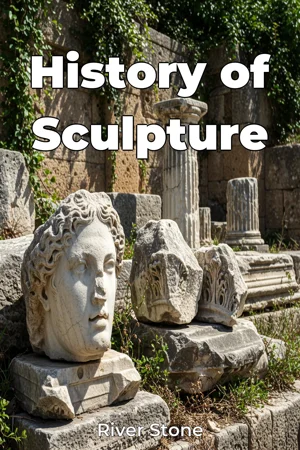
About This Book
How has humanity's three-dimensional artistic expression evolved from rudimentary carvings to the complex abstract forms that challenge our perceptions today? "History of Sculpture" embarks on a comprehensive journey through the dynamic world of sculpture, tracing its origins, transformations, and enduring impact on human culture. This book delves into the rich tapestry of sculptural art, exploring the techniques, materials, and socio-cultural contexts that have shaped its diverse forms across millennia. Central to our exploration are two pivotal themes: the evolving role of sculpture in reflecting and shaping societal values, and the continuous innovation in sculptural materials and techniques. These topics are vital because sculpture, more than any other art form, exists in tangible space, directly engaging with its environment and its audience. Understanding its history offers profound insights into the shifting priorities and aesthetic sensibilities of humankind. To fully appreciate the narrative of sculpture, we must consider its historical backdrop, from ancient civilizations using readily available stone and clay to Renaissance masters pioneering bronze casting, and modern artists embracing industrial materials. This requires an understanding of basic art historical concepts, familiarity with key periods in world history, and an appreciation for the interplay between artistic creation and technological advancement. The central argument of "History of Sculpture" is that sculpture serves as a barometer of cultural change, reflecting not only prevailing beliefs and artistic conventions but also driving innovations in material science and technology. This argument is significant because it re-positions sculpture from a mere decorative element to a dynamic force that actively participates in shaping human experience and understanding. This book unfolds in a structured progression. It begins by introducing fundamental concepts such as subtractive and additive processes, relief and in-the-round sculptures, and various sculptural styles. We then transition into a chronological exploration, dedicating chapters to major periods: Ancient Sculpture (Egypt, Greece, Rome), Medieval Sculpture (Romanesque, Gothic), Renaissance and Baroque Sculpture, 19th-Century Sculpture, and Modern and Contemporary Sculpture. Each chapter examines the major sculptors, key works, and the cultural influences that defined each era. The book culminates in an analysis of contemporary trends and the lasting legacy of sculptural traditions. The analysis presented is based on a wide array of evidence: extant sculptures from museum collections worldwide, historical documents detailing artistic practices, scholarly analyses of sculptural techniques, and the writings of artists themselves. Unique data sources include archaeological findings that shed light on early sculptural practices and technical analyses of materials used in ancient sculptures. "History of Sculpture" also connects to other fields like archaeology, anthropology, and material science. Archaeological discoveries provide crucial context for understanding the purpose and significance of ancient sculptures. Anthropological studies illuminate the role of sculpture in ritualistic practices and social structures across different cultures. Material science offers insights into the properties of various sculptural materials and the innovative techniques developed for their manipulation. These interdisciplinary connections enrich our understanding of sculpture as a multifaceted cultural artifact. A unique approach of this book will be is examining the interaction between sculptural innovation and technological advancement, showing how new materials and techniques have consistently opened up new avenues for artistic expression. The tone is academic yet accessible, aiming to inform and engage a broad audience without sacrificing scholarly rigor. The writing style blends descriptive analysis with historical context, making complex concepts understandable. The target audience includes art history students, art enthusiasts, museum visitors, and anyone interested in the evolution of artistic expression. This book is valuable because it provides a comprehensive and insightful overview of sculptural history, offering a fresh perspective on the role of sculpture in shaping human culture. As a work of art history, "History of Sculpture" adheres to the conventions of scholarly research, providing detailed documentation, critical analysis, and a comprehensive bibliography. The scope of "History of Sculpture" encompasses a global perspective, examining sculptural traditions from diverse cultures across various historical periods. It acknowledges limitations in covering every single sculptor or movement, focusing instead on highlighting key developments and influential figures. Readers can apply the information within to better analyze and appreciate sculpture they encounter in museums, public spaces, and art books. This book empowers them to understand the historical context, technical challenges, and artistic intentions behind sculptural works. The book also addresses the ongoing debate surrounding the definition of sculpture, particularly in the context of contemporary art where the boundaries between sculpture and other art forms are increasingly blurred.
How has humanity's three-dimensional artistic expression evolved from rudimentary carvings to the complex abstract forms that challenge our perceptions today? "History of Sculpture" embarks on a comprehensive journey through the dynamic world of sculpture, tracing its origins, transformations, and enduring impact on human culture. This book delves into the rich tapestry of sculptural art, exploring the techniques, materials, and socio-cultural contexts that have shaped its diverse forms across millennia. Central to our exploration are two pivotal themes: the evolving role of sculpture in reflecting and shaping societal values, and the continuous innovation in sculptural materials and techniques. These topics are vital because sculpture, more than any other art form, exists in tangible space, directly engaging with its environment and its audience. Understanding its history offers profound insights into the shifting priorities and aesthetic sensibilities of humankind. To fully appreciate the narrative of sculpture, we must consider its historical backdrop, from ancient civilizations using readily available stone and clay to Renaissance masters pioneering bronze casting, and modern artists embracing industrial materials. This requires an understanding of basic art historical concepts, familiarity with key periods in world history, and an appreciation for the interplay between artistic creation and technological advancement. The central argument of "History of Sculpture" is that sculpture serves as a barometer of cultural change, reflecting not only prevailing beliefs and artistic conventions but also driving innovations in material science and technology. This argument is significant because it re-positions sculpture from a mere decorative element to a dynamic force that actively participates in shaping human experience and understanding. This book unfolds in a structured progression. It begins by introducing fundamental concepts such as subtractive and additive processes, relief and in-the-round sculptures, and various sculptural styles. We then transition into a chronological exploration, dedicating chapters to major periods: Ancient Sculpture (Egypt, Greece, Rome), Medieval Sculpture (Romanesque, Gothic), Renaissance and Baroque Sculpture, 19th-Century Sculpture, and Modern and Contemporary Sculpture. Each chapter examines the major sculptors, key works, and the cultural influences that defined each era. The book culminates in an analysis of contemporary trends and the lasting legacy of sculptural traditions. The analysis presented is based on a wide array of evidence: extant sculptures from museum collections worldwide, historical documents detailing artistic practices, scholarly analyses of sculptural techniques, and the writings of artists themselves. Unique data sources include archaeological findings that shed light on early sculptural practices and technical analyses of materials used in ancient sculptures. "History of Sculpture" also connects to other fields like archaeology, anthropology, and material science. Archaeological discoveries provide crucial context for understanding the purpose and significance of ancient sculptures. Anthropological studies illuminate the role of sculpture in ritualistic practices and social structures across different cultures. Material science offers insights into the properties of various sculptural materials and the innovative techniques developed for their manipulation. These interdisciplinary connections enrich our understanding of sculpture as a multifaceted cultural artifact. A unique approach of this book will be is examining the interaction between sculptural innovation and technological advancement, showing how new materials and techniques have consistently opened up new avenues for artistic expression. The tone is academic yet accessible, aiming to inform and engage a broad audience without sacrificing scholarly rigor. The writing style blends descriptive analysis with historical context, making complex concepts understandable. The target audience includes art history students, art enthusiasts, museum visitors, and anyone interested in the evolution of artistic expression. This book is valuable because it provides a comprehensive and insightful overview of sculptural history, offering a fresh perspective on the role of sculpture in shaping human culture. As a work of art history, "History of Sculpture" adheres to the conventions of scholarly research, providing detailed documentation, critical analysis, and a comprehensive bibliography. The scope of "History of Sculpture" encompasses a global perspective, examining sculptural traditions from diverse cultures across various historical periods. It acknowledges limitations in covering every single sculptor or movement, focusing instead on highlighting key developments and influential figures. Readers can apply the information within to better analyze and appreciate sculpture they encounter in museums, public spaces, and art books. This book empowers them to understand the historical context, technical challenges, and artistic intentions behind sculptural works. The book also addresses the ongoing debate surrounding the definition of sculpture, particularly in the context of contemporary art where the boundaries between sculpture and other art forms are increasingly blurred.
"History of Sculpture" offers a comprehensive journey through the evolution of three-dimensional art, from ancient carvings to contemporary installations. The book investigates how sculpture reflects and shapes societal values, highlighting innovations in sculptural materials and techniques. For example, the transition from readily available stone and clay in ancient civilizations to the bronze casting of the Renaissance demonstrates artistic ingenuity. The book progresses chronologically, beginning with fundamental concepts like subtractive and additive processes. It then explores major periods, including Ancient, Medieval, Renaissance, Baroque, 19th-Century, Modern, and Contemporary sculpture. Each chapter focuses on key sculptors, works, and cultural influences, demonstrating how sculpture serves as a barometer of cultural change. This examination uniquely presents the interaction between sculptural innovation and technological advancement. Archaeological discoveries, anthropological studies, and material science enrich our understanding of sculptural art, making this book valuable for art history students, art enthusiasts, and anyone interested in the evolution of artistic expression.
Book Details
ISBN
9788235219220
Publisher
Publifye AS
Your Licenses
You don't own any licenses for this book
Purchase a license below to unlock this book and download the EPUB.
Purchase License
Select a tier to unlock this book
Need bulk licensing?
Contact us for enterprise agreements.