
About This Book
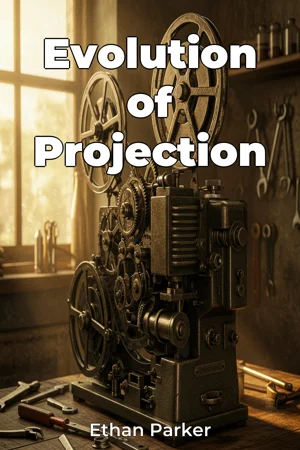
How did the flickering images of early nickelodeons evolve into the breathtakingly realistic displays we see today? "Evolution of Projection" meticulously charts the technological trajectory of video projection, from its nascent stages in late 19th-century cinema to the sophisticated high-resolution digital displays that dominate modern entertainment and information industries. The book explores how film, television, and technology intersect to shape our experiences. This book focuses on three central concepts: the underlying engineering innovations that enabled progressively higher-quality images; the economic forces that drove adoption of new projection technologies; and the social and cultural impacts of increasingly immersive visual experiences. Understanding the evolution of projection technology is crucial because it offers insights into the broader history of visual culture, the economics of media consumption, and the psychological effects of increasingly realistic displays. To fully appreciate the technical advancements, the book provides background information on the physics of light, the mechanics of early film projectors, and the principles of analog and digital video signals. No prior expertise is required, as all relevant concepts are explained in accessible terms. The central argument of "Evolution of Projection" is that the development of video projection technology is not simply a story of incremental improvements, but a series of paradigm shifts driven by both technological breakthroughs and the evolving demands of audiences and industries. This argument is significant because it challenges the notion of technological determinism and emphasizes the interplay between innovation, economics, and cultural forces. The book begins by introducing the basic principles of image projection and tracing its origins back to the magic lantern and early cinematic devices. It then follows a chronological path, first examining the shift from mechanical to electronic projection, focusing on the advent of cathode ray tube (CRT) projection systems and the rise of television. The next primary point is a detailed analysis of the digital revolution in projection, encompassing the development of LCD, DLP, and laser projection technologies. Finally, the book culminates by exploring the emergence of high-resolution displays (4K, 8K, and beyond), immersive environments (VR/AR), and the future of projection in various sectors. The book's analysis is supported by a wide array of evidence, including historical patents, technical specifications, archival footage of early projection systems, and contemporary industry reports. It also incorporates case studies of specific technological innovations and their impact on the film and television industries, and unique data is drawn from interviews with leading engineers and designers involved in the development of projection technology. "Evolution of Projection" connects to several other fields, including media studies (examining the social and psychological impact of screen technologies), economics (analyzing the business models that support the use of projection technology), and computer science (exploring the algorithms and software that drive digital displays). These interdisciplinary connections enrich the book's argument by providing a holistic understanding of the subject. A unique aspect of this book is its emphasis on the human element behind technological innovation, spotlighting the inventors, engineers, and entrepreneurs who shaped the evolution of projection. This approach provides a fresh perspective on the history of technology, moving beyond purely technical descriptions to explore the motivations and challenges faced by the individuals who developed these groundbreaking systems. The tone of the book is informative and engaging, presenting complex technical concepts in a clear and accessible manner. The writing style balances historical narrative with technical explanation, making it suitable for a broad readership. The target audience includes film and media students, technology enthusiasts, historians of science and technology, and professionals working in the film, television, and display industries. It would be similarly valuable to anyone seeking a comprehensive understanding of how video projection has evolved and its potential future directions. As a work of non-fiction in the fields of Film & Television and Technology, the book adheres to the conventions of academic rigor, accuracy, and objectivity. It provides detailed citations and references to support its claims and avoids speculative or unsubstantiated assertions. "Evolution of Projection" provides a detailed overview of the technological advancements in video projection. While the book strives for comprehensive coverage, it focuses primarily on the technological and economic aspects of projection, touching only briefly on the aesthetic or artistic dimensions of projected images. The information presented in the book has numerous real-world applications. For engineers and designers, it offers insights into the design principles and trade-offs involved in developing projection systems. For media professionals, it provides a deeper understanding of the technologies that shape their craft. For educators, it offers a valuable resource for teaching the history and technology of visual media. While the progression of projection technology generally represents advancement, the book also addresses controversies. One notable debate surrounds the long-term preservation of digital media, as the rapid pace of technological change can render older formats obsolete. The book offers a balanced assessment of these issues, highlighting the challenges and potential solutions involved in preserving our visual heritage.
How did the flickering images of early nickelodeons evolve into the breathtakingly realistic displays we see today? "Evolution of Projection" meticulously charts the technological trajectory of video projection, from its nascent stages in late 19th-century cinema to the sophisticated high-resolution digital displays that dominate modern entertainment and information industries. The book explores how film, television, and technology intersect to shape our experiences. This book focuses on three central concepts: the underlying engineering innovations that enabled progressively higher-quality images; the economic forces that drove adoption of new projection technologies; and the social and cultural impacts of increasingly immersive visual experiences. Understanding the evolution of projection technology is crucial because it offers insights into the broader history of visual culture, the economics of media consumption, and the psychological effects of increasingly realistic displays. To fully appreciate the technical advancements, the book provides background information on the physics of light, the mechanics of early film projectors, and the principles of analog and digital video signals. No prior expertise is required, as all relevant concepts are explained in accessible terms. The central argument of "Evolution of Projection" is that the development of video projection technology is not simply a story of incremental improvements, but a series of paradigm shifts driven by both technological breakthroughs and the evolving demands of audiences and industries. This argument is significant because it challenges the notion of technological determinism and emphasizes the interplay between innovation, economics, and cultural forces. The book begins by introducing the basic principles of image projection and tracing its origins back to the magic lantern and early cinematic devices. It then follows a chronological path, first examining the shift from mechanical to electronic projection, focusing on the advent of cathode ray tube (CRT) projection systems and the rise of television. The next primary point is a detailed analysis of the digital revolution in projection, encompassing the development of LCD, DLP, and laser projection technologies. Finally, the book culminates by exploring the emergence of high-resolution displays (4K, 8K, and beyond), immersive environments (VR/AR), and the future of projection in various sectors. The book's analysis is supported by a wide array of evidence, including historical patents, technical specifications, archival footage of early projection systems, and contemporary industry reports. It also incorporates case studies of specific technological innovations and their impact on the film and television industries, and unique data is drawn from interviews with leading engineers and designers involved in the development of projection technology. "Evolution of Projection" connects to several other fields, including media studies (examining the social and psychological impact of screen technologies), economics (analyzing the business models that support the use of projection technology), and computer science (exploring the algorithms and software that drive digital displays). These interdisciplinary connections enrich the book's argument by providing a holistic understanding of the subject. A unique aspect of this book is its emphasis on the human element behind technological innovation, spotlighting the inventors, engineers, and entrepreneurs who shaped the evolution of projection. This approach provides a fresh perspective on the history of technology, moving beyond purely technical descriptions to explore the motivations and challenges faced by the individuals who developed these groundbreaking systems. The tone of the book is informative and engaging, presenting complex technical concepts in a clear and accessible manner. The writing style balances historical narrative with technical explanation, making it suitable for a broad readership. The target audience includes film and media students, technology enthusiasts, historians of science and technology, and professionals working in the film, television, and display industries. It would be similarly valuable to anyone seeking a comprehensive understanding of how video projection has evolved and its potential future directions. As a work of non-fiction in the fields of Film & Television and Technology, the book adheres to the conventions of academic rigor, accuracy, and objectivity. It provides detailed citations and references to support its claims and avoids speculative or unsubstantiated assertions. "Evolution of Projection" provides a detailed overview of the technological advancements in video projection. While the book strives for comprehensive coverage, it focuses primarily on the technological and economic aspects of projection, touching only briefly on the aesthetic or artistic dimensions of projected images. The information presented in the book has numerous real-world applications. For engineers and designers, it offers insights into the design principles and trade-offs involved in developing projection systems. For media professionals, it provides a deeper understanding of the technologies that shape their craft. For educators, it offers a valuable resource for teaching the history and technology of visual media. While the progression of projection technology generally represents advancement, the book also addresses controversies. One notable debate surrounds the long-term preservation of digital media, as the rapid pace of technological change can render older formats obsolete. The book offers a balanced assessment of these issues, highlighting the challenges and potential solutions involved in preserving our visual heritage.
"Evolution of Projection" explores the captivating history of video projection, tracing its journey from early cinematic devices to today's high-resolution digital displays. This book uniquely balances technological detail with accessible explanations, appealing to both tech enthusiasts and film aficionados. It examines the underlying engineering innovations, economic forces, and socio-cultural impacts that have shaped our increasingly immersive visual experiences. For example, the shift from mechanical to electronic projection, driven by the advent of the cathode ray tube (CRT), revolutionized television. The book progresses chronologically, starting with the basic principles of image projection and early cinema. It then delves into the digital revolution, covering LCD, DLP, and laser projection technologies. Finally, it examines the rise of 4K and 8K displays and immersive environments, highlighting the interplay between innovation, economics, and cultural forces in driving these advancements. One key focus is the human element behind these innovations, spotlighting the engineers and entrepreneurs who propelled projection technology forward.
Book Details
ISBN
9788235219213
Publisher
Publifye AS
Your Licenses
You don't own any licenses for this book
Purchase a license below to unlock this book and download the EPUB.
Purchase License
Select a tier to unlock this book
Need bulk licensing?
Contact us for enterprise agreements.