
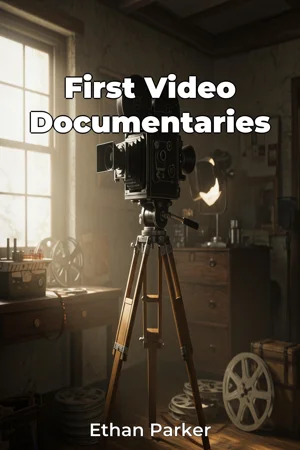
About This Book
Have you ever wondered how moving images transformed from mere entertainment to powerful tools of historical record, compelling storytelling, and hard-hitting investigative journalism? "First Video Documentaries" unravels this evolution, exploring the pivotal role early documentary films played in shaping our understanding of the world. This book delves into the formative years of the documentary genre, examining how pioneering filmmakers used nascent technology to capture reality, influence public opinion, and drive social change. This exploration is crucial because these foundational works established ethical standards, narrative techniques, and a commitment to truth-telling that continue to influence documentary filmmaking today. Understanding this history offers valuable insights into media literacy, the power of visual communication, and the evolving relationship between filmmakers and their subjects. We will begin by establishing the historical and technological context of early documentary filmmaking. This includes exploring the development of portable film equipment, the rise of newsreels, and the social and political climates that gave rise to the first documentaries. No prior knowledge of film theory is required; we will build from the ground up, explaining key concepts as they arise. The central argument of "First Video Documentaries" asserts that the initial innovations and struggles of early documentary filmmakers laid the groundwork for a genre with immense power to inform, persuade, and inspire. This argument matters because it challenges the notion that documentary filmmaking is a recent phenomenon and highlights the enduring legacy of those who first dared to point a camera at reality. The book is structured in three key parts. First, we will introduce the core concepts of documentary filmmaking, focusing on its definition, purpose, and ethical considerations. Second, we will examine the works of key figures and movements, such as the Griersonian documentary movement in Britain and the work of early American filmmakers who documented the Great Depression. We will analyze specific films, exploring their techniques, themes, and impact. Finally, we will address the culmination of these early efforts and how they influenced the future of the documentary filmmaking industry. The evidence presented will consist of detailed analyses of specific early documentaries, supplemented by primary source materials such as filmmakers' journals, production notes, and contemporary reviews. We will also draw on secondary sources, including film scholarship, historical accounts, and media studies research. "First Video Documentaries" also makes connections to other fields. It intersects with history by providing visual documentation of significant events and social conditions. It ties into sociology by examining how documentaries reflect and influence societal values. Furthermore, it connects with media studies by analyzing the evolving role of visual media in shaping public discourse. This book offers a unique perspective by focusing on the specific innovations and challenges faced by filmmakers in the early years of the genre. It moves beyond a simple chronological account to analyze the underlying principles and philosophical questions that shaped the development of documentary filmmaking. The tone throughout the book is informative and analytical, aiming to provide a balanced and nuanced understanding of the subject matter. It is intended for film students, media scholars, history buffs, and anyone interested in the power of visual storytelling. The book offers valuable information by providing historical context for understanding modern documentary filmmaking practices. The scope of this book is limited to the early decades of documentary filmmaking, focusing primarily on works produced before the widespread adoption of television. This intentional limitation allows for a more in-depth analysis of the foundational principles and practices that shaped the genre. The information presented here can be applied in various ways. Aspiring filmmakers can learn from the successes and failures of their predecessors. Media literacy advocates can use this knowledge to promote critical viewing skills. Historians can gain new insights into the past through the lens of documentary film. Finally, this book addresses ongoing debates about the ethics of documentary filmmaking, such as the role of the filmmaker in shaping the narrative and the use of manipulative techniques. By examining these debates in the context of early documentary films, we can gain a deeper understanding of their complexities and implications.
Have you ever wondered how moving images transformed from mere entertainment to powerful tools of historical record, compelling storytelling, and hard-hitting investigative journalism? "First Video Documentaries" unravels this evolution, exploring the pivotal role early documentary films played in shaping our understanding of the world. This book delves into the formative years of the documentary genre, examining how pioneering filmmakers used nascent technology to capture reality, influence public opinion, and drive social change. This exploration is crucial because these foundational works established ethical standards, narrative techniques, and a commitment to truth-telling that continue to influence documentary filmmaking today. Understanding this history offers valuable insights into media literacy, the power of visual communication, and the evolving relationship between filmmakers and their subjects. We will begin by establishing the historical and technological context of early documentary filmmaking. This includes exploring the development of portable film equipment, the rise of newsreels, and the social and political climates that gave rise to the first documentaries. No prior knowledge of film theory is required; we will build from the ground up, explaining key concepts as they arise. The central argument of "First Video Documentaries" asserts that the initial innovations and struggles of early documentary filmmakers laid the groundwork for a genre with immense power to inform, persuade, and inspire. This argument matters because it challenges the notion that documentary filmmaking is a recent phenomenon and highlights the enduring legacy of those who first dared to point a camera at reality. The book is structured in three key parts. First, we will introduce the core concepts of documentary filmmaking, focusing on its definition, purpose, and ethical considerations. Second, we will examine the works of key figures and movements, such as the Griersonian documentary movement in Britain and the work of early American filmmakers who documented the Great Depression. We will analyze specific films, exploring their techniques, themes, and impact. Finally, we will address the culmination of these early efforts and how they influenced the future of the documentary filmmaking industry. The evidence presented will consist of detailed analyses of specific early documentaries, supplemented by primary source materials such as filmmakers' journals, production notes, and contemporary reviews. We will also draw on secondary sources, including film scholarship, historical accounts, and media studies research. "First Video Documentaries" also makes connections to other fields. It intersects with history by providing visual documentation of significant events and social conditions. It ties into sociology by examining how documentaries reflect and influence societal values. Furthermore, it connects with media studies by analyzing the evolving role of visual media in shaping public discourse. This book offers a unique perspective by focusing on the specific innovations and challenges faced by filmmakers in the early years of the genre. It moves beyond a simple chronological account to analyze the underlying principles and philosophical questions that shaped the development of documentary filmmaking. The tone throughout the book is informative and analytical, aiming to provide a balanced and nuanced understanding of the subject matter. It is intended for film students, media scholars, history buffs, and anyone interested in the power of visual storytelling. The book offers valuable information by providing historical context for understanding modern documentary filmmaking practices. The scope of this book is limited to the early decades of documentary filmmaking, focusing primarily on works produced before the widespread adoption of television. This intentional limitation allows for a more in-depth analysis of the foundational principles and practices that shaped the genre. The information presented here can be applied in various ways. Aspiring filmmakers can learn from the successes and failures of their predecessors. Media literacy advocates can use this knowledge to promote critical viewing skills. Historians can gain new insights into the past through the lens of documentary film. Finally, this book addresses ongoing debates about the ethics of documentary filmmaking, such as the role of the filmmaker in shaping the narrative and the use of manipulative techniques. By examining these debates in the context of early documentary films, we can gain a deeper understanding of their complexities and implications.
"First Video Documentaries" explores the evolution of moving images from mere entertainment to powerful tools for historical record, visual storytelling, and journalism. This book examines how early documentary films shaped our understanding of the world, highlighting the ethical standards, narrative techniques, and commitment to truth-telling established by pioneering filmmakers. These foundational works impacted media literacy and the power of visual communication, particularly during eras like the Great Depression. The book progresses in three parts: defining documentary filmmaking's core concepts and ethics, then examining key figures like the Griersonian documentary movement and analyzing their techniques and impact. It then culminates by addressing how these early efforts influenced the future of the documentary filmmaking industry. By analyzing specific films and incorporating primary sources like filmmakers' journals, the book showcases the innovations and struggles faced during the genre's formative years.
Book Details
ISBN
9788235219190
Publisher
Publifye AS
Your Licenses
You don't own any licenses for this book
Purchase a license below to unlock this book and download the EPUB.
Purchase License
Select a tier to unlock this book
Need bulk licensing?
Contact us for enterprise agreements.