
About This Book
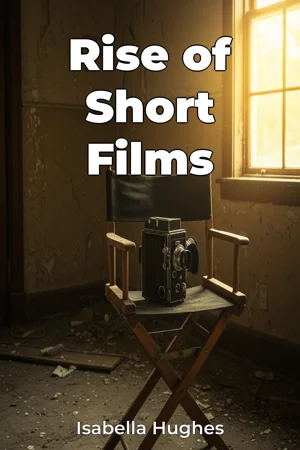
What if the most concise form of cinema held the key to understanding its future? "Rise of Short Films" examines the ascent of short-form filmmaking from its humble beginnings to its current status as a vital and influential art form, and a critical stepping stone for burgeoning directors. This book addresses the multifaceted evolution of short films, their significance in the film industry, and their impact on contemporary visual storytelling. These aspects are important because short films provide a unique platform for experimentation, innovation, and diverse voices that are often underrepresented in feature-length productions. The book situates the rise of short films within a historical framework, tracing their development alongside the broader history of cinema and television. It explores the impact of technological advancements, shifts in media consumption habits, and the emergence of online platforms on the popularity and accessibility of short-form content. No prior knowledge is strictly required, but some familiarity with film history and media studies will enhance the reader's understanding. The central argument posits that short films are not merely scaled-down versions of feature films, but rather a distinct and powerful medium with its own unique aesthetic, narrative possibilities, and cultural significance. This argument matters because it challenges traditional hierarchies within the film industry and highlights the artistic value of short-form storytelling. The book is structured to provide a comprehensive overview of the topic. It begins by introducing the fundamental concepts of short film production, distribution, and reception. It then develops these ideas through three major sections, each exploring a different facet of the medium. The first section examines the artistic and experimental nature of short films, exploring diverse genres and innovative techniques. The second section focuses on the role of short films as a training ground for emerging filmmakers, analyzing how they serve as a platform for building skills, gaining exposure, and launching careers. The third section investigates the growing importance of short films in the digital age, highlighting their accessibility, viral potential, and impact on online culture. The argument culminates in a discussion of the future of short films, considering their potential to shape the evolution of cinema and television. The analysis presented is supported by a range of evidence, including case studies of successful short films and filmmakers, interviews with industry professionals, and data on festival attendance and online viewership. Additionally, it uses film theory and media studies concepts to support its claims. The book connects to other fields, such as media studies, cultural studies, and art history. These connections enhance the argument by providing broader perspectives on the social, cultural, and aesthetic significance of short films. This book adopts an analytical and critical approach, offering a balanced perspective on the challenges and opportunities facing short filmmakers today. The writing style is accessible and engaging, making it suitable for both academic and general readers. The target audience includes film students, aspiring filmmakers, film critics, media scholars, and anyone interested in the art and business of filmmaking. This book is valuable to them because it provides a comprehensive and insightful overview of a rapidly evolving and increasingly important area of the film industry. In alignment with the conventions of non-fiction, the book maintains a fact-based and objective tone throughout. While the book aims to provide a broad overview of the field, its scope is limited to discussing short films produced and distributed primarily within the 21st century. The information in the book can be applied practically by filmmakers seeking to navigate the short film circuit, by film students looking to understand the history and theory of the medium, and by general readers who want to deepen their appreciation for this art form. The book acknowledges the ongoing debates surrounding the definition of "short film" and the challenges of measuring its impact in a rapidly changing media landscape.
What if the most concise form of cinema held the key to understanding its future? "Rise of Short Films" examines the ascent of short-form filmmaking from its humble beginnings to its current status as a vital and influential art form, and a critical stepping stone for burgeoning directors. This book addresses the multifaceted evolution of short films, their significance in the film industry, and their impact on contemporary visual storytelling. These aspects are important because short films provide a unique platform for experimentation, innovation, and diverse voices that are often underrepresented in feature-length productions. The book situates the rise of short films within a historical framework, tracing their development alongside the broader history of cinema and television. It explores the impact of technological advancements, shifts in media consumption habits, and the emergence of online platforms on the popularity and accessibility of short-form content. No prior knowledge is strictly required, but some familiarity with film history and media studies will enhance the reader's understanding. The central argument posits that short films are not merely scaled-down versions of feature films, but rather a distinct and powerful medium with its own unique aesthetic, narrative possibilities, and cultural significance. This argument matters because it challenges traditional hierarchies within the film industry and highlights the artistic value of short-form storytelling. The book is structured to provide a comprehensive overview of the topic. It begins by introducing the fundamental concepts of short film production, distribution, and reception. It then develops these ideas through three major sections, each exploring a different facet of the medium. The first section examines the artistic and experimental nature of short films, exploring diverse genres and innovative techniques. The second section focuses on the role of short films as a training ground for emerging filmmakers, analyzing how they serve as a platform for building skills, gaining exposure, and launching careers. The third section investigates the growing importance of short films in the digital age, highlighting their accessibility, viral potential, and impact on online culture. The argument culminates in a discussion of the future of short films, considering their potential to shape the evolution of cinema and television. The analysis presented is supported by a range of evidence, including case studies of successful short films and filmmakers, interviews with industry professionals, and data on festival attendance and online viewership. Additionally, it uses film theory and media studies concepts to support its claims. The book connects to other fields, such as media studies, cultural studies, and art history. These connections enhance the argument by providing broader perspectives on the social, cultural, and aesthetic significance of short films. This book adopts an analytical and critical approach, offering a balanced perspective on the challenges and opportunities facing short filmmakers today. The writing style is accessible and engaging, making it suitable for both academic and general readers. The target audience includes film students, aspiring filmmakers, film critics, media scholars, and anyone interested in the art and business of filmmaking. This book is valuable to them because it provides a comprehensive and insightful overview of a rapidly evolving and increasingly important area of the film industry. In alignment with the conventions of non-fiction, the book maintains a fact-based and objective tone throughout. While the book aims to provide a broad overview of the field, its scope is limited to discussing short films produced and distributed primarily within the 21st century. The information in the book can be applied practically by filmmakers seeking to navigate the short film circuit, by film students looking to understand the history and theory of the medium, and by general readers who want to deepen their appreciation for this art form. The book acknowledges the ongoing debates surrounding the definition of "short film" and the challenges of measuring its impact in a rapidly changing media landscape.
"Rise of Short Films" explores the burgeoning world of short-form filmmaking, establishing it as a vital art form and a significant launchpad for emerging filmmakers. The book traces the evolution of short films, highlighting their unique role in the film industry, and their impact on contemporary visual storytelling. Did you know that short films offer a distinct platform for experimentation and often amplify diverse voices underrepresented in feature-length productions? The book argues that these films are not just scaled-down versions of feature films but possess their own unique aesthetic and narrative power. The book adopts an analytical approach, presenting a balanced view of the challenges and opportunities in short filmmaking. It begins by introducing the core concepts of short film production and distribution, then progresses through sections examining the artistic nature of short films, their role as a training ground for filmmakers, and their increasing importance in the digital age. Case studies, interviews, and data support the analysis, offering practical insights and demonstrating how short films have shaped visual storytelling and the broader landscape of cinema.
Book Details
ISBN
9788235219046
Publisher
Publifye AS
Your Licenses
You don't own any licenses for this book
Purchase a license below to unlock this book and download the EPUB.
Purchase License
Select a tier to unlock this book
Need bulk licensing?
Contact us for enterprise agreements.