
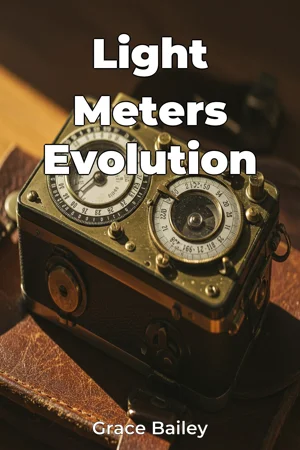
About This Book
Have you ever wondered how photographers achieved perfectly exposed images before the advent of sophisticated in-camera metering? "Light Meters Evolution" unravels the captivating history of light measurement in photography, exploring its technological advancements and artistic implications across time. This book delves into the essential role of light meters in shaping photographic practice. It examines how photographers transitioned from estimations and rudimentary tools to precise electronic instruments. The core concepts explored are: first, the evolution of light metering technologies, from early extinction meters and visual estimation techniques to selenium and cadmium sulfide (CdS) meters, and finally, to sophisticated silicon-based electronic meters. Understanding this technological progression is vital for appreciating the ingenuity of photographers throughout history and their capacity to adapt to evolving tools. Second, the book investigates the impact of light meters on photographic aesthetics and creative processes. It analyzes how objective measurement systems influenced the development of various photographic styles and techniques, and also the degree to which photographers intentionally deviated from these “objective” readings for artistic effect. Finally, the book analyzes the social and economic factors that influenced the adoption and accessibility of light meters, charting the shift from tools exclusive to professionals to devices readily available to amateur photographers. Photography’s development is inextricably linked to the science of optics and the technology of light-sensitive materials. Readers should have a basic understanding of photographic principles such as aperture, shutter speed, ISO, and the exposure triangle. This book argues that the evolution of light meter technology profoundly influenced not only the technical aspects of photography but also its artistic expression. We trace a path from reliance on subjective judgment to dependence on precise measurement, and then to a more nuanced synthesis of the two. The book's structure follows a chronological and thematic approach. We begin by introducing the challenges of early photography, where photographers relied on experience, rules of thumb, and rudimentary tools like exposure calculators and actinometers. The subsequent chapters detail the emergence of extinction meters, then the revolutionary selenium and CdS meters. A significant portion of the book is dedicated to the rise of electronic meters, and their integration into camera bodies, and the digital era's sophisticated matrix and evaluative metering systems. The book culminates by analyzing the present state of metering and its role in the digital photography and videography landscape. It also considers how an understanding of metering principles can inform and improve image creation, even when relying on automated systems. The analysis is substantiated through a combination of primary sources, including historical photographic manuals, patent documents, and archival materials from camera manufacturers, supplemented by secondary literature on the history of photography and technology. The book also incorporates case studies of influential photographers and their metering practices, providing tangible examples of how different technologies shaped their work. "Light Meters Evolution" connects to other fields such as the history of technology, visual arts, and media studies. The evolution of light meters reflects broader trends in technological innovation and scientific progress. It reveals how technological advancements shape artistic practices and cultural expression. The book offers a unique perspective by combining a technical history of light metering with an exploration of its artistic and cultural implications. It moves beyond a purely technological narrative to explore the human element, illuminating how photographers engaged with and adapted to these evolving tools. Written in a clear and accessible style, the book balances technical detail with engaging storytelling. It is aimed at a diverse audience, including photography students, practicing photographers, historians of photography, and anyone interested in the intersection of technology and visual culture. The book’s value lies in its comprehensive overview of light metering and its impact on the development of photography as an art form and a technology. The book's scope encompasses light metering technologies used in still photography, while acknowledging overlaps with cinematography and videography. The book addresses ongoing discussions about the role of technology in artistic creation, engaging with debates about the balance between technical precision and creative freedom. Ultimately, "Light Meters Evolution" provides readers with a deeper understanding of the technology that shaped photography. It offers practical insights, demonstrating how an understanding of light metering can inform and enhance contemporary photographic practice.
Have you ever wondered how photographers achieved perfectly exposed images before the advent of sophisticated in-camera metering? "Light Meters Evolution" unravels the captivating history of light measurement in photography, exploring its technological advancements and artistic implications across time. This book delves into the essential role of light meters in shaping photographic practice. It examines how photographers transitioned from estimations and rudimentary tools to precise electronic instruments. The core concepts explored are: first, the evolution of light metering technologies, from early extinction meters and visual estimation techniques to selenium and cadmium sulfide (CdS) meters, and finally, to sophisticated silicon-based electronic meters. Understanding this technological progression is vital for appreciating the ingenuity of photographers throughout history and their capacity to adapt to evolving tools. Second, the book investigates the impact of light meters on photographic aesthetics and creative processes. It analyzes how objective measurement systems influenced the development of various photographic styles and techniques, and also the degree to which photographers intentionally deviated from these “objective” readings for artistic effect. Finally, the book analyzes the social and economic factors that influenced the adoption and accessibility of light meters, charting the shift from tools exclusive to professionals to devices readily available to amateur photographers. Photography’s development is inextricably linked to the science of optics and the technology of light-sensitive materials. Readers should have a basic understanding of photographic principles such as aperture, shutter speed, ISO, and the exposure triangle. This book argues that the evolution of light meter technology profoundly influenced not only the technical aspects of photography but also its artistic expression. We trace a path from reliance on subjective judgment to dependence on precise measurement, and then to a more nuanced synthesis of the two. The book's structure follows a chronological and thematic approach. We begin by introducing the challenges of early photography, where photographers relied on experience, rules of thumb, and rudimentary tools like exposure calculators and actinometers. The subsequent chapters detail the emergence of extinction meters, then the revolutionary selenium and CdS meters. A significant portion of the book is dedicated to the rise of electronic meters, and their integration into camera bodies, and the digital era's sophisticated matrix and evaluative metering systems. The book culminates by analyzing the present state of metering and its role in the digital photography and videography landscape. It also considers how an understanding of metering principles can inform and improve image creation, even when relying on automated systems. The analysis is substantiated through a combination of primary sources, including historical photographic manuals, patent documents, and archival materials from camera manufacturers, supplemented by secondary literature on the history of photography and technology. The book also incorporates case studies of influential photographers and their metering practices, providing tangible examples of how different technologies shaped their work. "Light Meters Evolution" connects to other fields such as the history of technology, visual arts, and media studies. The evolution of light meters reflects broader trends in technological innovation and scientific progress. It reveals how technological advancements shape artistic practices and cultural expression. The book offers a unique perspective by combining a technical history of light metering with an exploration of its artistic and cultural implications. It moves beyond a purely technological narrative to explore the human element, illuminating how photographers engaged with and adapted to these evolving tools. Written in a clear and accessible style, the book balances technical detail with engaging storytelling. It is aimed at a diverse audience, including photography students, practicing photographers, historians of photography, and anyone interested in the intersection of technology and visual culture. The book’s value lies in its comprehensive overview of light metering and its impact on the development of photography as an art form and a technology. The book's scope encompasses light metering technologies used in still photography, while acknowledging overlaps with cinematography and videography. The book addresses ongoing discussions about the role of technology in artistic creation, engaging with debates about the balance between technical precision and creative freedom. Ultimately, "Light Meters Evolution" provides readers with a deeper understanding of the technology that shaped photography. It offers practical insights, demonstrating how an understanding of light metering can inform and enhance contemporary photographic practice.
"Light Meters Evolution" explores the fascinating journey of light measurement in photography, from early, imprecise methods to today's sophisticated digital systems. Discover how photographers initially relied on estimations and basic tools, gradually adopting selenium and cadmium sulfide (CdS) meters before embracing advanced electronic meters. The book emphasizes how these technological leaps profoundly influenced both the technical aspects and the artistic expression within photography. The book investigates the impact of light meters on photographic aesthetics and creative processes, analyzing how objective measurement systems influenced the development of various photographic styles and techniques. Interestingly, many photographers intentionally deviated from "objective" readings for artistic effect. Readers will gain insights into how the accessibility of light meters shifted from being exclusive to professionals to becoming readily available to amateur photographers, impacting photographic practice across different skill levels. Beginning with the challenges of early photography and rudimentary tools, the book progresses chronologically through the emergence of extinction meters, selenium and CdS meters, and the rise of electronic meters integrated into cameras. By understanding the evolution of light meters, readers will gain a deeper appreciation for the ingenuity of photographers and how technology has shaped the visual arts.
Book Details
ISBN
9788235218926
Publisher
Publifye AS
Your Licenses
You don't own any licenses for this book
Purchase a license below to unlock this book and download the EPUB.
Purchase License
Select a tier to unlock this book
Need bulk licensing?
Contact us for enterprise agreements.