
About This Book
What if the most authentic stories of the past weren't found in grand portraits, but in the unguarded moments captured on ordinary streets? "First Street Photos" delves into the pioneering era of photography, spotlighting how early photographers ventured beyond the studio to capture candid moments of everyday life. This book explores the intersection of technological innovation, artistic vision, and social observation that defined street photography's origins. It examines the vital role these images played in shaping our understanding of the past and how they continue to influence contemporary photographic practices. This exploration is significant because it reveals the democratization of image-making, shifting the focus from staged representations to unscripted realities. It also underscores the ethical considerations that have always been inherent in documentary photography. Understanding the historical context of street photography allows us to critically assess the images that surround us today. "First Street Photos" is structured around three core themes. First, it analyzes the technological advancements—smaller, more portable cameras and faster film—that enabled photographers to move freely through urban environments. Second, it examines the diverse approaches and motivations of early street photographers, from social reformers documenting poverty to artists seeking beauty in the mundane. Third, the book considers the responses of the public and the subjects themselves to being photographed, addressing issues of privacy, representation, and the power dynamics inherent in the act of capturing an image. The central argument of "First Street Photos" is that early street photography both reflected and shaped the social landscape of its time. It argues that these images were not merely objective records, but subjective interpretations that influenced public perception and contributed to social change. This argument is important because it challenges traditional views of photography as purely objective documentation, emphasizing the role of the photographer's perspective and the social context in shaping meaning. The book's structure follows a logical progression. An introductory section will define "street photography" within its historical context and introduce the key figures and technological developments. The subsequent chapters will explore the themes mentioned above, supported by detailed analyses of specific photographs and the historical circumstances surrounding their creation. The concluding section will discuss the legacy of early street photography and its continuing relevance in the digital age. "First Street Photos" draws upon a range of primary sources, including original photographs, period publications, photographers’ journals and letters, relevant legal documents, and census data. It supplements this with secondary scholarship in photography history, social history, and urban studies. The book introduces a unique dataset comprising a curated selection of early street photographs from diverse geographical locations, offering a comparative perspective on the development of the genre. The book connects to other fields such as sociology, urban planning, and art history. Sociology provides a framework for understanding the social dynamics captured in the photographs. Urban planning informs the analysis of the urban environments in which the images were made. Art history provides a perspective on issues of aesthetics and visual representation. These connections enhance the book's argument by situating street photography within a broader intellectual context. "First Street Photos" offers a fresh perspective by examining early street photography through the lens of social agency, arguing that these images empowered both photographers and subjects to participate in shaping the visual narrative of their time. Written in a clear and engaging style, "First Street Photos" appeals to a broad audience, including photography enthusiasts, history buffs, students of visual culture, and anyone interested in understanding how early photography captured candid moments in everyday life. The book avoids technical jargon and presents complex ideas in a accessible manner. It provides valuable insights for both amateur and professional photographers seeking to understand the roots of their craft. As a work of photography history, "First Street Photos" adheres to standards of rigorous scholarship, while also embracing the visual richness of the subject matter. The book focuses primarily on black-and-white photography from the late 19th and early 20th centuries, acknowledging that this period represents a formative stage in the development of the genre. While the influence of photography on other forms of art and documentation is noted, a full exploration of the influence is beyond the book's scope. The information in "First Street Photos" can be applied practically by readers interested in improving their own street photography, understanding the ethical implications of their work, or developing a deeper appreciation for the history of the medium. One ongoing debate in the field of photography concerns the ethics of photographing people without their consent. "First Street Photos" addresses this debate by examining the historical context of these practices and considering the evolving standards of privacy and representation.
What if the most authentic stories of the past weren't found in grand portraits, but in the unguarded moments captured on ordinary streets? "First Street Photos" delves into the pioneering era of photography, spotlighting how early photographers ventured beyond the studio to capture candid moments of everyday life. This book explores the intersection of technological innovation, artistic vision, and social observation that defined street photography's origins. It examines the vital role these images played in shaping our understanding of the past and how they continue to influence contemporary photographic practices. This exploration is significant because it reveals the democratization of image-making, shifting the focus from staged representations to unscripted realities. It also underscores the ethical considerations that have always been inherent in documentary photography. Understanding the historical context of street photography allows us to critically assess the images that surround us today. "First Street Photos" is structured around three core themes. First, it analyzes the technological advancements—smaller, more portable cameras and faster film—that enabled photographers to move freely through urban environments. Second, it examines the diverse approaches and motivations of early street photographers, from social reformers documenting poverty to artists seeking beauty in the mundane. Third, the book considers the responses of the public and the subjects themselves to being photographed, addressing issues of privacy, representation, and the power dynamics inherent in the act of capturing an image. The central argument of "First Street Photos" is that early street photography both reflected and shaped the social landscape of its time. It argues that these images were not merely objective records, but subjective interpretations that influenced public perception and contributed to social change. This argument is important because it challenges traditional views of photography as purely objective documentation, emphasizing the role of the photographer's perspective and the social context in shaping meaning. The book's structure follows a logical progression. An introductory section will define "street photography" within its historical context and introduce the key figures and technological developments. The subsequent chapters will explore the themes mentioned above, supported by detailed analyses of specific photographs and the historical circumstances surrounding their creation. The concluding section will discuss the legacy of early street photography and its continuing relevance in the digital age. "First Street Photos" draws upon a range of primary sources, including original photographs, period publications, photographers’ journals and letters, relevant legal documents, and census data. It supplements this with secondary scholarship in photography history, social history, and urban studies. The book introduces a unique dataset comprising a curated selection of early street photographs from diverse geographical locations, offering a comparative perspective on the development of the genre. The book connects to other fields such as sociology, urban planning, and art history. Sociology provides a framework for understanding the social dynamics captured in the photographs. Urban planning informs the analysis of the urban environments in which the images were made. Art history provides a perspective on issues of aesthetics and visual representation. These connections enhance the book's argument by situating street photography within a broader intellectual context. "First Street Photos" offers a fresh perspective by examining early street photography through the lens of social agency, arguing that these images empowered both photographers and subjects to participate in shaping the visual narrative of their time. Written in a clear and engaging style, "First Street Photos" appeals to a broad audience, including photography enthusiasts, history buffs, students of visual culture, and anyone interested in understanding how early photography captured candid moments in everyday life. The book avoids technical jargon and presents complex ideas in a accessible manner. It provides valuable insights for both amateur and professional photographers seeking to understand the roots of their craft. As a work of photography history, "First Street Photos" adheres to standards of rigorous scholarship, while also embracing the visual richness of the subject matter. The book focuses primarily on black-and-white photography from the late 19th and early 20th centuries, acknowledging that this period represents a formative stage in the development of the genre. While the influence of photography on other forms of art and documentation is noted, a full exploration of the influence is beyond the book's scope. The information in "First Street Photos" can be applied practically by readers interested in improving their own street photography, understanding the ethical implications of their work, or developing a deeper appreciation for the history of the medium. One ongoing debate in the field of photography concerns the ethics of photographing people without their consent. "First Street Photos" addresses this debate by examining the historical context of these practices and considering the evolving standards of privacy and representation.
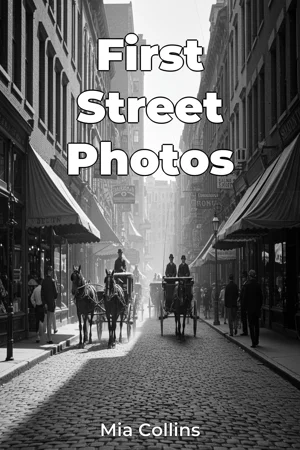
"First Street Photos" explores the origins of street photography, revealing how early photographers captured candid moments of everyday life and offering a unique perspective on social history. Venturing beyond formal studio portraits, these pioneers used technological advancements like portable cameras to document unscripted realities in urban environments. The book highlights how these images shifted image-making from staged representations to capturing the essence of daily life, influencing our understanding of the past and shaping contemporary photographic practices. This book examines the diverse motivations and approaches of early street photographers, from those documenting poverty to artists finding beauty in the mundane. It addresses critical questions about privacy, representation, and power dynamics, highlighting the ethical considerations inherent in documentary photography. Structured around core themes, the book progresses through chapters analyzing technological advancements, photographer motivations, and public responses, supported by detailed analyses of specific photographs and historical circumstances. The book argues that early street photography both reflected and shaped the social landscape, challenging purely objective views of photography. By drawing on primary sources like original photos and photographers' journals, as well as secondary scholarship, "First Street Photos" offers fresh insights into social agency, empowering both photographers and subjects in shaping the visual narrative of their time, and making it valuable for photography enthusiasts and history buffs alike.
Book Details
ISBN
9788235218865
Publisher
Publifye AS
Your Licenses
You don't own any licenses for this book
Purchase a license below to unlock this book and download the EPUB.
Purchase License
Select a tier to unlock this book
Need bulk licensing?
Contact us for enterprise agreements.