
About This Book
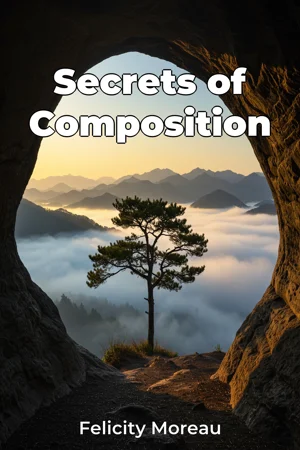
Have you ever wondered why some photographs resonate so deeply while others fall flat? "Secrets of Composition" unveils the artistic principles that transform ordinary snapshots into compelling visual narratives. This book explores the core elements of photographic composition – framing, angle, and balance – demonstrating how their deliberate manipulation can elevate your images from simple records to powerful works of art. The genres covered include Photography General, Art, and Photography. Composition is not merely a technical skill; it's a language. Just as grammar shapes sentences, composition guides the viewer's eye, conveying emotion, creating depth, and telling stories within a single frame. Mastering these principles is paramount for anyone seeking to move beyond point-and-shoot photography, regardless of their equipment. This book delves into the historical context of composition in art, drawing parallels between classical painting, sculpture, and modern photography. Understanding the roots of these techniques offers a deeper appreciation of their enduring relevance. While no prior expertise is required, a foundational understanding of basic photographic principles such as aperture, shutter speed, and ISO will be beneficial. The central argument of "Secrets of Composition" is that effective composition isn't about following rigid rules, but about understanding fundamental principles and applying them creatively to express your unique vision. It advocates for an intentional approach, where every element within the frame serves a purpose. The book is structured to provide a progressive learning experience. It begins with an introduction to the fundamental concepts of framing, discussing how to use natural and artificial borders to isolate subjects and direct attention. Angle, from low to high and everything in between, is explored in the next section with a practical application on several subjects. The rule of thirds is analyzed extensively, along with leading lines, symmetry, and the golden ratio, providing a framework for achieving visual equilibrium. These elements are considered in the context of positive and negative space. The culmination of these points is the practical application of these theories by explaining how all these ideas work in tandem to obtain a higher quality artistic photograph. The book concludes with practical exercises and assignments designed to reinforce the concepts and encourage experimentation. The arguments presented are supported by a diverse range of visual examples, including historical masterpieces and contemporary photographs. Each concept is illustrated with clear diagrams and annotated images, demonstrating how the principles are applied in real-world scenarios. The book also draws on insights from art history, psychology, and visual communication to provide a comprehensive understanding of how composition affects perception and emotion. This book connects to several interdisciplinary fields. Firstly, its reliance on principles derived from art history establishes a clear link to the study of visual arts and aesthetics. Secondly, the discussion of visual perception and the psychology of composition connects to the field of cognitive science, exploring how the human brain processes visual information. Finally, the book's emphasis on storytelling and narrative construction aligns with the principles of communication theory. "Secrets of Composition" offers a unique perspective by deconstructing established “rules” and presenting them as flexible guidelines. It encourages readers to develop their own compositional “voice” and to experiment with different techniques to find what works best for their individual style and subject matter. The tone is conversational yet informative, avoiding jargon and presenting complex ideas in an accessible way. The writing style balances theoretical explanations with practical examples, making the book both educational and engaging. The target audience includes amateur photographers, photography students, and anyone interested in improving their visual literacy. It is valuable to those looking to add artistic value to their photographs and to gain a deeper understanding of the visual arts. Anyone interested in elevating their photographs from the mundane to the artistic will find this book valuable. While "Secrets of Composition" covers a broad range of compositional techniques, it focuses primarily on still photography and doesn't delve into the specifics of video composition or cinematography. The focus is on foundational principles applicable across various photographic genres, such as portraiture, landscape, and street photography. The techniques learned can be applied to a multitude of real-world scenarios, from capturing everyday moments with greater impact to creating stunning images for professional or artistic purposes. While there are varying opinions on the importance of strict adherence to certain compositional "rules," this book embraces a more flexible approach, encouraging readers to understand the underlying principles and adapt them to their creative vision.
Have you ever wondered why some photographs resonate so deeply while others fall flat? "Secrets of Composition" unveils the artistic principles that transform ordinary snapshots into compelling visual narratives. This book explores the core elements of photographic composition – framing, angle, and balance – demonstrating how their deliberate manipulation can elevate your images from simple records to powerful works of art. The genres covered include Photography General, Art, and Photography. Composition is not merely a technical skill; it's a language. Just as grammar shapes sentences, composition guides the viewer's eye, conveying emotion, creating depth, and telling stories within a single frame. Mastering these principles is paramount for anyone seeking to move beyond point-and-shoot photography, regardless of their equipment. This book delves into the historical context of composition in art, drawing parallels between classical painting, sculpture, and modern photography. Understanding the roots of these techniques offers a deeper appreciation of their enduring relevance. While no prior expertise is required, a foundational understanding of basic photographic principles such as aperture, shutter speed, and ISO will be beneficial. The central argument of "Secrets of Composition" is that effective composition isn't about following rigid rules, but about understanding fundamental principles and applying them creatively to express your unique vision. It advocates for an intentional approach, where every element within the frame serves a purpose. The book is structured to provide a progressive learning experience. It begins with an introduction to the fundamental concepts of framing, discussing how to use natural and artificial borders to isolate subjects and direct attention. Angle, from low to high and everything in between, is explored in the next section with a practical application on several subjects. The rule of thirds is analyzed extensively, along with leading lines, symmetry, and the golden ratio, providing a framework for achieving visual equilibrium. These elements are considered in the context of positive and negative space. The culmination of these points is the practical application of these theories by explaining how all these ideas work in tandem to obtain a higher quality artistic photograph. The book concludes with practical exercises and assignments designed to reinforce the concepts and encourage experimentation. The arguments presented are supported by a diverse range of visual examples, including historical masterpieces and contemporary photographs. Each concept is illustrated with clear diagrams and annotated images, demonstrating how the principles are applied in real-world scenarios. The book also draws on insights from art history, psychology, and visual communication to provide a comprehensive understanding of how composition affects perception and emotion. This book connects to several interdisciplinary fields. Firstly, its reliance on principles derived from art history establishes a clear link to the study of visual arts and aesthetics. Secondly, the discussion of visual perception and the psychology of composition connects to the field of cognitive science, exploring how the human brain processes visual information. Finally, the book's emphasis on storytelling and narrative construction aligns with the principles of communication theory. "Secrets of Composition" offers a unique perspective by deconstructing established “rules” and presenting them as flexible guidelines. It encourages readers to develop their own compositional “voice” and to experiment with different techniques to find what works best for their individual style and subject matter. The tone is conversational yet informative, avoiding jargon and presenting complex ideas in an accessible way. The writing style balances theoretical explanations with practical examples, making the book both educational and engaging. The target audience includes amateur photographers, photography students, and anyone interested in improving their visual literacy. It is valuable to those looking to add artistic value to their photographs and to gain a deeper understanding of the visual arts. Anyone interested in elevating their photographs from the mundane to the artistic will find this book valuable. While "Secrets of Composition" covers a broad range of compositional techniques, it focuses primarily on still photography and doesn't delve into the specifics of video composition or cinematography. The focus is on foundational principles applicable across various photographic genres, such as portraiture, landscape, and street photography. The techniques learned can be applied to a multitude of real-world scenarios, from capturing everyday moments with greater impact to creating stunning images for professional or artistic purposes. While there are varying opinions on the importance of strict adherence to certain compositional "rules," this book embraces a more flexible approach, encouraging readers to understand the underlying principles and adapt them to their creative vision.
"Secrets of Composition" explores the art of transforming ordinary photographs into compelling visual narratives through understanding and applying fundamental compositional elements. The book reveals how deliberate choices concerning framing, angle, and balance can elevate images, conveying emotion and depth, much like grammar shapes sentences. By connecting photographic composition to historical art, readers gain a deeper appreciation for techniques like the rule of thirds, leading lines, and the golden ratio, moving beyond simple snapshots to create true works of art. The book progresses systematically, starting with framing and angle, then exploring techniques like the rule of thirds and symmetry in relation to positive and negative space, culminating in practical applications. It emphasizes that effective composition relies on understanding core principles rather than rigidly following rules, encouraging photographers to develop their unique vision. The book uses annotated images and visual examples, and a conversational tone, to show how these principles function in real-world scenarios. Ultimately, this book offers a unique perspective by treating established rules as flexible guidelines, encouraging experimentation and the development of a personal compositional style. It aims to empower amateur photographers and art enthusiasts alike to enhance their visual literacy and artistic expression through a deeper understanding of photographic composition in various genres.
Book Details
ISBN
9788235218827
Publisher
Publifye AS
Your Licenses
You don't own any licenses for this book
Purchase a license below to unlock this book and download the EPUB.
Purchase License
Select a tier to unlock this book
Need bulk licensing?
Contact us for enterprise agreements.